The Complete Handbook of Air Purifier Filters
A practical reference for professionals, businesses, and serious hobbyists who specify, install, maintain, or profit from air filtration systems
★★★★★3.5 · 6 reviewsby Alumigogo Books
non-fiction
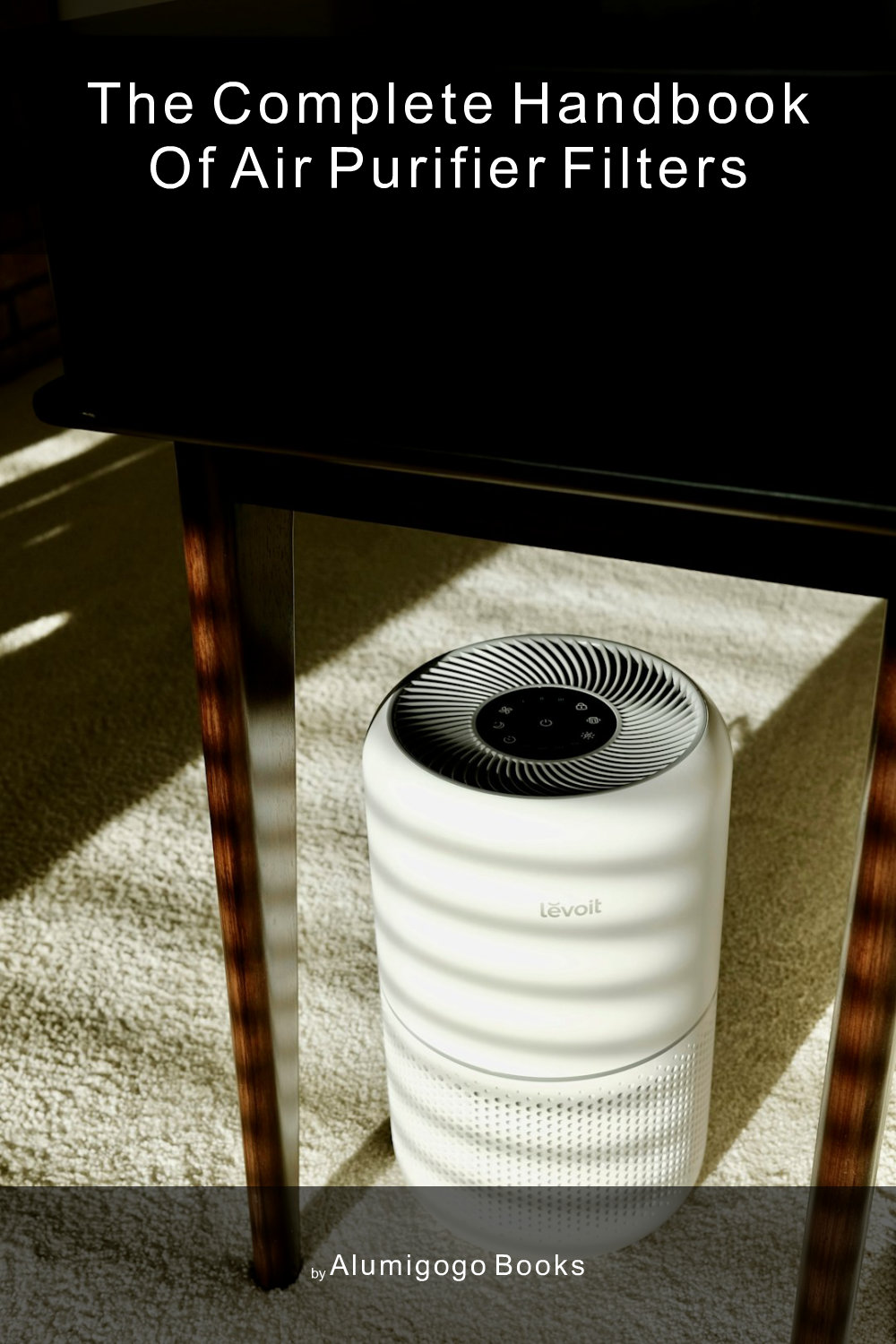
The Complete Handbook of Air Purifier Filters
A practical reference for professionals, businesses, and serious hobbyists who specify, install, maintain, or profit from air filtration systems
★★★★★3.5 · 6 reviewsby Alumigogo Books
non-fiction
Practical technical knowledge for anyone who chooses, installs, or maintains air purifier filters—no marketing, no hype.
🔒Secure checkout via Stripe
Labor Day Sale
$9
About this book
Air purifier filters are engineered products, not commodities. Yet most buyers face a choice between vague manufacturer marketing and guesswork.
This handbook is for professionals, businesses, and serious hobbyists who want to understand how air purifier filters actually work, what specifications mean in real conditions, and how to build sustainable filter management practices. You'll learn the mechanics of particle capture, the real differences between MERV grades and HEPA standards, how filter loading affects airflow over time, and when a filter is truly saturated versus when it has useful life remaining.
Inside you'll find decision frameworks for specifying the right filter for your environment, installation protocols that actually matter, maintenance schedules grounded in real performance data, and concrete business opportunities—from reselling and private-labeling to service contracts and filter-as-a-service models. Whether you're managing building systems, running an HVAC business, or consulting on indoor air quality, this reference eliminates guesswork and gives you the foundation to make informed, cost-effective decisions.
Reader Reviews
Jennifer Smith
★★★★★I use this at work specifying HVAC filters for our facility, and it's become my reference. Chapter 2 on types and specs is exactly what I needed—finally a clear explanation of why MERV 13 isn't automatically better than MERV 11 for our space. The cost-benefit framework in Chapter 3 has already saved us money on maintenance contracts. One thing I'd have appreciated: a bit more depth on testing standards (ASHRAE methods), but overall it's practical and grounded.
Melissa Wright
★★★★★This is a solid technical reference, and I liked the real-world context—especially the explanation of filter loading and bypass in Chapter 1. But it felt aimed more at HVAC pros than DIY users. For someone like me just trying to maintain a home system, some of the specification talk is overkill. The maintenance chapter was helpful, though I would've liked more troubleshooting trees or flowcharts. Good book, but not quite the right fit for my needs.
Ashley Lewis
★★★★★Picked this up because I was tired of guessing whether to replace my filters based on time or appearance. Chapter 1 is clear and well-written, and the sections on pressure drop and filter loading actually made sense. I found Chapter 3 useful too. That said, I was hoping for more guidance on specific filter brands and models—there's business info but not much on which real-world filters to actually buy. Still, it's better than manufacturer datasheets.
James Lee
★★★★★As someone getting into the filter supply business, Chapters 2, 3, and 6 were exactly what I needed to understand the market and how filters are actually specified. The business opportunities section gave me real ideas. Chapter 1 felt a bit long for what amounts to 'filters trap particles using different methods,' though I understand why the author built the foundation. Would have liked more pricing data and margin expectations for resellers.
Betty Hall
★★★★★This is the book I've been waiting for. I'm a building engineer, and every manufacturer I talk to hands me glossy sheets that don't answer my real questions. This handbook answers them. The explanation of MERV, CADR, and dust-holding capacity in Chapter 2, the decision tree in Chapter 3, and the troubleshooting in Chapter 5 are exactly what I need to manage our systems correctly. Chapter 1 does a great job explaining the actual mechanics without being condescending. This is going in my office library.
Jessica Hill
★★★★★I'm writing this after using Chapter 1 and the FAQ (Chapter 8) to train our maintenance team. The mechanics explanation finally gave them a mental model for why we care about pressure drop and bypass, not just 'follow the schedule.' The book has real depth. My only note: some of the industry context (standards bodies, cert programs in Chapter 7) feels generic—would have valued more on how those actually affect filter compliance and liability. Still, excellent reference.