The Complete Guide to Becoming A Robotics Engineer
What you'll really do, earn, and need to break in - with honest numbers, real timelines, and a straight answer on whether this career is worth it for you.
★★★★★3.8 · 8 reviewsby Alumigogo Books
non-fiction
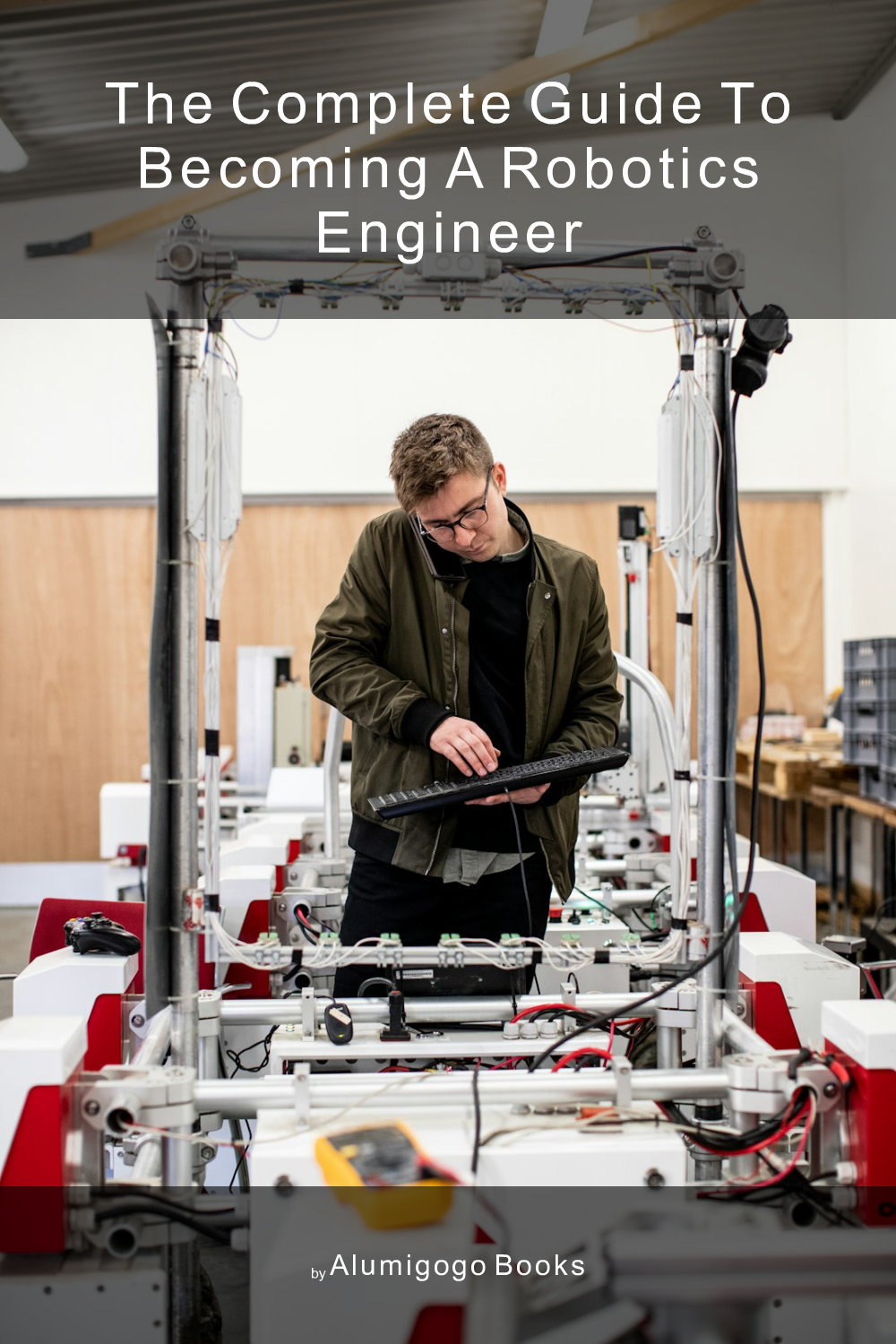
The Complete Guide to Becoming A Robotics Engineer
What you'll really do, earn, and need to break in - with honest numbers, real timelines, and a straight answer on whether this career is worth it for you.
★★★★★3.8 · 8 reviewsby Alumigogo Books
non-fiction
The honest guide to becoming a robotics engineer - what the job really is, what it pays, and whether it's right for you.
🔒Secure checkout via Stripe
Labor Day Sale
$9
About this book
You've heard robotics is the future. You've seen the videos of humanoid robots doing backflips. But you haven't seen the 900-page simulation logs, the sensor calibration that takes three days, or the meeting where you explain for the fourth time why the gripper won't close. This book is the reality check you need before you commit years of your life and tens of thousands of dollars to a career path.
Drawing on what seasoned robotics engineers actually do - not what TED talks claim they do - this guide gives you concrete answers. You'll learn what a typical workday looks like hour by hour, what you'll realistically earn from your first job to your fifteenth year, and exactly which education paths get you hired (and which waste your time). You'll get a self-assessment checklist to measure your fit, a step-by-step plan for landing your first role with zero experience, and honest answers to the questions everyone asks but no one answers straight: Is the math really that hard? Will the jobs be there in ten years? What happens if I can't get into a top engineering program?
If you're the kind of person who wants to know the real story before you commit, into the details, and gets more motivated by a clear-eyed plan than by hype, this book is for you. Read it before you pick a major, before you sign up for that bootcamp, or before you turn down an offer in another field to 'do something with robotics.'
Reader Reviews
Nicholas Thomas
★★★★★This is the book I wish I had before I switched my major from computer science to mechanical engineering. The Chapter 1 breakdown of what a robotics engineer actually does on a daily basis - the simulation work, the endless sensor debugging, the meetings with manufacturing - saved me from walking in blind. I felt seen and prepared. If you're on the fence, read this before you commit a single semester to the wrong path.
Jonathan Smith
★★★★★It's solid and honest, I'll give it that. The salary numbers and education path comparisons are useful, and I appreciate that it doesn't sugar-coat the math requirements. But I found the tone a bit dry in places, and I was hoping for more detail on the software side specifically - ROS, computer vision, that sort of thing. It's a good starting point, but it didn't fully answer my questions as someone who's more of a programmer than a mechanical person.
Barbara Baker
★★★★★I'm a mother of a high schooler who keeps saying they want to do 'robots.' This book gave me a reality check on what that actually means - the schooling, the money, the job market - and I'm honestly a bit relieved we read it. Chapter 1 lays out the day-to-day so clearly that my kid realized they're more interested in the coding than the wiring. Three stars because it dragged a little in the middle, but from a parenting perspective, it was worth it.
Gary Walker
★★★★★As a 30-something mechanical engineer thinking about pivoting into robotics, this was exactly the kick in the pants I needed. The Chapter 1 description of the work environment - open labs, cross-functional teams, the fact that you spend as much time on the floor with the robot as at the computer - was spot-on. The chapter on breaking in gave me a concrete checklist instead of vague advice like 'network more.' I've already started building my portfolio. Five stars, absolutely.
Kathleen Anderson
★★★★★It's fine. I've been a software engineer for six years and this book confirmed a lot of what I suspected - that robotics is less glamorous than the videos make it look. I appreciated the realistic salary range for my area and the honest breakdown of the education paths. But I found the 'day in the life' chapter a bit repetitive with the first chapter, and I wanted a little more on the business side - which industries are actually hiring right now versus in five years.
Richard White
★★★★★I've read a lot of career guides, and most of them are pure fluff. This one is dense with details - real numbers, real timelines, real frustrations. The Chapter 1 exploration of the tools (ROS, simulators, soldering irons) and the team dynamics (working with electrical engineers who speak a different language) was worth the price of the book alone. I docked a star because I thought the FAQ at the end could have been more comprehensive, but overall, it's the most grounded resource I found on this field.
Jacob Garcia
★★★★★I'm in my second year of a mechanical engineering degree and was starting to wonder if I was on the right track. This book helped me see that yes, the path is real, but it's longer and harder than my professors let on. The chapter on education and training laid out the options clearly - including the cost of a master's, which I had severely underestimated - and the self-assessment in Chapter 2 was honest about the personality traits that actually matter. Only four stars because I wish it had included an appendix on scholarship or funding opportunities.
Sandra Torres
★★★★★An honest, grounded book that doesn't try to sell you on the career, which I found refreshing. The Chapter 1 breakdown of the day-to-day was realistic - it's equal parts problem-solving, tedious testing, and sitting in meetings - and the salary table gave me a clear picture of what I can expect from start to mid-career. It's not a page-turner, and I would've liked more case studies of actual engineers' career paths, but as a decision-making tool, it's excellent. I can say with confidence now that this isn't for me, which saves me years of wasted effort.