The Unprofessional Guide to tarsal-carpal coalition syndrome
What You Need to Know About Tarsal-Carpal Coalition Syndrome - A Plain-Language Guide for Patients and Caregivers (For Informational Purposes Only)
★★★★★3.8 · 6 reviewsby Alumigogo Books
non-fiction
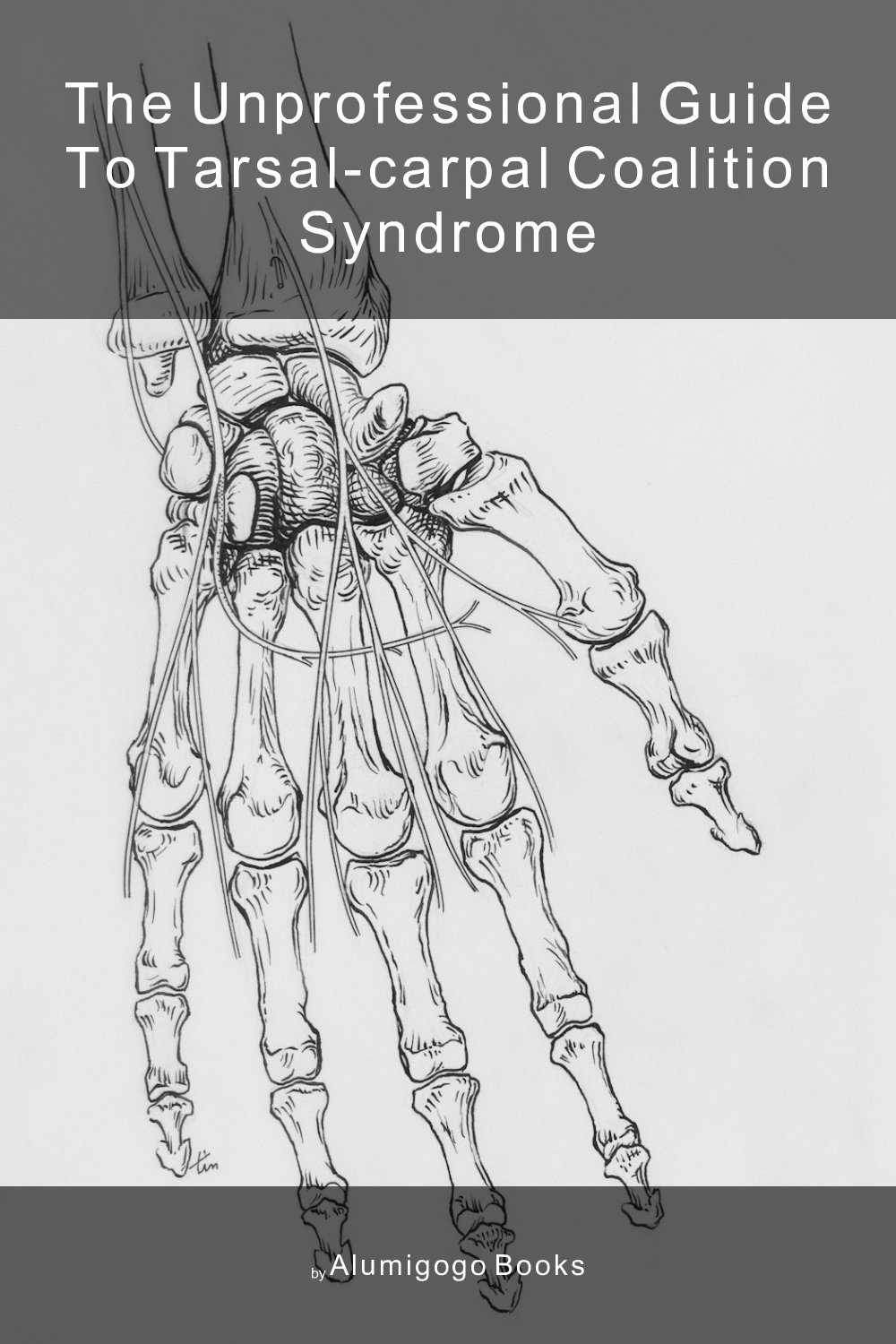
The Unprofessional Guide to tarsal-carpal coalition syndrome
What You Need to Know About Tarsal-Carpal Coalition Syndrome - A Plain-Language Guide for Patients and Caregivers (For Informational Purposes Only)
★★★★★3.8 · 6 reviewsby Alumigogo Books
non-fiction
A plain-language guide to tarsal-carpal coalition syndrome - for the newly diagnosed, their families, and anyone who needs answers without the medical jargon.
🔒Secure checkout via Stripe
Labor Day Sale
$9
About this book
So you just got told you have tarsal-carpal coalition syndrome. Maybe you've never heard of it before. Maybe your young child was the one who got the diagnosis. Either way, you're probably sitting there thinking: What does that even mean? Is it going to hurt forever? What do I do now?
This guide is here to answer those questions with honesty and warmth. No one is going to pretend they know things they don't - tarsal-carpal coalition syndrome is rare and still somewhat mysterious - but you will leave these pages with a much clearer picture of what's going on inside your body, why it might have happened, and what your options are going forward.
Written for patients, not just practitioners, this book walks you through the full journey: what the syndrome is, what you'll likely feel, how to navigate doctors' appointments, what treatments and management strategies exist, and how to reshape your day-to-day life so it works for you. There's also a chapter for caregivers, because supporting someone through this is its own challenge. Plus, you'll get ready-made lists of questions to bring to your next appointment so you never freeze in the exam room again. This guide is for information only - it will never tell you what to do, but it will help you figure out what to ask.
Reader Reviews
Nancy Young
★★★★★I was completely lost when my doctor first said 'tarsal-carpal coalition syndrome' - I thought he was speaking another language. This guide was the first thing that made me feel like I wasn't alone. I appreciated that it didn't promise miracles but also didn't make everything sound hopeless. The chapter about what's actually happening in your hands and feet helped me explain it all to my husband. Only reason it's not 5 stars is I wanted even more detail on treatment options, but honestly it covered the essentials well.
Michelle Sanchez
★★★★★Got this for my daughter who was just diagnosed, and I read it myself first. It's the perfect middle ground - it doesn't talk down to you, but it also never feels like reading a medical journal. I really liked the chapter on caregivers because I felt seen. We're still learning to live with this, but at least I feel like we have a roadmap now. Definitely glad I bought it.
Kevin Scott
★★★★★This is the resource I wish I had when I first got diagnosed three years ago. I spent so many sleepless nights doom-scrolling forums where everyone was terrified. This guide cuts through all that noise. It gave me the exact questions to bring to my specialist and helped me understand my symptoms - which ones were common, which ones were just me. My favorite line was in Chapter 1 about your bones doing something your brain didn't approve. It made me laugh. If you just got diagnosed, get this book, you'll breathe easier.
Patricia Anderson
★★★★★It's a decent overview, and I appreciate that it's written for regular people. That said, I felt like Chapter 5 on treatment options was a bit thin - I wanted more concrete details on physical therapy exercises and pain management strategies. As someone who's been living with this for years, I didn't learn a ton that I didn't already know. But for someone brand new to the diagnosis, I can see how this would be helpful. It's honest and well-written, just not deep enough for me personally.
William Ramirez
★★★★★My wife has tarsal-carpal coalition syndrome and barely talks about it, so I got this to try to understand her better. The caregiver chapter alone was worth the purchase - it gave me a checklist and told me things NOT to say, which honestly saved me from putting my foot in my mouth several times. I also appreciated that the book admits what is unknown instead of pretending to have all the answers. This is clearly written by people who care about patients, not just researchers.
Jessica Baker
★★★★★This is a fine introduction to the condition, and I'd recommend it if you're totally in the dark. The symptom table in Chapter 3 is really useful. But I deducted a star because I wish it included more information specific to kids - my son was diagnosed at seven, and I felt some sections were geared more toward adults living with this long-term. Still, the tone is warm and it did make me feel less panicked. Just pair it with your pediatric specialist's advice and you'll be in okay shape.