The Unprofessional Guide to Baller-Gerold syndrome
What You Need to Know — A Plain-Language Guide for Patients and Caregivers (For Informational Purposes Only)
★★★★★3.9 · 8 reviewsby Alumigogo Books
non-fiction
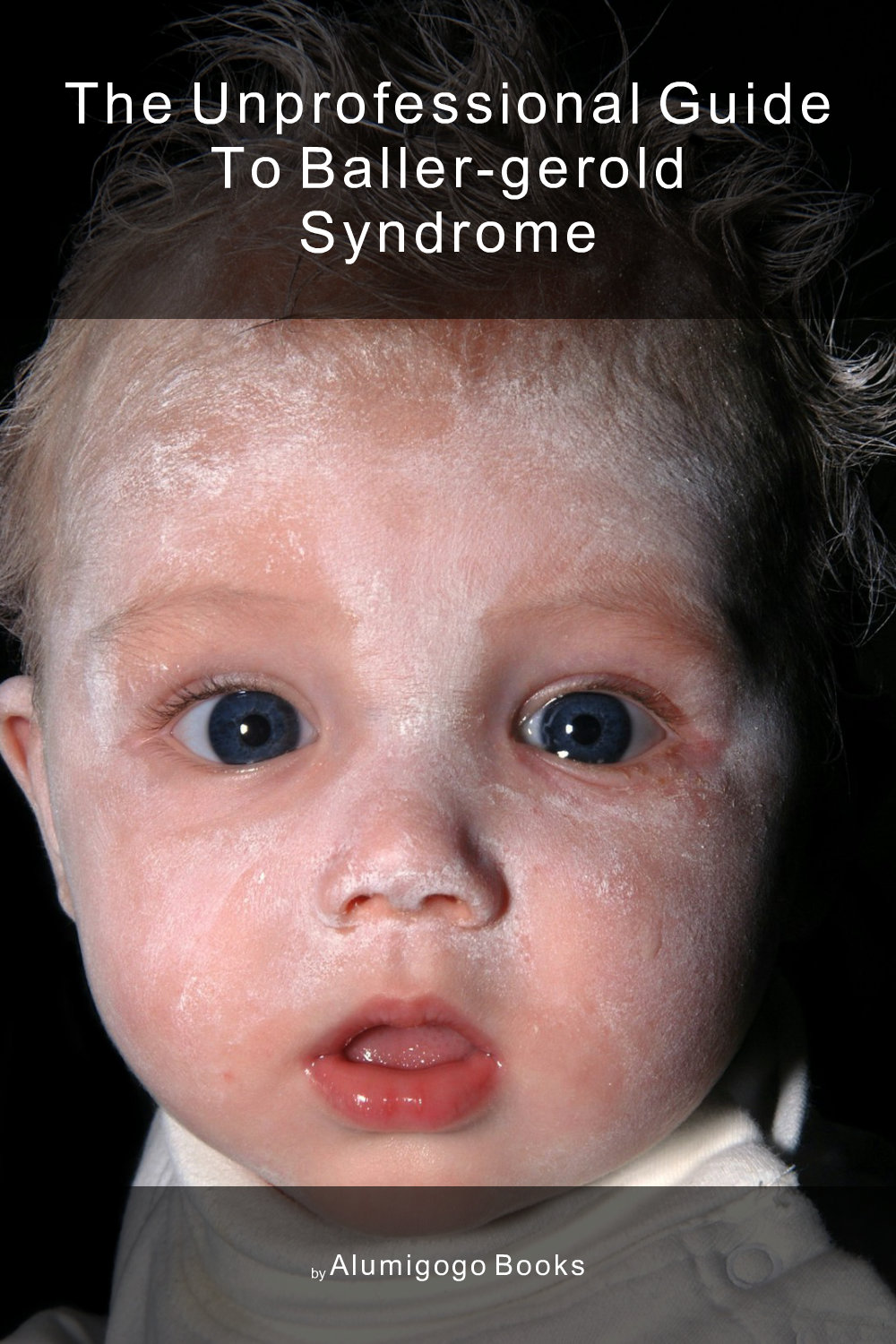
The Unprofessional Guide to Baller-Gerold syndrome
What You Need to Know — A Plain-Language Guide for Patients and Caregivers (For Informational Purposes Only)
★★★★★3.9 · 8 reviewsby Alumigogo Books
non-fiction
You just got a rare diagnosis. Here's what it actually means, what happens next, and how to face it without falling apart.
🔒Secure checkout via Stripe
Labor Day Sale
$9
About this book
When a doctor says "Baller-Gerold syndrome," your brain goes blank. It sounds rare, scary, and completely foreign. This guide is the hand on your shoulder that says: breathe, I've got you. Written in plain, warm, unpretentious language, it walks you through every layer of this genetic condition—from the craniosynostosis (a fancy word for early skull fusion) to the radial ray anomalies (changes in the bones of the arms and hands) that define the syndrome.
You won't find panic-inducing statistics or cold clinical jargon here. Instead, you'll get honest, practical information: what symptoms to expect, which ones are common, which ones are alarming, and how to tell the difference. You'll learn what tests actually look for, how to get a second opinion without offending your doctor, and the exact questions to ask at every stage. There's real advice on daily living, caregiving without burning out, and the emotional weight of a rare disease.
This is not a medical textbook and it is not medical advice. It is a friend who's done the research, a map for the road ahead, and a reminder that a diagnosis is a starting point—not an ending. Whether you're a patient, a parent, or a partner in care, this guide is your first step toward feeling like you understand what's happening and what comes next.
Reader Reviews
Angela Green
★★★★★My sister was diagnosed last month and I sent her this book—then bought my own copy because she wouldn't stop quoting it. It's not a cure, nothing is, but it made us both feel like we had a map instead of just being lost. The honest sections about what's variable and what's common helped us calm down and focus on what matters.
Michael Lee
★★★★★I'll be honest, I almost didn't buy this because I thought it would be either too clinical or too sappy. It's neither. The chapter on why this happened finally made it click for me—I'd been carrying guilt that wasn't mine to carry. The symptom table in chapter 3 is the most useful thing I've read since the diagnosis.
Jacob Johnson
★★★★★This was the first thing that made me feel like I could breathe after my daughter's diagnosis. The tone is exactly right—warm without being fake, informative without being overwhelming. I've read chapter 1 three times already just to feel grounded. The question list for doctors at the end is worth the price alone.
Christopher Ramirez
★★★★★Really grateful for the practical advice. The day-to-day chapter felt like someone finally understood what our mornings look like. I docked one star because I wish there were a couple more specific examples of what physical therapy sessions actually involve, but honestly that's me being picky. The big picture is helpful.
Charles Allen
★★★★★It's a solid guide, and I appreciate that it's honest about the unknowns. I do wish it went a bit deeper into the surgical options for the craniosynostosis—the explanation was clear but I was looking for more detail. Still, for a first read after diagnosis, this is way better than anything my doctor gave me.
Sandra Nguyen
★★★★★As a mom trying to make sense of this for my son, I found the caregiver chapter so validating. The advice on what NOT to say other people are saying things to me all the time, and I didn't realize I could set boundaries. The book doesn't sugarcoat anything, but it also doesn't leave you in a pit of despair. Just feels fair.
Edward Green
★★★★★This is the only resource I've found that talks about Baller-Gerold syndrome like a human being is writing about it. My dad has this condition, and I took notes while reading chapter 6 about daily life. The travel tips especially were things I never would have thought to ask a doctor about. It's not perfect, but it's genuine.
Matthew Jones
★★★★★I'm a skeptical person and I was worried this would be too chatty, like one of those blogs that just repeats optimism. It's actually pretty balanced. Chapter 2 about genetics was the clearest explanation I've gotten anywhere. I only give three stars because I wanted a little more detail on long-term prognosis—it felt a little vague in places. But it's a good starting point.