The Complete Handbook of Tabi Socks
A professional's guide to selecting, using, and maintaining traditional Japanese split-toe footwear
★★★★★4.2 · 6 reviewsby Alumigogo Books
non-fiction
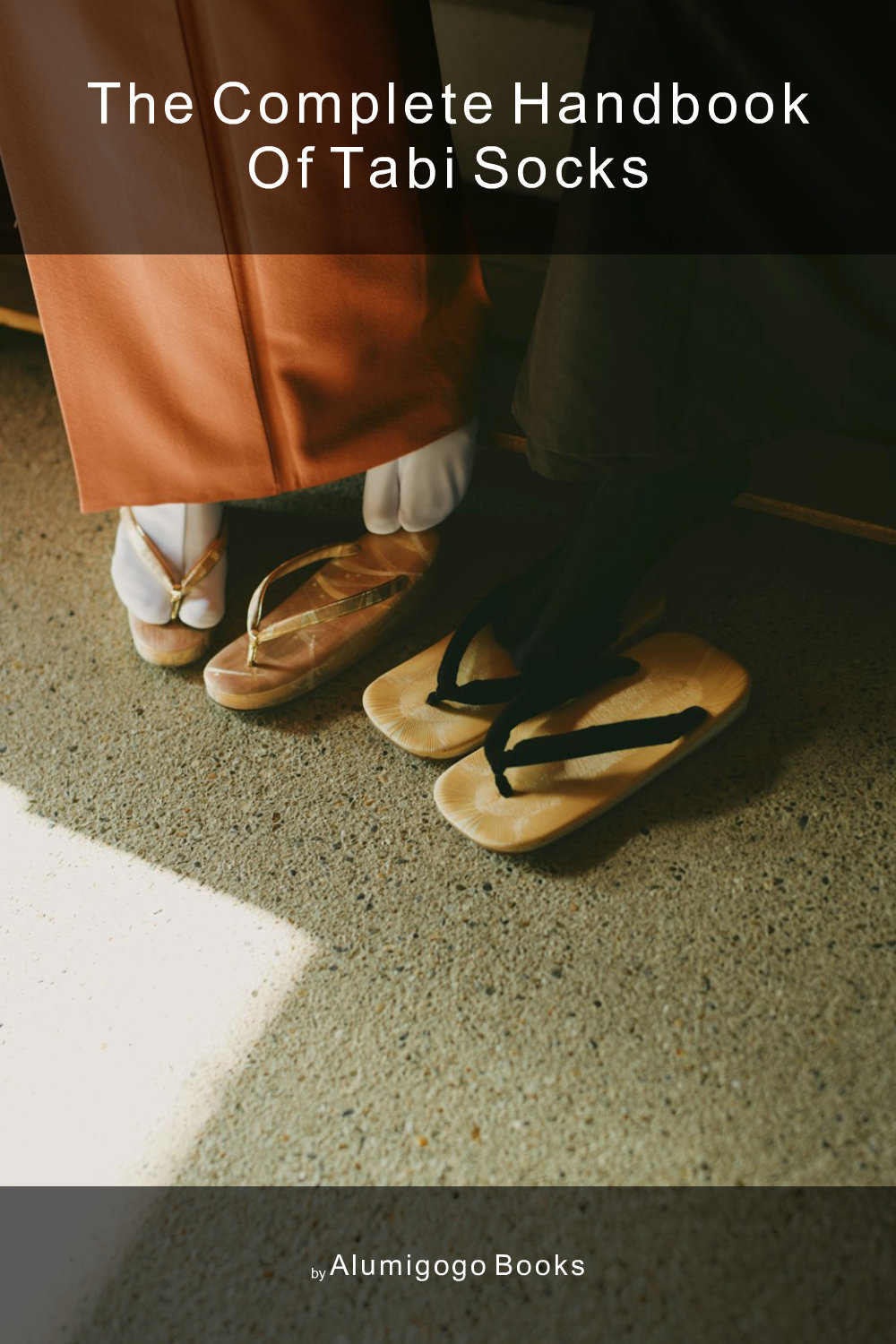
The Complete Handbook of Tabi Socks
A professional's guide to selecting, using, and maintaining traditional Japanese split-toe footwear
★★★★★4.2 · 6 reviewsby Alumigogo Books
non-fiction
From construction to commerce: the professional reference for selecting, using, and maintaining traditional tabi socks.
🔒Secure checkout via Stripe
Labor Day Sale
$9
About this book
From the tea house to the workshop, tabi socks are more than simple footwear; they are precision instruments of comfort, tradition, and function. This handbook provides a comprehensive, practical guide for anyone who needs to work with tabi, not just admire them. It covers the technical specifications that truly matter, from cotton yarn counts and rubber sole durometers to the nuanced differences in cuff construction across various grades of Japanese and international production.
Written for professionals, businesses, and serious hobbyists, this book cuts through the romanticism to deliver actionable knowledge. It offers a systematic approach to choosing the correct tabi for specific applications, detailed instructions for proper wear and care, and solutions for common problems like seam chafing and rubber sole degradation. The book also explores the commercial landscape, outlining realistic business opportunities in retail, rental, and private labeling, and it provides a forward-looking perspective on material science and market trends shaping the future of this classic garment.
Whether you are equipping a restaurant team, developing a new product line, or deepening your understanding of traditional Japanese attire, this handbook is your essential companion. It provides the clear, concrete information needed to make confident decisions and ensures your investment in tabi delivers on its promise of quality, durability, and performance.
Reader Reviews
Elizabeth Allen
★★★★★Finally, a book that treats tabi with the seriousness they deserve. I run a small chain of Japanese-inspired restaurants and I've been guessing at sizing and quality for years, wasting money on bad batches. The decision framework in Chapter 3 alone paid for the book many times over, and the maintenance chapter solved our odor problem permanently. It's my new go-to reference.
Melissa Lewis
★★★★★The content is genuinely thorough, and I respect the lack of fluff. I was hoping for a bit more on the cultural history and the stories behind famous houses, but the author keeps it strictly practical. It reads a bit like a technical manual, which is fine, but I found the brand comparison section in Chapter 6 to be a little thin on emerging international makers. Still, a very useful desk reference for my wholesale business.
Betty Hall
★★★★★As a hobbyist who just wanted to understand my tabi better, this book was a bit of a heavy lift. It's definitely written for a professional buyer or a business owner, not a casual enthusiast. That said, the troubleshooting guide for rubber sole delamination was exactly what I needed, and the sizing charts are the clearest I've seen. I just felt it could have used a few more real-world photos to illustrate the concepts.
Rebecca Martinez
★★★★★This filled a massive knowledge gap for my design studio. We are developing our own line of modern workwear and needed to understand the mechanics of the split toe and the durability of different sole compounds. The technical specs in Chapter 2 and the breakdown of the supply chain were precise, practical, and endlessly useful. I've already copied the glossary for our internal team. Highly recommend.
George Roberts
★★★★★George here. I'm a collector and a bit of a stickler for details. This book isn't glossy coffee-table material; it's dense, factual, and exactly what I needed. The chapter on maintenance is the best I've ever read, with clear instructions on washing and drying that actually preserve the integrity of the cuff. The business chapter was a bonus and gave me a new perspective on the market I hadn't considered. A must-have for anyone serious about traditional attire.
Edward Harris
★★★★★A very solid, well-structured reference. I'm a procurement manager for a hospitality group, and the specs on materials and sizing were exactly what I needed to standardize our staff uniforms. The reviews and comps are fair, and I found the distinction between production grades helpful. The only minor thing I thought it was missing was a quick-reference appendix at the back, but the index is mostly fine. I'll be keeping it on my shelf.