The Complete Handbook of Sewing Machine Feet
The working professional's reference for choosing, fitting, using, and maintaining every sewing machine foot on the market.
★★★★★4.3 · 8 reviewsby Alumigogo Books
non-fiction
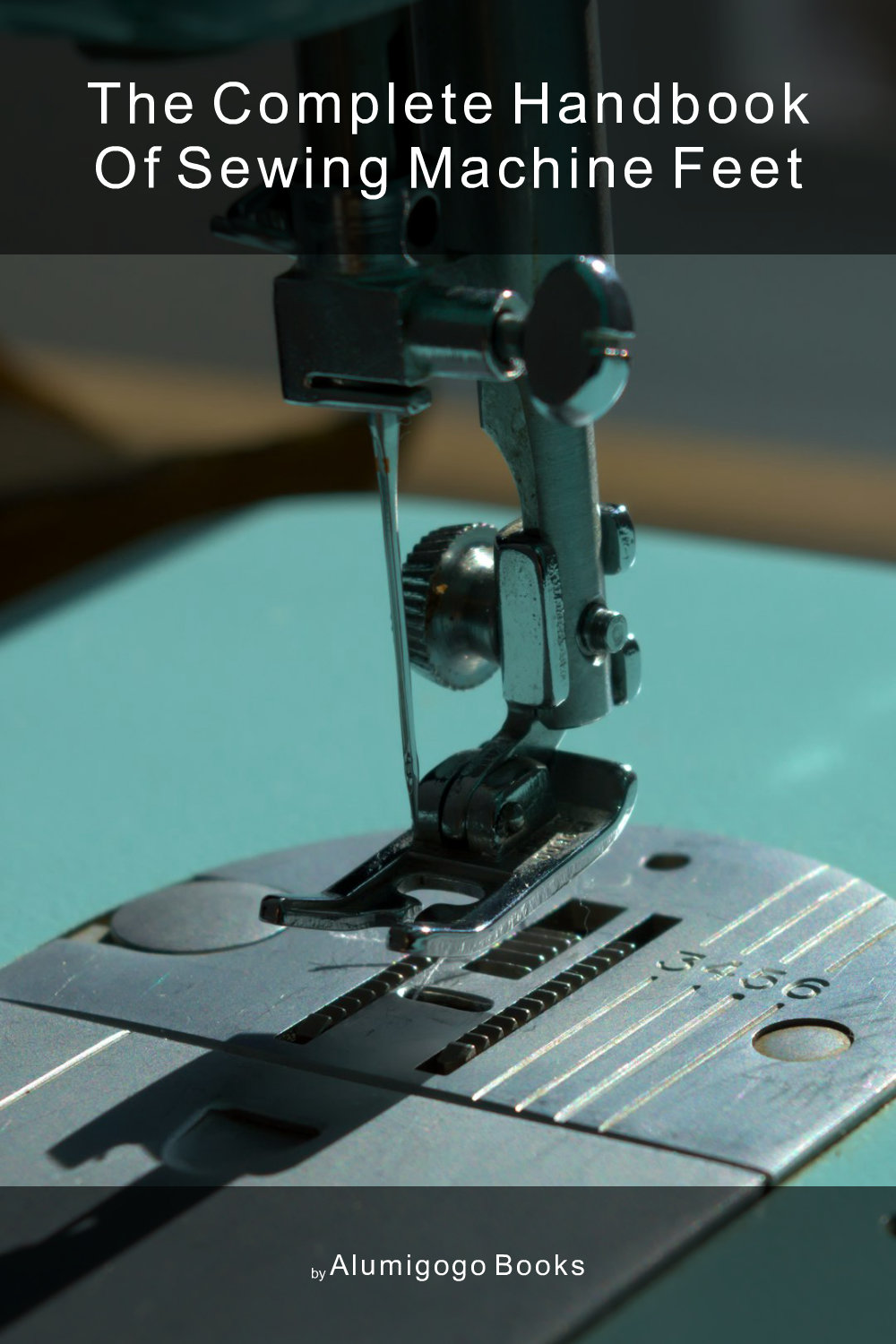
The Complete Handbook of Sewing Machine Feet
The working professional's reference for choosing, fitting, using, and maintaining every sewing machine foot on the market.
★★★★★4.3 · 8 reviewsby Alumigogo Books
non-fiction
The definitive reference for choosing, using, and maintaining sewing machine feet, written for professionals who need practical answers, not marketing.
🔒Secure checkout via Stripe
Labor Day Sale
$9
About this book
Most sewers never use more than the four or five presser feet that arrive in the machine's box. But between a standard presser foot and a professional finish lies a range of specialized feet designed to do one thing well: a piping foot that rides against a cord, a binding foot that folds and feeds bias tape in a single pass, a walking foot that coordinates top and bottom feed to prevent shifting on slippery or thick stacks. This handbook is a complete map of that territory.
Organized by function rather than by brand, the book covers everything from the geometry of a straight-stitch foot to the adjustments required for a teflon-coated foot on leather. It includes a detailed explanation of shank types (low, high, slant, and snap-on), their compatibility charts, and the trade-offs between OEM and aftermarket manufacturing quality. Each chapter moves from selection to installation to daily use, with troubleshooting guides for skipped stitches, uneven feed, and broken needle plates.
Written for tailors, alterationists, quilters, upholsterers, and anyone who runs a sewing machine for a living or for serious craft, this is a reference book meant to sit on the worktable, not the shelf. It covers the business of sourcing, reselling, and servicing feet, looks at how the category is changing with CNC-machined parts and aftermarket manufacturing, and ends with a glossary of terms and a FAQ section. It is the book for people who want to know not just what a foot is called, but why it is shaped the way it is and how to make it work.
Reader Reviews
Michelle Wilson
★★★★★I've been altering suits for eleven years and I still found about a dozen feet in this book I had never properly understood. The chapter on shank types alone saved me from a mis-buy, and the troubleshooting section on uneven feed was spot-on. I docked a star because the installation chapter is a bit dry and I wish it had more photos, but the text is accurate.
Matthew Harris
★★★★★This is the one reference I now keep in my studio, right next to the machine. I do custom upholstery and the section on walking feet and teflon feet is exactly what I needed to justify tool investments to my partner. The glossary is genuinely useful and I have already used the buying framework in chapter three twice. Worth every penny.
Thomas Sanchez
★★★★★A solid manual that does exactly what it says. I appreciate that it treats the reader like a professional and avoids the fluff that clogs most sewing content. The section on OEM versus aftermarket was clear, and the maintenance chapter gave me a checklist I actually use. A bit dense in places and it won't win any awards for excitement, but it's a proper reference.
Nancy Rivera
★★★★★I run a small studio and teach classes on the side, so I've skimmed a lot of sewing books. This is the first one I've found that stands up as an engineering reference rather than a craft essay. The chapter on how the foot interacts with the feed dogs was the clearest explanation I've read. I've already ordered two more copies for my students.
Robert Lee
★★★★★Good, practical coverage of a topic that normally gets one paragraph in a machine manual. I especially liked the concrete examples of what happens when you use the wrong foot on leather versus a fine woven. The reason I gave it four stars instead of five is that the chapter on business opportunities assumes you are already set up as a supplier, which I'm not.
Paul Lewis
★★★★★As a professional quilter, I bought this for the walking foot and free-motion sections, but I read the whole thing in two sittings. The writing is plain and confident, no hype, which I appreciate. Some of the recommendations are geared toward industrial machines, but the adjustments for domestic machines are clearly flagged. A good solid reference.
Linda Johnson
★★★★★The first chapter alone told me more about how a presser foot actually works than every manual I've kept since the 1990s. I ordered a roller foot and a cording foot based on the compatibility charts and both fit my old Bernina perfectly. This is the book to give someone who wants to sew professionally and take their tooling seriously.
Paul Thomas
★★★★★I bought this because I'm tired of buying feet that don't fit my industrial Juki, and the charts in chapter two did clear up the shank height confusion. That said, the book is dense and the writing is about as dry as a parts catalog, which makes it hard to read cover to cover. It's more of a dictionary you pull off the shelf. Fine for reference, but I was expecting a bit more real-world guidance on brands.