The Complete Handbook of Serving Trays
Material selection, structural engineering, and practical service life for professionals, buyers, and serious users.
★★★★★4.3 · 3 reviewsby Alumigogo Books
non-fiction
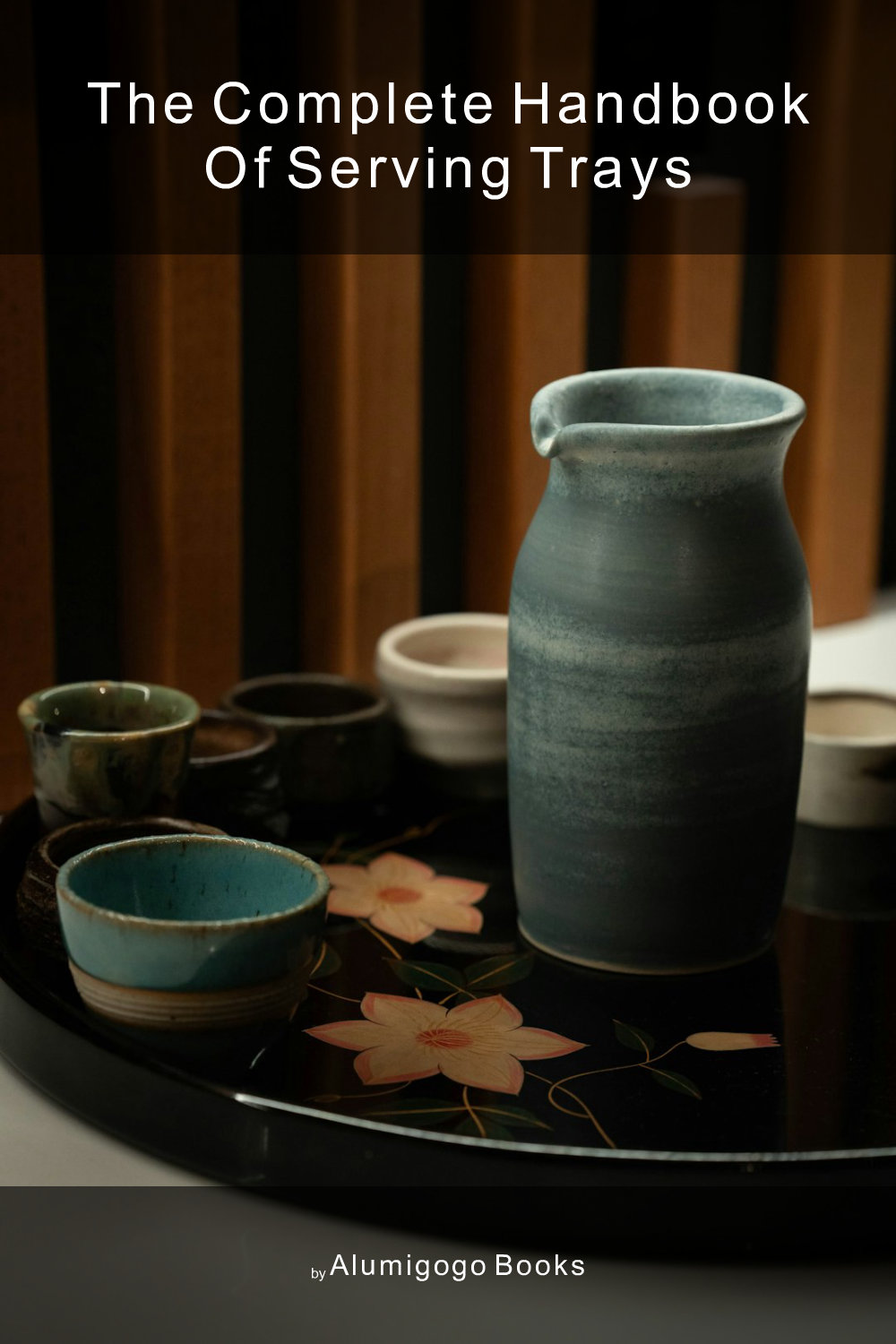
The Complete Handbook of Serving Trays
Material selection, structural engineering, and practical service life for professionals, buyers, and serious users.
★★★★★4.3 · 3 reviewsby Alumigogo Books
non-fiction
An engineering-grade reference on serving trays: materials, load limits, service life, and total cost of ownership.
🔒Secure checkout via Stripe
Labor Day Sale
$9
About this book
Serving trays in commercial and serious home use fail in predictable ways: they warp under heat, delaminate from dish machine chemicals, crack at stress corners, or develop a slippery surface that sends a loaded platter to the floor. Most purchasing decisions are made on looks and price per unit, with no data on the factors that determine whether a tray lasts 200 cycles or 5,000. This handbook replaces guesswork with measurement.
The book covers the full engineering reality of the category: wood grain orientation and its effect on warping, the difference between 18/10 and 201 stainless steel in acidic food service, why polycarbonate trays fail differently than polypropylene ones, how stacking and racking designs change load distribution, and how to set up a wash-line protocol that doubles tray life. It also covers structural repairs, refinishing schedules, and how to calculate true cost-per-service for any tray you are considering.
Written for the person who actually signs the purchase order or uses the tray 300 days a year, it contains no lifestyle photography and no brand fluff. It contains load tables, chemical compatibility notes, service-life benchmarks, and a decision framework you can use the day you read it.
Reader Reviews
Gary Miller
★★★★★I run a catering company and I've bought trays based on what looked sturdy in a catalog. This book changed that. The chapter on load distribution and the cost-per-service math alone saved me from ordering another batch of the cheap melamine ones that kept warping. It reads like a technical manual, which I appreciated, though I did find some sections a bit dense. If you're a professional who actually uses this stuff daily, it's worth the read.
Lisa Smith
★★★★★Good solid reference. I'm a hobbyist woodworker who makes serving boards and trays, and the sections on wood grain orientation and food-safe finishes were genuinely useful - I've already adjusted how I lay out the grain on my larger platters. The maintenance chapter has real substance, not the usual 'wash with mild soap' advice. Only complaint is I wish they'd included a few more photos of the structural defects they describe, but the written descriptions are clear enough.
Stephanie Nelson
★★★★★Finally a book that treats serving trays as serious equipment instead of a decorative afterthought. I'm the purchasing manager for a hotel group and I've bought every type of tray you can name - the comparison of 18/10 stainless vs. 201, the chemical compatibility chart with common dish machine detergents, and the section on why polycarbonate crazes after a year all directly apply to my job. The fault diagnosis tables in chapter 5 are worth the price alone. I've already used the selection framework to replace our banquet tray inventory and I'm ordering copies for our F&B team.