The Complete Handbook of Pretend Housekeeping
The Professional's Guide to Toy Vacuum Cleaners, Play Kitchens, and Every Other Imitation Appliance
★★★★★4.6 · 7 reviewsby Alumigogo Books
non-fiction
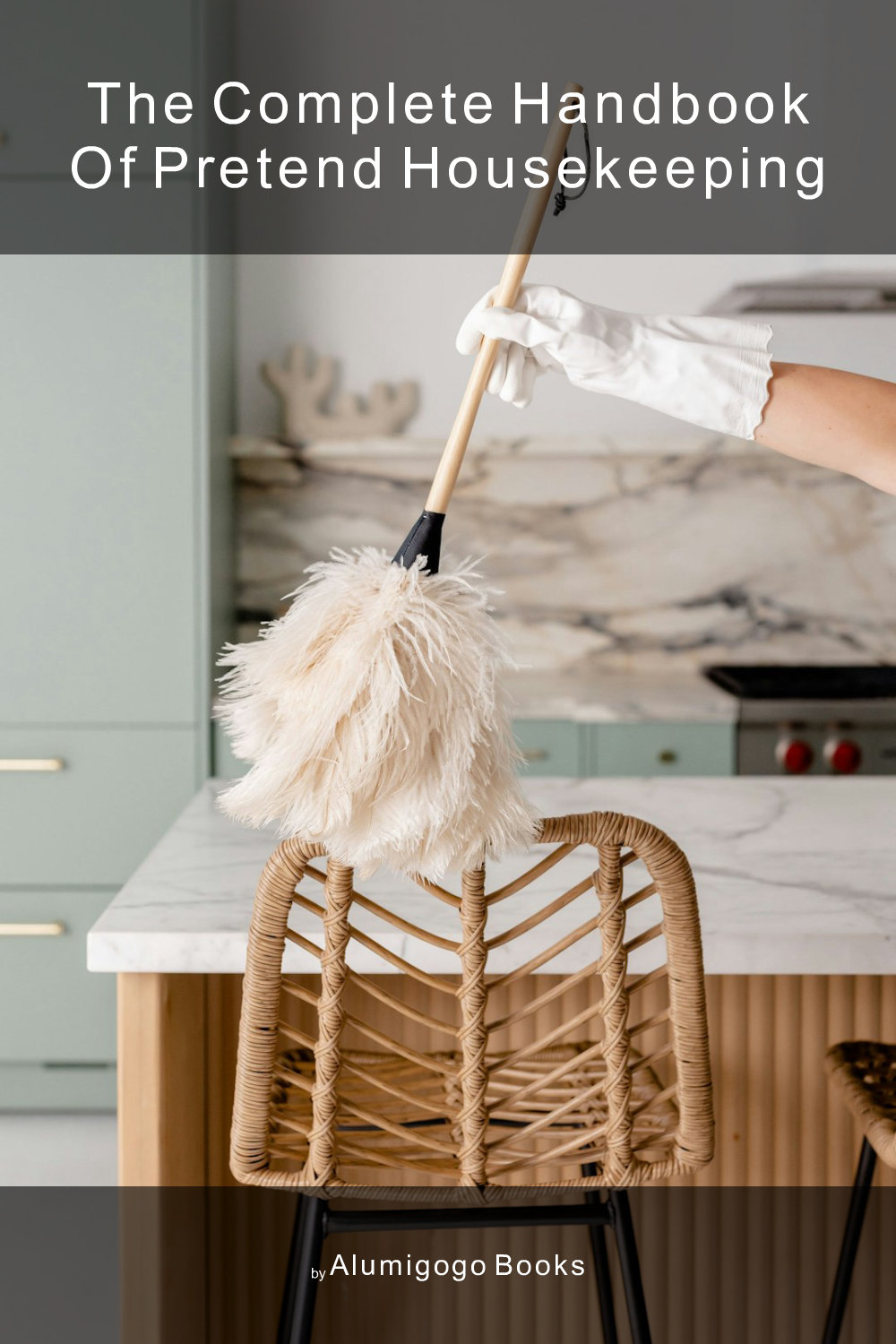
The Complete Handbook of Pretend Housekeeping
The Professional's Guide to Toy Vacuum Cleaners, Play Kitchens, and Every Other Imitation Appliance
★★★★★4.6 · 7 reviewsby Alumigogo Books
non-fiction
A practical reference for selecting, maintaining, and selling pretend housekeeping toys, based on real materials, standards, and play science.
🔒Secure checkout via Stripe
Labor Day Sale
$9
About this book
The toy vacuum cleaner you sell to a preschool is not the same as the one you buy for a toddler's birthday. Material differences affect durability and safety. Play-value differences affect how long a child stays engaged. And business differences affect whether you make a margin or take a loss. The Complete Handbook of Pretend Housekeeping is the first reference to address all of these factors in one place, without the hype.
Written for buyers, operators, and sellers, the book walks through the anatomy of these toys, from the injection-molded ABS of a play kitchen to the fiberboard construction of a pretend ironing board. It covers the ASTM and EN safety standards that govern them, the maintenance problems that appear after six months of classroom use, and the pricing structures that determine whether a private-label venture is viable. Each chapter ends in a framework you can apply to your own work, not a recommendation to buy a specific brand.
This is not a gift guide. It is a professional handbook. It is meant for the procurement manager who needs a comparison matrix, the store owner who cannot afford a returns disaster, and the collector who wants to understand why a 1980s metal stove is worth more than a 2010s plastic one.
Reader Reviews
Thomas Garcia
★★★★★I run the toy section for a regional chain and this is the first reference that treats the category like a real product class instead of a seasonal impulse buy. The chapter on construction materials alone saved me from a bad order of fiberboard play stoves that would have disintegrated in our humidity. The maintenance chapter is now laminated and hung in our back office.
Rebecca Gonzalez
★★★★★Solid resource, and I've already used the comparison framework to justify a different supplier for our daycare's pretend cleaning set. I knocked off one star because the chapter on installation spent a lot of time on wall anchoring, which is not relevant for our portable play corner. Otherwise, the troubleshooting section on toy vacuums was exactly right.
Edward Sanchez
★★★★★I've been buying and selling pretend kitchens on auction sites for years, and I wish this had existed when I started. The glossary alone is worth the price, because knowing the difference between a dowel-pin joint and a cam-lock joint has saved me on two restorations. This reads like an engineering manual, which I mean as a compliment.
George Clark
★★★★★As a museum curator for a children's exhibit floor, I need toys that survive five hundred interactions a week. The chapter on real-world context validated everything I've learned the hard way, and the maintenance section gave me a schedule for checking drawer slides and hinge screws that we actually use now. It's the only handbook on my shelf that doesn't assume the user is a parent with a single child.
Timothy Flores
★★★★★Good, dense read. I appreciate that it doesn't do the 'top 10 toys' fluff you see everywhere. The business chapter on private-labeling was useful but could have gone deeper into import logistics. The safety standards comparison between ASTM and EN was very clear, and I felt better prepared for my next trade show after reading it.
Laura Carter
★★★★★This is the reference book I didn't know my play-space consultancy needed. I've used the decision framework in chapter three three times already to help clients choose between a cheap play kitchen for a water-adjacent sensory area versus a more expensive one for the main room. The note about BPA-free plastic versus ABS in the glossary section cleared up a recurring client question. Excellent, practical writing.
Margaret Smith
★★★★★A thorough and honestly written handbook. The focus on real specifications and failure modes is great. I gave it four stars because the chapter on future trends seemed a bit speculative compared to the rest of the book, and I wanted more hard data on market share. Still, I've already recommended it to two other preschool directors.