The Complete Handbook of Pottery & Sculpting Materials
Essential Knowledge for Professionals, Businesses, and Serious Hobbyists
★★★★★4.0 · 8 reviewsby Alumigogo Books
non-fiction
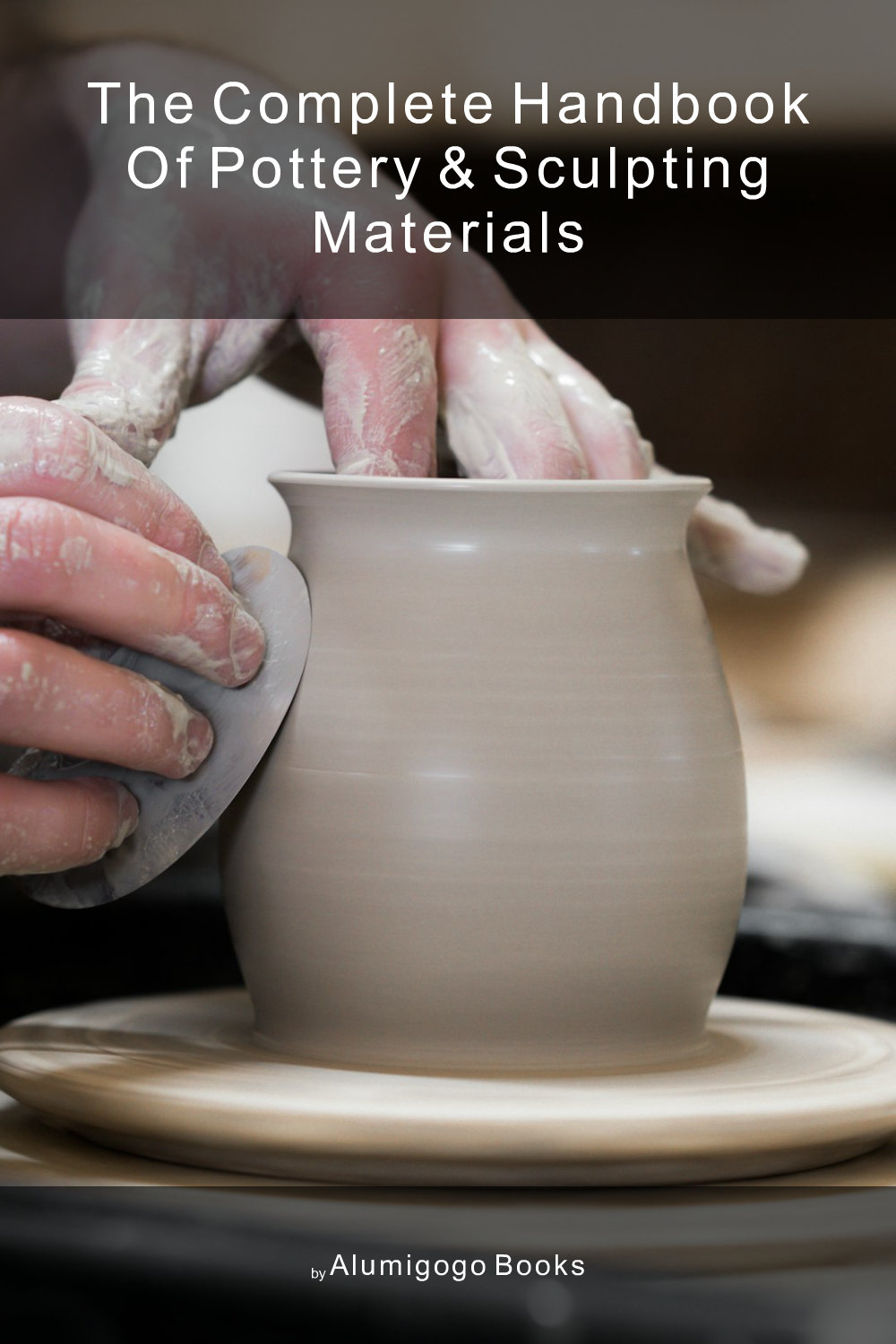
The Complete Handbook of Pottery & Sculpting Materials
Essential Knowledge for Professionals, Businesses, and Serious Hobbyists
★★★★★4.0 · 8 reviewsby Alumigogo Books
non-fiction
Master pottery and sculpting materials from composition to troubleshooting. A professional reference for artists, educators, and makers who demand real knowledge.
🔒Secure checkout via Stripe
Labor Day Sale
$9
About this book
The Complete Handbook of Pottery & Sculpting Materials
Pottery and sculpting materials are engineered products, not raw earth. Their performance depends on mineral composition, particle size distribution, moisture content, firing temperature, and dozens of other measurable variables—most of which are invisible to the casual user but critical to professionals.
This handbook teaches you to work with pottery and sculpting materials as a practitioner, not a hobbyist. You'll learn to read technical specifications, understand how clay bodies and glazes actually work, select materials for specific applications (architectural, functional, sculptural, high-fire, low-fire), diagnose firing failures and material defects, and evaluate suppliers on criteria that actually matter. Whether you're a ceramicist scaling production, an art educator choosing studio materials, a business owner managing material costs, or a serious hobbyist tired of guesswork, this book covers what you need to know.
Based on material science, industry standards, and real-world studio and production experience, The Complete Handbook of Pottery & Sculpting Materials is a reference you'll return to constantly—not marketing material, not beginner instructions, but the practical knowledge professionals rely on.
Reader Reviews
Ashley Perez
★★★★★Finally, a book that treats clay and sculpting materials like the engineered products they actually are. I've been throwing and hand-building for years, but I never understood why certain clay bodies cracked or why my glazes behaved differently at different firing temperatures until I read Chapter 1. The material science explanation made everything click. Highly recommend for anyone serious about their craft.
Timothy Young
★★★★★The technical content is solid and exactly what I needed for sourcing materials for our pottery studio. My main issue is that some sections assume you already know kiln basics—if you're completely new to firing, you might need to supplement with other resources. Still, the specification and troubleshooting sections are worth the price alone.
Nancy Wright
★★★★★I'm a ceramic artist who's been scaling my business, and this handbook solved real problems I was facing with material inconsistency and supplier reliability. The chapter on choosing materials based on firing temperature and intended use is exactly what I've been looking for. Clear, practical, and written for people who actually work with clay. A reference I'll use constantly.
Jonathan Carter
★★★★★As an art educator managing a studio budget, I needed to understand what I was actually buying and why materials cost differently. This book explains the 'why' behind specifications in a way that's clear without being condescending. The troubleshooting chapter alone has paid for itself in avoided kiln disasters.
Paul Martinez
★★★★★Good reference material, but some of the technical sections on material composition go deeper than I needed. I'm a hobbyist, not a materials scientist, and while the knowledge is accurate, I felt like I was reading more than I required. That said, it's thorough, and if you want to truly understand your materials, you'll get value here.
Christopher Thomas
★★★★★Solid handbook with useful information, but I wish there were more visual aids—diagrams of kiln loading, cross-sections of clay bodies, that kind of thing. The prose is clear, but in technical material like this, a diagram would sometimes save pages of explanation. Good reference, but could be more accessible to visual learners.
Margaret Wright
★★★★★This is exactly what I needed when I started consulting with small pottery studios on material selection and kiln efficiency. The framework in Chapter 3 for choosing materials based on specific applications is practical and immediately usable. My only minor note is that some supplier information could be more current, but the principles don't change. Excellent resource.
Michael Ramirez
★★★★★A thorough reference that explains the science without overselling. I appreciated the focus on real-world problems like storage, moisture management, and firing consistency—not just theory. The troubleshooting section saved me from wasting materials on a batch of clay that was too wet. Highly practical for anyone managing materials at any scale.