The Complete Handbook of Pot Racks
A practical reference for kitchen professionals, designers, and serious home cooks on selecting, installing, and maintaining pot racks
★★★★★4.0 · 5 reviewsby Alumigogo Books
non-fiction
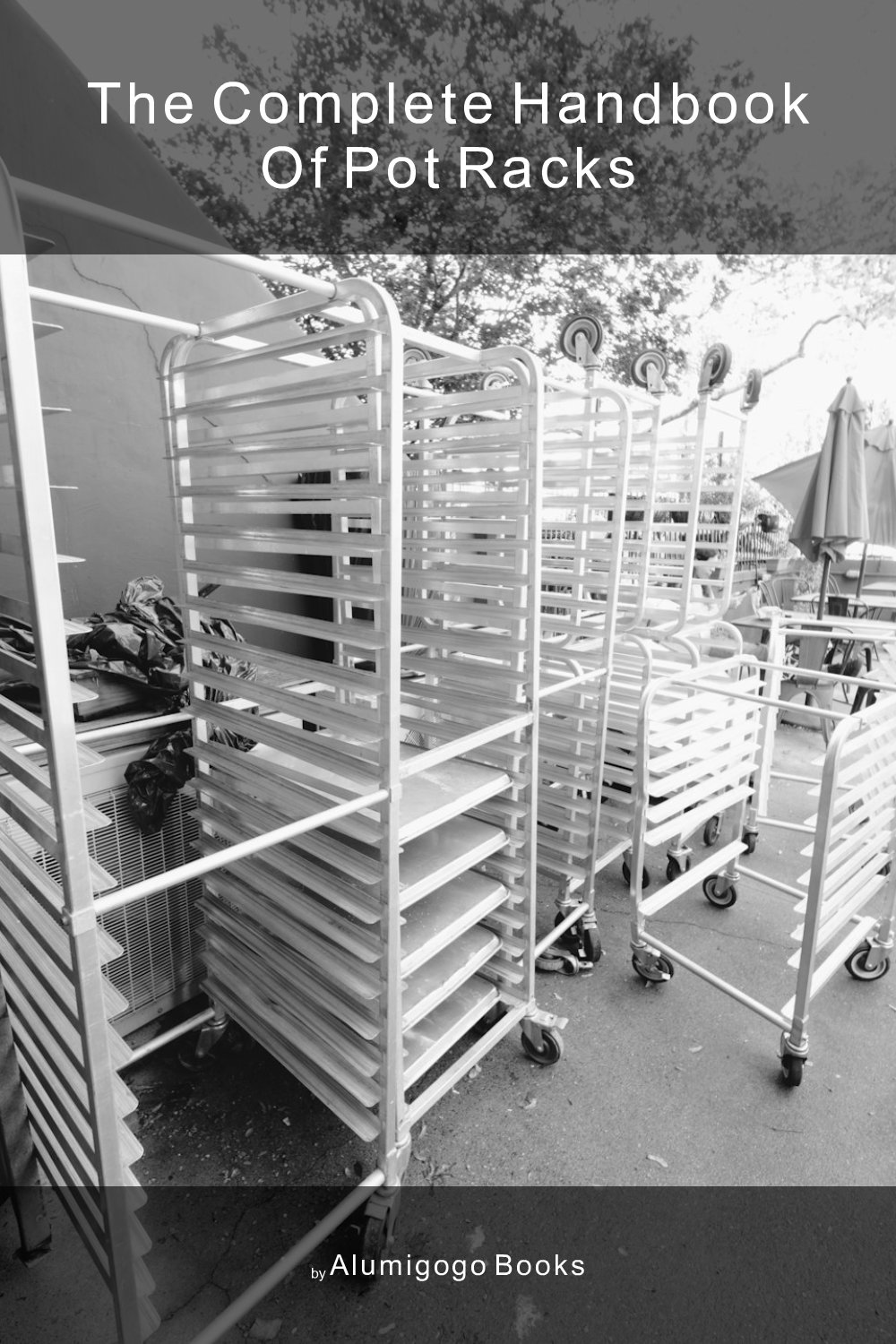
The Complete Handbook of Pot Racks
A practical reference for kitchen professionals, designers, and serious home cooks on selecting, installing, and maintaining pot racks
★★★★★4.0 · 5 reviewsby Alumigogo Books
non-fiction
The definitive reference on pot racks: types, load capacities, installation, and maintenance. For professionals and hobbyists who demand facts, not hype.
🔒Secure checkout via Stripe
Labor Day Sale
$9
About this book
Most pot rack advice is either a thin sales pitch or a forum argument. 'The Complete Handbook of Pot Racks' is different. It is a dense, fact-checked reference that treats a pot rack as what it really is: an engineered ceiling- or wall-mounted structure that must safely hold significant dynamic and static loads. The book walks you through real-world selection criteria—ceiling construction, stud spacing, cookware weight, and kitchen traffic patterns—with specific figures and practical examples you can verify yourself. If you are deciding between a ceiling-mounted island rack and a wall-mounted rail system for a 12-foot work line, or retrofitting a rack into a home kitchen with exposed joists, this book gives you a decision-making framework, not a shopping list.
The handbook also covers the full lifecycle of the product: installation methods for drywall, plaster, wood joists, and concrete slabs; daily use protocols; maintenance for steel, brass, copper, and wood finishes; and a troubleshooting section for sagging, racking, and premature finish failure. It does not stop at the consumer level. Dedicated chapters analyze the manufacturer landscape, from budget Chinese-import brands to premium European custom fabricators, and outline concrete business models—private labeling, installation services, rack renovation, and restaurant supply—for a reader who wants to operate in this space commercially.
With nine tightly written chapters, a practical glossary, and concrete technical data throughout, 'The Complete Handbook of Pot Racks' is meant to be dog-eared, consulted on the job, and trusted. It replaces hours of contradictory online research with a single authoritative resource.
Reader Reviews
David Anderson
★★★★★It's thorough, I'll give it that. The chapter on ceiling construction and anchoring alone is worth the price if you're DIY-ing. But I found some of the maintenance advice a bit conservative, like acting like you need to wax your rack every month. It read a little like a textbook in parts, so I skimmed some sections. Decent reference, not a page-turner.
Anthony Jones
★★★★★I've been running a kitchen supply and installation business for eight years, and I wish this existed when I started. The chapter on types and specifications is spot on—it correctly explains why a 14-gauge steel rack from a Chinese importer is not the same value as a 12-gauge from a domestic shop, even if they look identical in a photo. The installation section saved me hours on a tricky joist layout. I've ordered five more for my crew.
George Wright
★★★★★A really solid reference with a lot more technical detail than I expected. I'm a home cook who just wanted to mount a rack over my island, and this didn't just give me a steps list—it explained how to assess my load based on my actual pans. The writing is dry and very practical, which is what I wanted. My only gripe is the business chapter felt a bit out of place for a home user, but it wasn't hard to skip.
Matthew Flores
★★★★★Helpful, but I felt the tone was a little condescending at times. Like, I understand that a pot rack should be installed into a stud, but the book spent paragraphs beating that drum. The chapter on troubleshooting was useful, though. I had a squeaky ceiling mount and the section on loose set screws fixed it right away. It's a fine guide, but I think a lot of it is common sense if you're at all handy.
Susan Miller
★★★★★I am the person who will spend two weeks researching a pot rack, and this saved me at least that. Chapter one got me hooked—it treats the subject with total respect, breaking down the physics of a swinging load and why static capacity ratings are just the start of the equation. I built my own line over the range using their design principles and it's rock solid. The glossary is a nice touch, too. This is now my go-to answer when friends ask for home-improvement references.