The Complete Handbook of Pies & Tarts
A Practical Reference for Professional Bakers, Food Businesses, and Serious Enthusiasts
★★★★★3.9 · 8 reviewsby Alumigogo Books
non-fiction
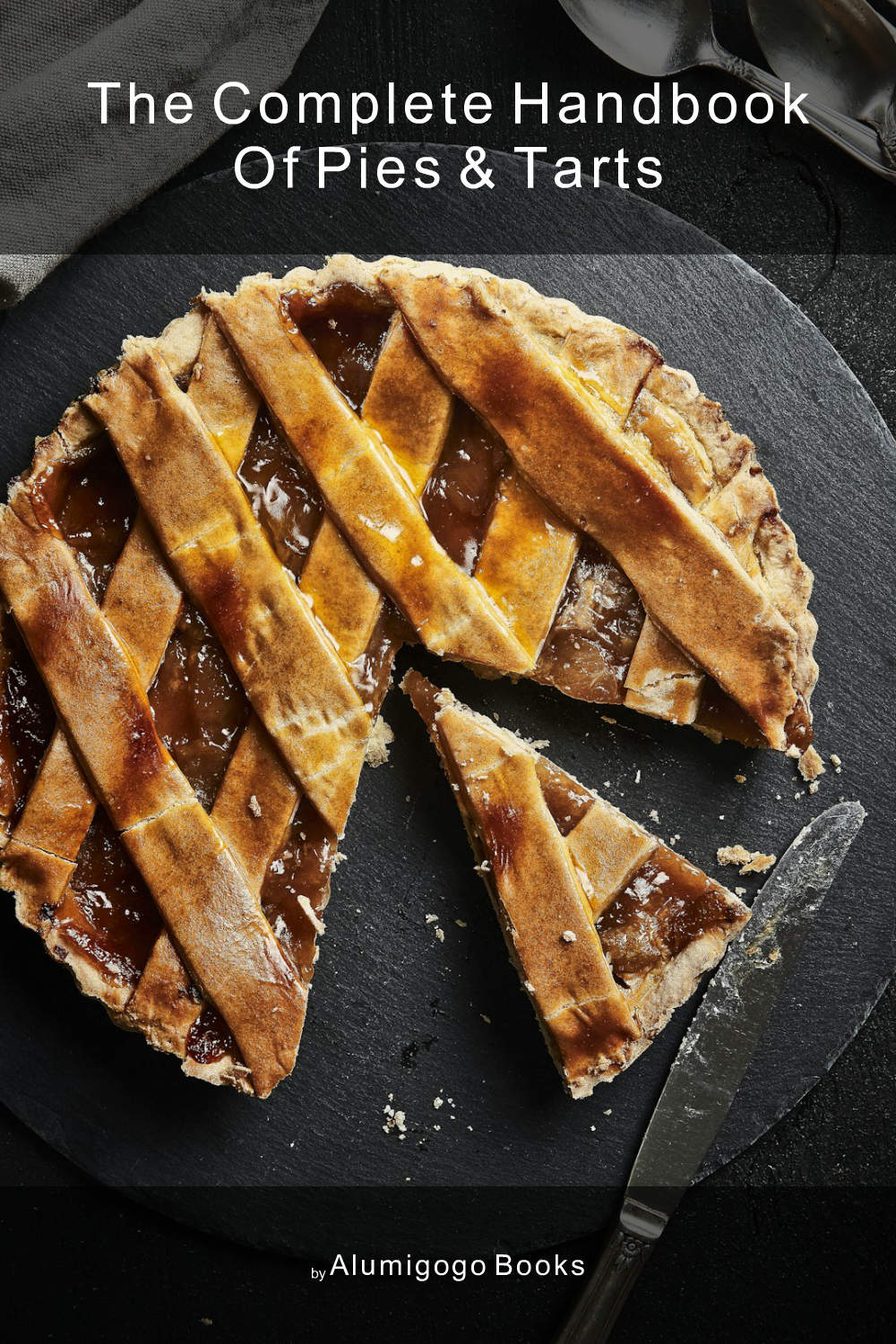
The Complete Handbook of Pies & Tarts
A Practical Reference for Professional Bakers, Food Businesses, and Serious Enthusiasts
★★★★★3.9 · 8 reviewsby Alumigogo Books
non-fiction
Master the science, the craft, and the business of pies and tarts. A practical reference for anyone who takes baking seriously.
🔒Secure checkout via Stripe
Labor Day Sale
$9
About this book
For too long, the world of pies and tarts has been divided between recipe collections that ignore the 'why' and industrial manuals that ignore the craft. This handbook fills that void. From the molecular behavior of gluten and starch to the practical economics of a wholesale pie business, this is a deep-dive into the entire category. It explains how different fats, flours, and hydration levels create different crumb structures, and why a 4-inch tart ring behaves differently than a 9-inch pie plate in a convection oven. It provides the specifications that matter, like butterfat content, dough temperature targets, and relative humidity for storage, and it gives you the tools to make informed choices for your own operation.
The book is organized for real-world use. The opening chapter lays out the foundational science and market context, while subsequent chapters guide you through equipment selection, installation, and maintenance. A dedicated troubleshooting section addresses common failures like soggy bottoms, shrinking crusts, and weeping meringues with concrete, root-cause solutions. Later, the text shifts to a business focus, analyzing supply chains, pricing strategies, and private-labeling opportunities. It also looks forward to emerging trends like alternative flours, automation, and sustainability pressures.
Whether you are outfitting a new bakery, professionalizing your home kitchen, or looking to start a specialized tart business, this handbook is designed to be your primary reference. It is a manual meant to be used, not just read, and it is grounded in the practical realities of working with these deceptively simple, endlessly complex baked goods.
Reader Reviews
Betty Wilson
★★★★★I bought this hoping for a few solid recipes, and it is definitely not that. It's a full textbook on pie-making science and business, which is fine, but I wasn't prepared for how dense it was. The troubleshooting chapter alone is worth the price, but I feel like I'm reading a manual for a commercial kitchen when I just have a home bakery setup. It's a bit much for the casual pro, but I can see how a larger operation would find it indispensable. I'll keep it on the shelf for reference, though I won't read it cover to cover.
Michelle Carter
★★★★★This is the book I wish I had when I opened my bakery. We wasted months and money on trial and error with dough temperatures and blind-baking methods that this book explains clearly in the first few chapters. The chapter on specifications is a goldmine - I finally understand the 'why' behind the butterfat content and different lamination techniques. The business angles were a bonus I didn't expect, and the maintenance schedules have already become part of our weekly routine. It's dense, but every page is useful. I've already recommended it to two other bakers in the area.
Ryan Garcia
★★★★★I write food content for a living, so I'm used to reading practical guides, but this felt a little too much like a dry textbook. The science is accurate, but the prose could use more life. That said, the info is solid. The section on why a tart ring is better than a fluted pan for certain applications was eye-opening, and I've changed my testing methods because of it. It's not a light read, but it's a thorough one. If you're a very serious home baker, this is great. If you're just making an apple crisp, you'll be lost.
Jeffrey Lopez
★★★★★I appreciate a reference work that doesn't talk down to you. I've been in the food business for about 15 years, mostly on the cooking side, but I've moved into pastry. This handbook gave me the grounding I was missing. The comps are spot on, and the way they break down the different fat-to-flour ratios is incredibly helpful for adapting recipes to different environments. My only real gripe is the lack of illustrative photos or diagrams - I'm a visual learner, and some of the lamination steps are easier to see than read. Otherwise, it's a genuinely useful professional tool.
Sandra Smith
★★★★★The back cover says it's for 'serious' bakers, and it means it. I'm a professional in a high-volume kitchen, so the chapter on maintenance and troubleshooting was a massive help. We had a recurring issue with our meringue weeping, and the root cause breakdown in chapter 5 sorted it out. The business section is clearly written by someone who knows the wholesale market, not just the craft. My reservation is that it might alienate a more casual baker who isn't ready for the technical specs. It's not a fun book; it's a work manual. That's what I wanted, though.
Rebecca Torres
★★★★★Every time I take on a new product category, I look for a definitive manual, and this is it for pies and tarts. I appreciate how the authors avoided fluff and got straight to the practicalities, like how different ovens create variable hot spots that affect your crust. The practical examples are concrete and immediately applicable. I was particularly impressed with the chapter on business opportunities - it gave me a realistic model for a private-label tart business that I'm currently exploring. A serious, no-nonsense reference that has earned a permanent spot on my desk.
Eric Jackson
★★★★★I'll start by saying I'm not the target audience, and I know that now. I'm a hobbyist who was hoping for a chapter on troubleshooting, and I got that, but I had to wade through a lot of industrial equipment talk to find it. The formatting is clean, but I think it's better suited for a commercial kitchen than my home. The info about different pan materials and thicknesses was useful, but the maintenance schedules for a spiral mixer are not something I'll ever use. It's a smart book with a clear purpose, just not a broad one. I'll recommend it to my friend who runs a pie truck, though.
Christopher Roberts
★★★★★Finally, a book that treats pie-making like the engineering challenge it is. I'm a pastry chef, and I've been frustrated by books that just say 'use cold butter' without explaining the physics. This book explains the thermodynamics and the lubrication mechanics, which means I can now adapt my recipes to different climates and equipment without guesswork. The chapter on specifications is the most useful thing I've read in years, and the gluten management section is worth the entire price. It's a dense yet incredibly rewarding read. This is the reference manual I'll be handing to my new junior bakers.