The Complete Handbook of Microscope Accessories
Selection, Installation, Maintenance, and Business Strategies for Professionals, Labs, and Serious Hobbyists
★★★★★4.0 · 6 reviewsby Alumigogo Books
non-fiction
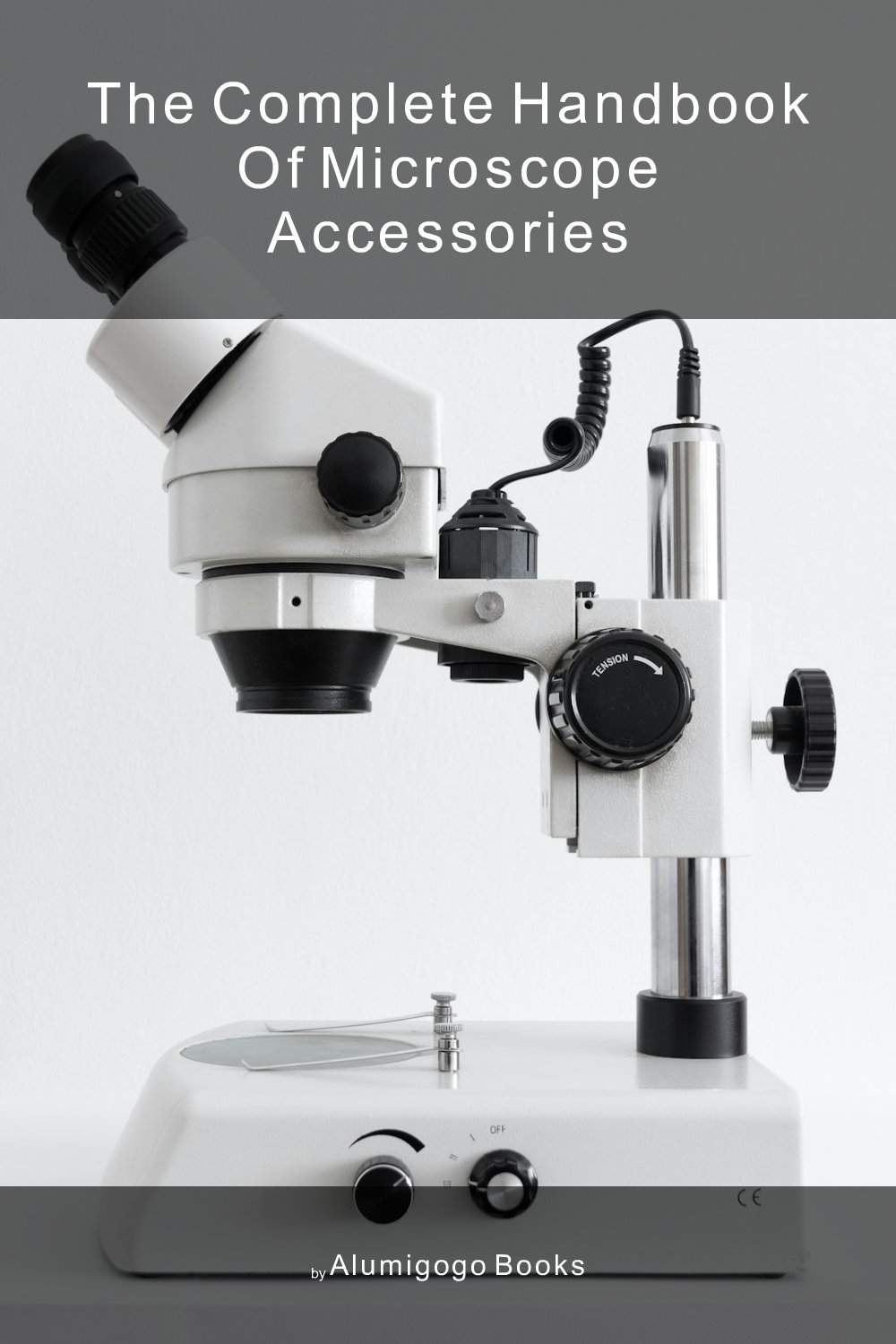
The Complete Handbook of Microscope Accessories
Selection, Installation, Maintenance, and Business Strategies for Professionals, Labs, and Serious Hobbyists
★★★★★4.0 · 6 reviewsby Alumigogo Books
non-fiction
A practical reference for buying, using, maintaining, and profiting from microscope accessories. No hype, no fluff.
🔒Secure checkout via Stripe
Labor Day Sale
$9
About this book
Microscope accessories are often the difference between a good image and a publishable one, between a routine check and a breakthrough observation. Yet the market is flooded with incompatible parts, vague specifications, and contradictory advice. This handbook is a neutral, thoroughly practical guide that walks you through every major accessory category, from high-numerical-aperture objectives and specialized condensers to digital cameras and motorized stages.
Built for professionals, businesses, and serious hobbyists, the book explains how each accessory works in real-world terms, what specifications actually matter, and how to avoid the pitfalls of mixing brands and generations. The chapters cover selection strategies, installation and alignment, routine maintenance, and troubleshooting. It also dedicates a full section to market opportunities, helping readers assess whether reselling, servicing, or private-labeling is a viable avenue for their skills and capital.
Written in an objective, instructional style, this is not a marketing piece. It is a working reference manual. The goal is to make you a smarter buyer, a more competent operator, and, if you choose, a more successful businessperson in the laboratory equipment space.
Reader Reviews
Amy Gonzalez
★★★★★I picked this up looking for a solid overview of camera adapters, and it delivered. The compatibility section is genuinely useful, and the chapter on maintenance convinced me to change how I store my objectives. My only complaint is that the troubleshooting section could have gone a little deeper on digital imaging software issues, but that's a minor point in an otherwise solid reference.
John Roberts
★★★★★This is the book I wish I had five years ago when I first started outfitting my home lab. It is painfully practical. The business opportunities chapter convinced me to start servicing and cleaning objectives for local universities, which has become a nice side income. I've already bought two copies, one for the bench and one for my desk. Highly recommended for anyone serious about microscopy.
Susan Green
★★★★★A very useful handbook for someone like me who manages a small QA lab. The selection criteria are laid out clearly, which helped a lot when I had to justify a new camera system to my boss. I docked one star because I feel the installation chapter is a bit too conservative and assumes the reader has very little mechanical skill, but overall, it is a reliable source of information.
Timothy Lee
★★★★★It does exactly what it says: no nonsense, straight to the point. I especially appreciated the practical examples scattered throughout the first few chapters. The section on differentiating between research-grade and budget optics is worth the price of the book alone for anyone dealing with procurement. The online formatting of the sample chapter was clean, and the glossary is a nice quick reference.
Nancy Baker
★★★★★I was hoping for more detail on specific brands and exact model numbers, but it stays more general. The maintenance chapter is fine, but I feel that some of the troubleshooting tips are obvious to anyone who has worked with scopes for a while. That being said, the business chapter really got me thinking, and I found the market analysis to be a surprising and interesting read, so it's not a total miss.
Jeffrey Hernandez
★★★★★This is a great reference to keep next to the bench. The chapters on matching numerical aperture and the real-world implications of working distance are exactly what I needed to optimize my current setup. It reads like a manual and not a blog post, which I appreciate. The reviews from other readers who wanted brand specifics are missing the point; this book sets you up to know what to look for, whatever the brand.