The Complete Handbook of Laboratory Flasks
A Professional's Field Guide to Selection, Use, and Care
★★★★★4.0 · 4 reviewsby Alumigogo Books
non-fiction
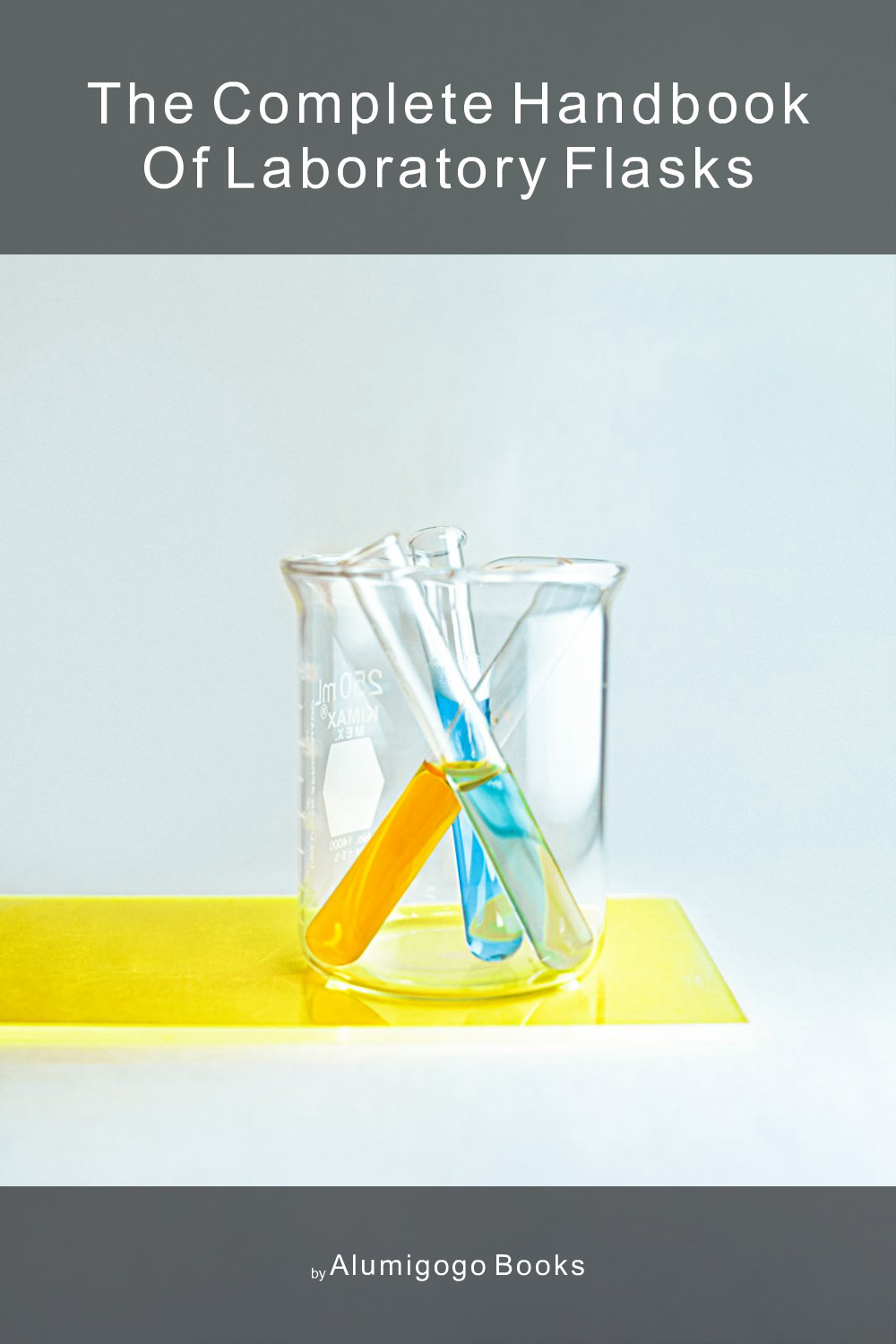
The Complete Handbook of Laboratory Flasks
A Professional's Field Guide to Selection, Use, and Care
★★★★★4.0 · 4 reviewsby Alumigogo Books
non-fiction
An engineer's manual for buying, using, and maintaining laboratory flasks — free of jargon, steeped in practical trade knowledge.
🔒Secure checkout via Stripe
Labor Day Sale
$9
About this book
The Complete Handbook of Laboratory Flasks is the definitive practical reference for anyone who selects, operates, or maintains these foundational pieces of scientific glassware. Unlike manufacturer brochures that only highlight new products, this handbook offers a neutral, standards-based framework for understanding exactly what a flask is supposed to do in a given thermal or pressure environment. You will learn how borosilicate glass differs from fused quartz and why that distinction matters when you perform a routine evaporation, and you will learn which volumetric class (Class A vs. Class B) is legally defensible in a regulated QC laboratory versus acceptable for a teaching environment. The book covers the full cycle of ownership: from sourcing and inspection of raw glassware, to secure clamping in a reflux setup, through rigorous cleaning and safe storage, to the diagnosis of spontaneous breakage or cloudy anneal defects.
The handbook also covers commercial realities that are often ignored in laboratory textbooks. For procurement agents and lab managers, it explains the tolerances you can expect from budget brands, where the hidden quality risks are, and how to rationalize a glassware budget across a large team. For entrepreneurial readers, it includes a dedicated chapter that identifies concrete markets: from niche reselling of used Schott and Pyrex ware, to private labeling for educational supply companies, to specialized cleaning and quartz repair services that in-house lab staff lack the time to perform. Written in a neutral, instructional tone, this book avoids hype and focuses on durable, transferable knowledge that remains valid through catalog changes and vendor mergers.
Reader Reviews
Michael Taylor
★★★★★I'm a QC chemist and immediately appreciated that this book actually distinguishes between Class A and Class B glassware in a way that's binding and intelligible—the last chapter on standards bodies and calibration traceability saved me from a very expensive error. The chapter on troubleshooting ground-joint seizures is spot on; the 'cool, then warm-and-tap' method fixed a stubborn joint I'd been fighting for months. Only reason for 4 stars: I wish the section on cleaning protocols included a quick-reference chemical compatibility table for the specific cleaners they recommend, instead of making me cross-check another source. Otherwise, this is the reference I'm keeping at the bench.
Andrew Wilson
★★★★★The chapter on business opportunities is the single most useful thing I've read this year. I run a small lab equipment resale shop, and their breakdown of the three tiers of buyers—hobbyists who want cheap glassware, mid-tier academics, and the four-figure budget for a single high-precision quartz unit—helped me completely rethink my procurement and pricing. The advice on how to spot a weak annealing line in a used Erlenmeyer is worth the cover price alone; I've already rejected five flasks that would have broken in transport. Also, as a serious bonus, I actually read the whole thing cover to cover. The writing style is dense but makes sense, like a national metrology lab left their field manual on the bus. This book is my new go-to gift for colleagues starting glassware-heavy projects.
Melissa Torres
★★★★★I run the prep lab at a community college and appreciated the straightforward, practical approach—especially the chapter on 'Installation and Usage.' The bit about adjusting the clamp on a round-bottom flask to 25 degrees off horizontal to allow proper thermal expansion is a small detail, but it's the kind of thing you don't get from a manufacturer's brochure, and I've already started using it with my students. There was a moment in the troubleshooting section where I disagreed with their advice on cleaning albumin residues with a low-temperature chromic acid soak—they didn't mention the alternative enzyme detergents until a paragraph later, and the way they wrote it felt a bit rushed. Still, a solid textbook for a serious teaching lab.
Timothy Flores
★★★★★As a home distiller and extractor, I appreciate that this book doesn't look down on hobbyists, but in some areas it feels too geared toward the institutional buyer. I found the business chapter interesting, but the section on procurement is heavily skewed toward high-volume purchases, and I had to search for the relevant info about single-unit buying. On the plus side, the chapter 'Understanding Laboratory Flasks' is excellent. The explanation for why the pour ring on an Erlenmeyer flask should be factory-ground and not just a lip was something I've never heard anywhere else and it's the reason my glass stopped chipping. The writing can be a bit dry sometimes, but the information is solid. If you're a serious amateur in chemistry and you already know your way around a fume hood, this is a good additional read, but mostly for the deeper dive into glass composition.