The Complete Handbook of Laboratory Blenders
Selection, Operation, Maintenance, and Business Strategy for Blenders in the Professional Laboratory
★★★★★4.5 · 8 reviewsby Alumigogo Books
non-fiction
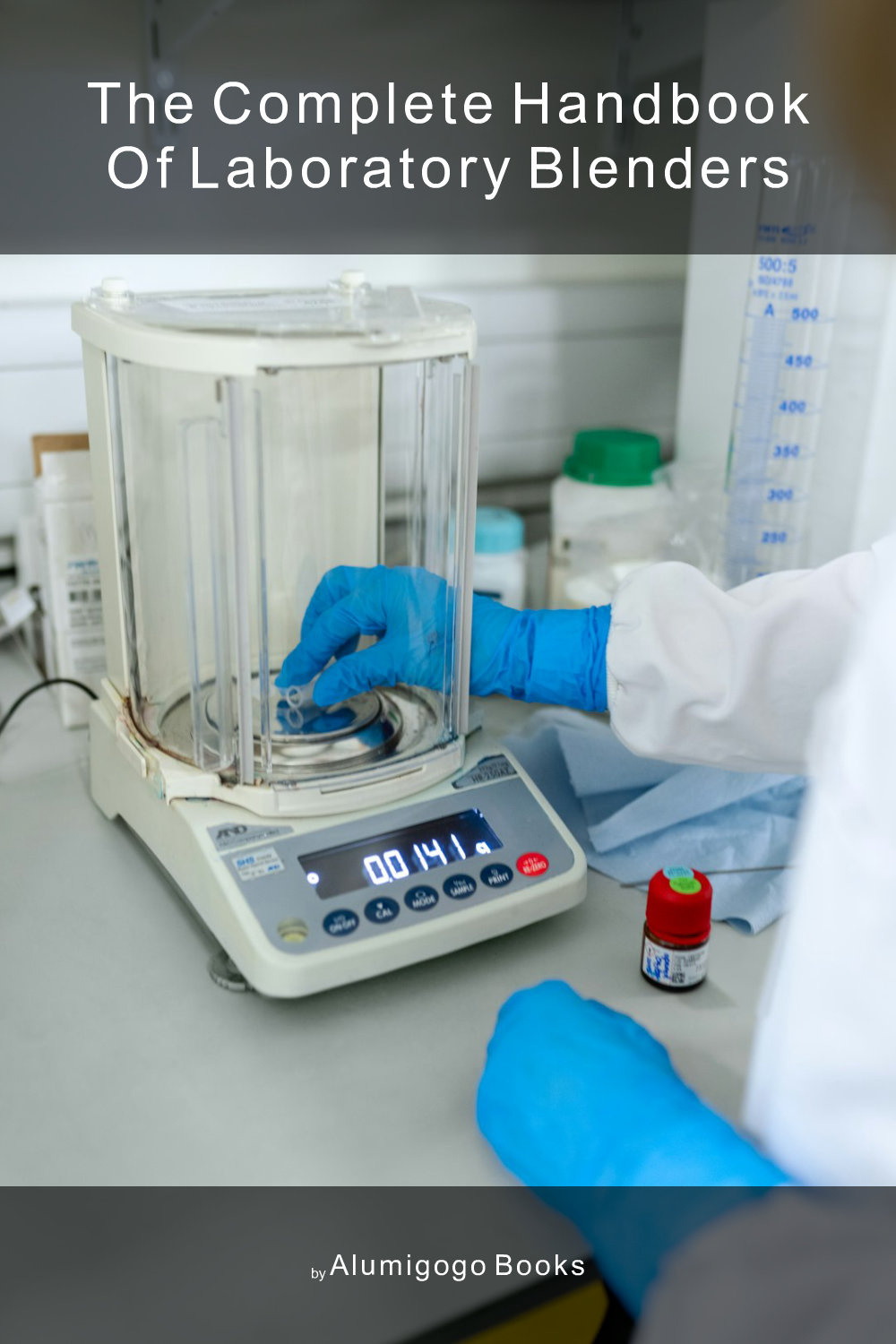
The Complete Handbook of Laboratory Blenders
Selection, Operation, Maintenance, and Business Strategy for Blenders in the Professional Laboratory
★★★★★4.5 · 8 reviewsby Alumigogo Books
non-fiction
From selecting the right cutter geometry to diagnosing a failing bearing, this handbook covers the complete lifecycle of laboratory blenders.
🔒Secure checkout via Stripe
Labor Day Sale
$9
About this book
Laboratory blenders are not scaled-down kitchen appliances; they are precision instruments that must achieve reproducible particle size reduction, homogenization, or blending in media ranging from dry powders to sterile tissue samples. The difference between a failed extraction and a valid result is often the mechanical state of the blender head, the speed profile selected, or the design of the container. This handbook examines those factors in detail, presenting the underlying mechanics, specifications that matter, and the failure modes that waste time and material.
Written for professionals and hands-on enthusiasts, this reference provides a structured approach to equipment selection based on your specific workload, container materials, and cleaning requirements. It includes practical installation and validation protocols, daily operating procedures, and a diagnostic framework for common issues such as overheating, noise, and sample leakage. The maintenance chapter covers lubrication schedules, blade sharpening, and electrical safety checks for all major types, from high-shear rotor-stators to heavy-duty commercial jar mills.
The later chapters open the business side of laboratory equipment: identifying supply chains, evaluating brand positions, and exploring revenue models from calibration services to equipment rental. The concluding sections review emerging technologies, such as brushless DC drives and integrated sample tracking, and provide a guide to standards, professional bodies, and publications for ongoing learning. Whether you are about to purchase your first lab blender or have been running a test kitchen for a decade, this handbook offers reference-grade answers.
Reader Reviews
Nicholas Moore
★★★★★This is the reference I wish I had when I started my food safety lab. The chapter on understanding blenders explains cavitation and shear in a way that finally clicked for me, and the installation checklist in chapter four caught two issues in our setup before they ruined a batch of samples. I've already referenced the troubleshooting guide twice this month. Worth every penny.
Anthony Hernandez
★★★★★I run a small analytical services company, and we evaluate a lot of equipment. This book is refreshingly honest - it doesn't push any brand, it explains how a rotor-stator actually differs from a fixed-blade homogenizer, and the cost-of-ownership framework in chapter three changed how I budget. The maintenance guide is thorough enough that we do more repairs in-house now. Highly recommended for any lab manager.
Melissa Anderson
★★★★★As a chemist moving into process scale-up, I needed to understand lab blenders beyond just 'how to turn it on'. This handbook gave me the mechanical grounding - from torque curves to container material selection - that my colleague with 20 years of experience takes for granted. I particularly liked the clear explanation of why a blender that works for powder won't necessarily work for tissue. Excellent.
Patricia Harris
★★★★★Good, thorough book, and the business chapter was a nice surprise - I hadn't considered consulting as a side income from our lab equipment expertise. I'm giving it four stars instead of five because I found a couple of the expanded discussions, like the full glossary and some of the brand analysis, a bit lengthy for my needs. Still, the core chapters on operation and troubleshooting are excellent.
Brian Williams
★★★★★I do formulation work in cosmetics, and this book grounded me in what happens inside the blending vessel at a mechanical level. The section on maintenance was very useful; I've started doing my own blade inspection after reading it. It is a bit dry in spots and more thorough than I needed, but that's a strength if you want a proper reference rather than a quick read.
Lisa Anderson
★★★★★We invest a lot in our lab equipment, so I appreciate a book that explains what you're actually paying for. The chapters on specifications and choosing the right blender are practical, with the right amount of technical depth. I deducted one star because the chapter on future trends seemed a bit speculative, but the rest of the book is rock solid and will stay on my desk.
Gary Lee
★★★★★Every lab that processes samples should have a copy near the equipment. I'm a senior technician, and this book replaced about two weeks of asking colleagues questions. The section on diagnosing a failing bearing from a specific noise was exactly what I needed - and it saved us a costly service call. The business opportunities chapter was a bonus that got me thinking about a rental side business. Great value.
Linda Flores
★★★★★The chapter on installation and usage was my favorite - it's clear that the author has actually performed these steps, not just read about them. I used the pre-run validation protocol when we got our new unit and found a loose connection before it caused a problem. The book is comprehensive and well-written, though at times the level of detail felt a little high for my general lab work. Good reference.