The Complete Handbook of Kitchen Slicers
A professional guide to selection, operation, maintenance, and business applications for food service and serious home kitchens
★★★★★4.0 · 7 reviewsby Alumigogo Books
non-fiction
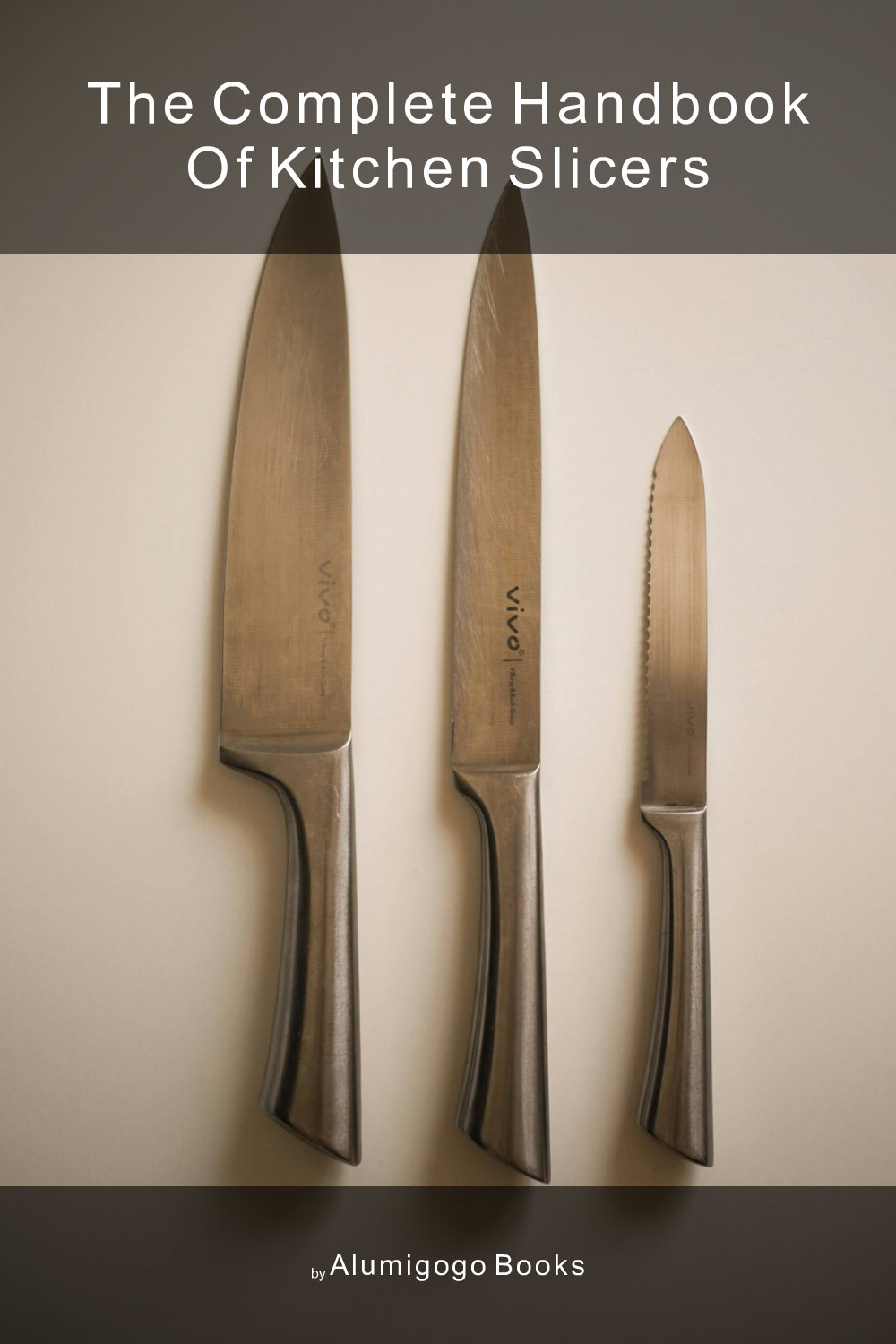
The Complete Handbook of Kitchen Slicers
A professional guide to selection, operation, maintenance, and business applications for food service and serious home kitchens
★★★★★4.0 · 7 reviewsby Alumigogo Books
non-fiction
The practical reference for professionals, businesses, and serious home cooks who need to choose, operate, and maintain kitchen slicers correctly and profitably.
🔒Secure checkout via Stripe
Labor Day Sale
$9
About this book
Kitchen slicers are among the most useful and most dangerous tools in any kitchen. Whether you're outfitting a restaurant, expanding a catering business, running a butcher shop, or serious enough about home cooking to invest in professional equipment, you need to understand what a slicer actually does, which specifications matter, how to choose the right model for your workflow, and how to maintain it safely over years of heavy use.
This handbook cuts through manufacturer marketing and forum mythology. It covers slicer types and their real-world performance differences, how to evaluate specifications that actually predict reliability and edge retention, installation and daily operation workflows proven in commercial kitchens, systematic maintenance and troubleshooting based on how slicers fail in practice, and an honest overview of brands and the actual business opportunities around slicers—from resale to servicing to starting a rental operation.
Written for professionals, kitchen managers, serious hobbyists, and anyone building expertise in this category, The Complete Handbook of Kitchen Slicers is grounded in concrete specifications, real-world examples, and the workflows of people who use slicers day in and day out.
Reader Reviews
Jason Scott
★★★★★I bought this expecting a basic how-to guide, and it delivered that, but I felt like it went way too deep into specifications and motor types that don't really apply to home use. Chapter 2 was dense enough to feel like a textbook. That said, the maintenance and troubleshooting sections in Chapter 5 are genuinely useful, and it's nice to have everything in one place instead of hunting through manuals. Worth it if you're serious about your equipment, less so if you just want to use the thing.
Nicholas Young
★★★★★Finally, a slicer guide written by someone who actually knows what they're talking about. I run a deli and have been making slicer decisions based on whatever our supplier recommended. This book broke down blade materials, stroke length, and feed pressure in ways that made actual sense—and when I went back to look at our current machine against the specs in Chapter 2, I realized we'd been running it at way too much feed pressure for years. The maintenance chapter alone paid for the book. Extremely practical.
Karen Lee
★★★★★Perfect. This is exactly what I needed before investing in a commercial slicer for my catering business. The author doesn't waste time on marketing-speak; Chapter 1 gives you the real picture of what these machines do and why they matter, and Chapter 3 walks you through the decision in a way that actually matches how we work. I actually used the business opportunities section in Chapter 6 to explore renting out capacity to a complementary food prep business. Clear, honest, and genuinely useful.
Jason Thompson
★★★★★Been in food service for 15 years and thought I knew slicers inside and out. This handbook made me realize how many things I was doing by habit rather than by the actual design of the equipment. The troubleshooting chapter is outstanding—it addresses problems I've dealt with but never fully understood. If you work with slicers regularly, this is worth every penny.
Joshua Nguyen
★★★★★Solid reference book. The technical chapters are detailed and well-organized, especially Chapter 2 on types and specs. My one wish is that there was more on the actual resale and rental business side—Chapter 6 touches on it, but I was hoping for deeper case studies or examples of how people are actually making money in this space. Still a valuable resource overall, just not quite as complete as I hoped on that front.
Paul Jackson
★★★★★This book is thorough, no question, but I found it pretty heavy on the commercial kitchen angle. I own a nice home slicer and wanted practical advice for keeping it running well and safely. Chapter 4 and Chapter 5 are good, but a lot of the choices and maintenance content assumes you're running it multiple times a day in a commercial setting. If that's your situation, it's excellent. If you're like me—using one maybe once or twice a week—there's still useful stuff here, just had to skip some sections that didn't apply.
Kathleen White
★★★★★Appreciate the no-nonsense approach, but I was hoping for more comparison tables or quick-reference guides. The writing is clear, but when you're in the middle of choosing between three different machines and need a fast way to see how they stack up on key specs, you're doing a lot of reading between chapters. The glossary at the end is helpful, though. It's a good handbook; I just would've valued a more visual structure for the decision-making parts.