The Complete Handbook of Intercom Accessories
A Practical Reference for Specifying, Installing, and Maintaining Intercom Accessories in Professional and Industrial Settings
★★★★★3.4 · 7 reviewsby Alumigogo Books
non-fiction
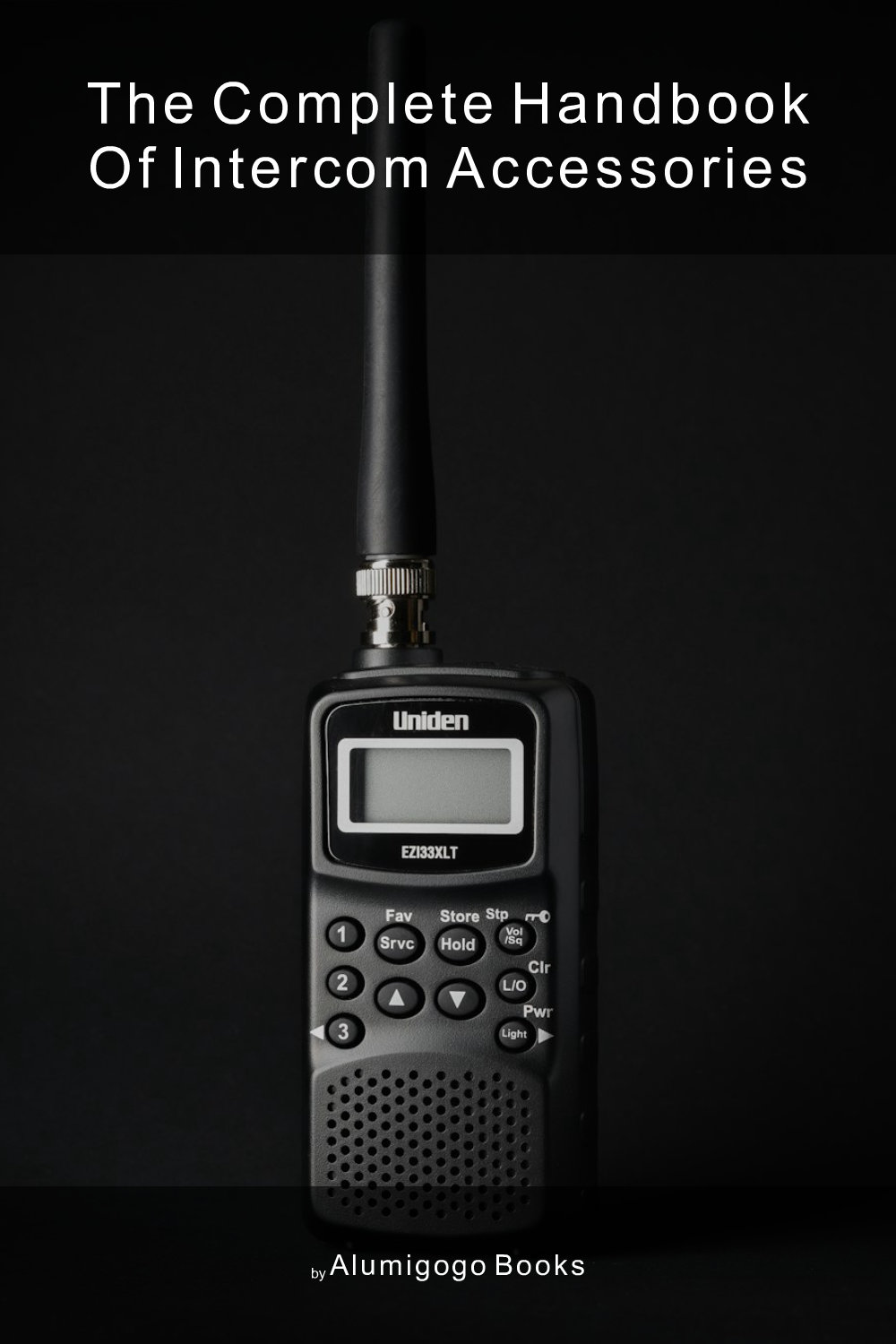
The Complete Handbook of Intercom Accessories
A Practical Reference for Specifying, Installing, and Maintaining Intercom Accessories in Professional and Industrial Settings
★★★★★3.4 · 7 reviewsby Alumigogo Books
non-fiction
A plain-language engineering reference for anyone who buys, installs, or maintains intercom accessories — written without the sales pitch.
🔒Secure checkout via Stripe
Labor Day Sale
$9
About this book
Intercom accessories are the unsung components that determine whether a door station survives a rainy season, a headset survives a 12-hour shift, or a master station can hear a conversation in a noisy warehouse. Yet most information about them comes from manufacturers who want you to buy more, or forums where one bad experience becomes gospel. This handbook cuts through both. It explains what each accessory type actually does, how it connects to your system, and which specifications you should care about — weather ratings, impedance, cable distance limits, and power budgets, among others.
The book is organized like a working reference, not a marketing brochure. Early chapters build a foundation in how intercom systems and their accessories interact. The middle chapters take you through choosing, installing, and maintaining components, with practical steps and troubleshooting trees. Later chapters cover the supplier landscape and concrete business models, from simple reselling to service contracts. A dedicated chapter on future trends separates real technological shifts from vendor hype.
Whether you are a facilities manager replacing forty door stations, a security integrator quoting a new apartment building, or a hobbyist wiring a workshop intercom, this handbook gives you the vocabulary, the specifications, and the procedural knowledge to make sound decisions and avoid expensive mistakes.
Reader Reviews
Laura Garcia
★★★★★I was hoping for a bit more practical wiring detail in the first chapter — it explains concepts well but sometimes feels like it's circling around the actual install work. The section on weather ratings and how they translate to real installations was genuinely useful though, and I'll keep the book on my shelf for that alone. Just wish it had gotten to the troubleshooting trees sooner.
Linda Williams
★★★★★Decent reference for someone new to intercoms, but I've been in the low-voltage trade for eight years and didn't find much I didn't already know from experience. The business opportunities chapter in the outline looks promising, but the early chapters spent a lot of time on basics I could have skimmed. Give it to your junior techs — it's a solid foundation, just not advanced material.
Rebecca Williams
★★★★★The book does a good job of cutting through manufacturer marketing, which I appreciated. The chapter on understanding accessories clearly explains how things like impedance and power budgets actually work in practice, rather than just quoting datasheet specs. My only real complaint is that some examples feel overly generic — I would have liked more specific model comparisons or field stories.
Richard Thompson
★★★★★It's an honest book that knows what it is: a reference manual, not a thrilling read. I used the first chapter to re-familiarize myself with signal loss calculations before a multi-tenant install and it was spot on. The writing is dry and a bit academic in places, and I think some diagrams would have helped, but for the price of admission it does what it claims.
Laura White
★★★★★Finally, a reference that treats intercom accessories as engineering components instead of consumer gadgets. The first chapter alone was worth the purchase — it set up how to think about the whole system, from the master station to the door station and everything in between. I've already used the glossary and the specification framework to change how I quote jobs. This is the book I wish I'd had when I started doing intercom work.
Amanda Ramirez
★★★★★As someone who manages a small office building with a legacy analog intercom, I found this helpful but slightly overwhelming. The first chapter grounds you well in the basics — I finally understand why my call buttons keep failing in winter — but the scope is broad and I sometimes got lost in details meant for larger commercial installations. Good reference, but I wouldn't call it beginner-friendly.
Edward Moore
★★★★★I bought this for the coverage of the actual accessory ecosystem — headsets, relays, power supplies — and it delivered. The first chapter's breakdown of how accessories interact with the main system was clear and practical, and it didn't feel like reading a spec sheet. I docked one star because the writing style is a bit dry and I would have liked more images or tables to break up the text, but the content is top-notch.