The Complete Handbook of Handkerchiefs
A practical reference for buyers, sellers, and users of handkerchiefs across fabric, finish, and function
★★★★★4.0 · 5 reviewsby Alumigogo Books
non-fiction
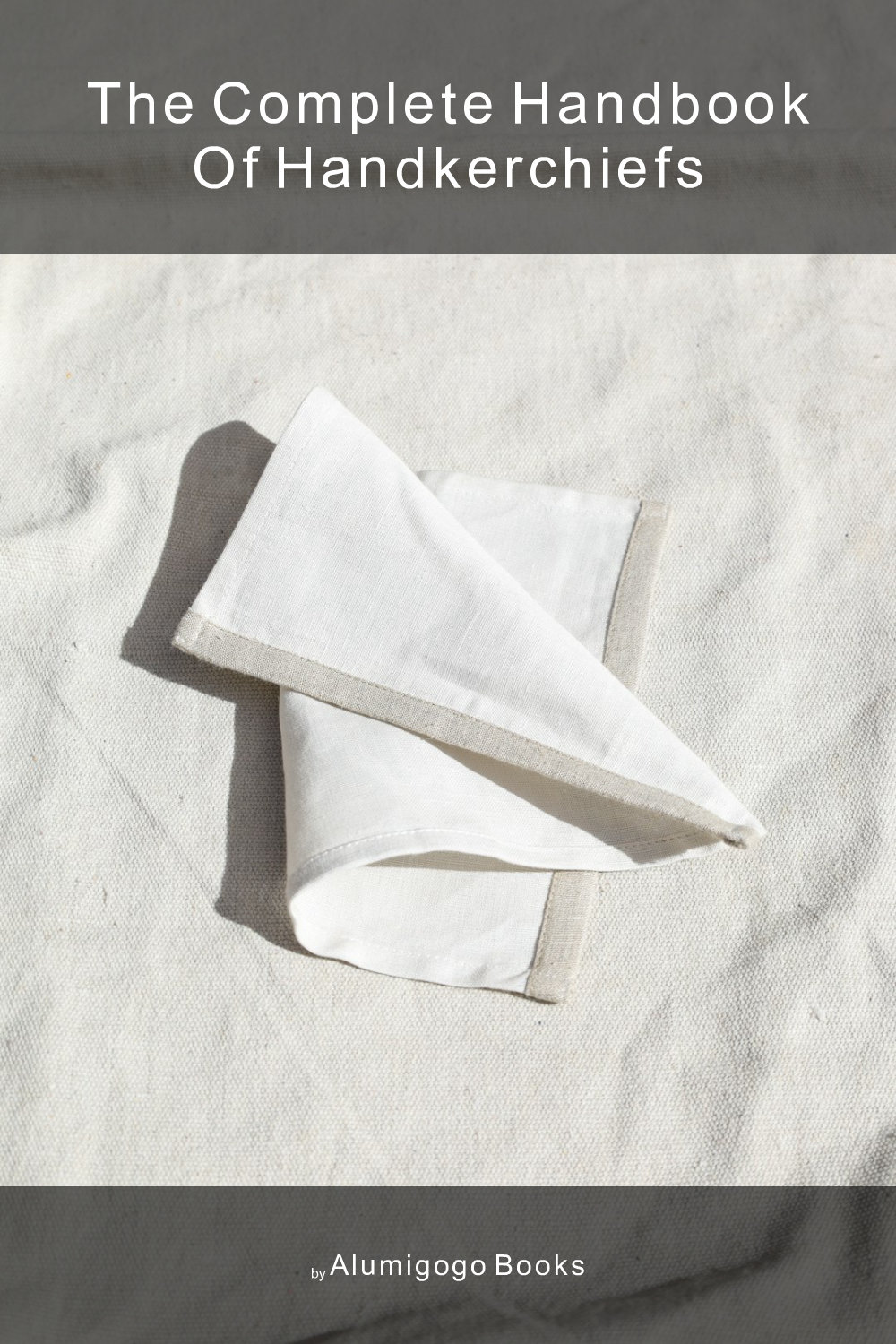
The Complete Handbook of Handkerchiefs
A practical reference for buyers, sellers, and users of handkerchiefs across fabric, finish, and function
★★★★★4.0 · 5 reviewsby Alumigogo Books
non-fiction
Buy better, care smarter, and sell with confidence: the complete practical reference on handkerchief fabric, finish, and function.
🔒Secure checkout via Stripe
Labor Day Sale
$9
About this book
Handkerchiefs look simple, but the difference between a pocket square that sits correctly and one that crumples, a uniform accessory that lasts five years versus five washes, or a private-label product that sells versus one that languishes comes down to specifiable details: cotton staple length, thread count, hem stitch density, and finishing compounds. This handbook gives you those details in plain language, with tolerance ranges, test methods, and real-world examples drawn from tailoring, hospitality, military uniform, and retail contexts.
Inside, you will find a full breakdown of the major types—plain, birdseye, jacquard, silk, linen, cotton, and blends—each with the specifications that actually matter for its intended use. The book walks through selection criteria for buyers, correct folding, pocket placement, and daily handling, then covers laundry chemistry, stain-specific removal procedures, ironing temperatures, and common repair techniques. It does not stop at personal use: a full chapter covers wholesale sourcing, supplier positioning, private-label logistics, and service businesses such as linen rental and monogramming.
The reference section includes a glossary of textile and construction terms, a spec-comparison framework, and answers to the questions buyers and sellers actually ask. Written for professionals and serious hobbyists, it avoids brand puffery and marketing language, giving you instead the working knowledge to make confident decisions and to verify claims made by suppliers.
Reader Reviews
Ryan Lee
★★★★★I've bought handkerchiefs for years and thought I knew the basics, but the chapter on birdseye vs. plain weave and the table on cotton staple length genuinely changed what I look for. The laundering section is practical and I immediately used the vinegar rinse tip on some stiffening. Only reason it's not five stars: I'd have liked a few more photos or diagrams, especially in the folding chapter. The text is clear, but a picture would have saved me a few tries.
Susan Adams
★★★★★Solid reference overall, but it reads more like a textbook than a handbook in places. I appreciated the supplier chapter and the glossary is genuinely useful, but I felt the section on choosing a handkerchief for a business suit was underexplained compared to the heavy detail on thread counts and weave densities. I also wanted a more direct answer on whether linen or cotton is better for heavy daily use—the book gives you the specs but I had to make my own call. Fine for a serious buyer, less so for someone just starting.
Susan Nelson
★★★★★Finally a reference that treats handkerchiefs as engineered products, not just fashion accessories. I'm in hospitality procurement and the chapter on commercial laundering chemistry alone saved me from ruining a batch of 200 linen uniform squares. The spec tables for hem stitch density and shrinkage limits are exactly what I needed to certify new suppliers. This is going on my team's shelf as required reading.
Sandra King
★★★★★Decent coverage and clearly researched, but I expected more on the resale side. The chapters on types and maintenance are strong, but the business opportunities chapter felt generic—it names models like monogramming and rental but doesn't give enough real cost or margin figures to act on. Also, the prevention of mildew in long-term storage deserved a bit more than a passing mention. I'd still recommend it for the textile specs, just not for someone primarily looking for a business playbook.
Charles Gonzalez
★★★★★I'm a tailor and I've been recommending this to my clients who ask for pocket squares that actually sit flat. The author clearly understands construction—the section on edge finishes and why a rolled hem behaves differently than a machine-stitched one is the clearest I've read. The troubleshooting chapter got me to fix a fraying problem on a client's silk square without damaging the fabric. It's the first book on the topic that doesn't read like a style blog. Excellent, practical, and I've already ordered two copies for colleagues.