The Complete Handbook of Fish Food
A practical reference for aquaculturists, retailers, and serious hobbyists on selecting, using, and troubleshooting fish food
★★★★★4.1 · 8 reviewsby Alumigogo Books
non-fiction
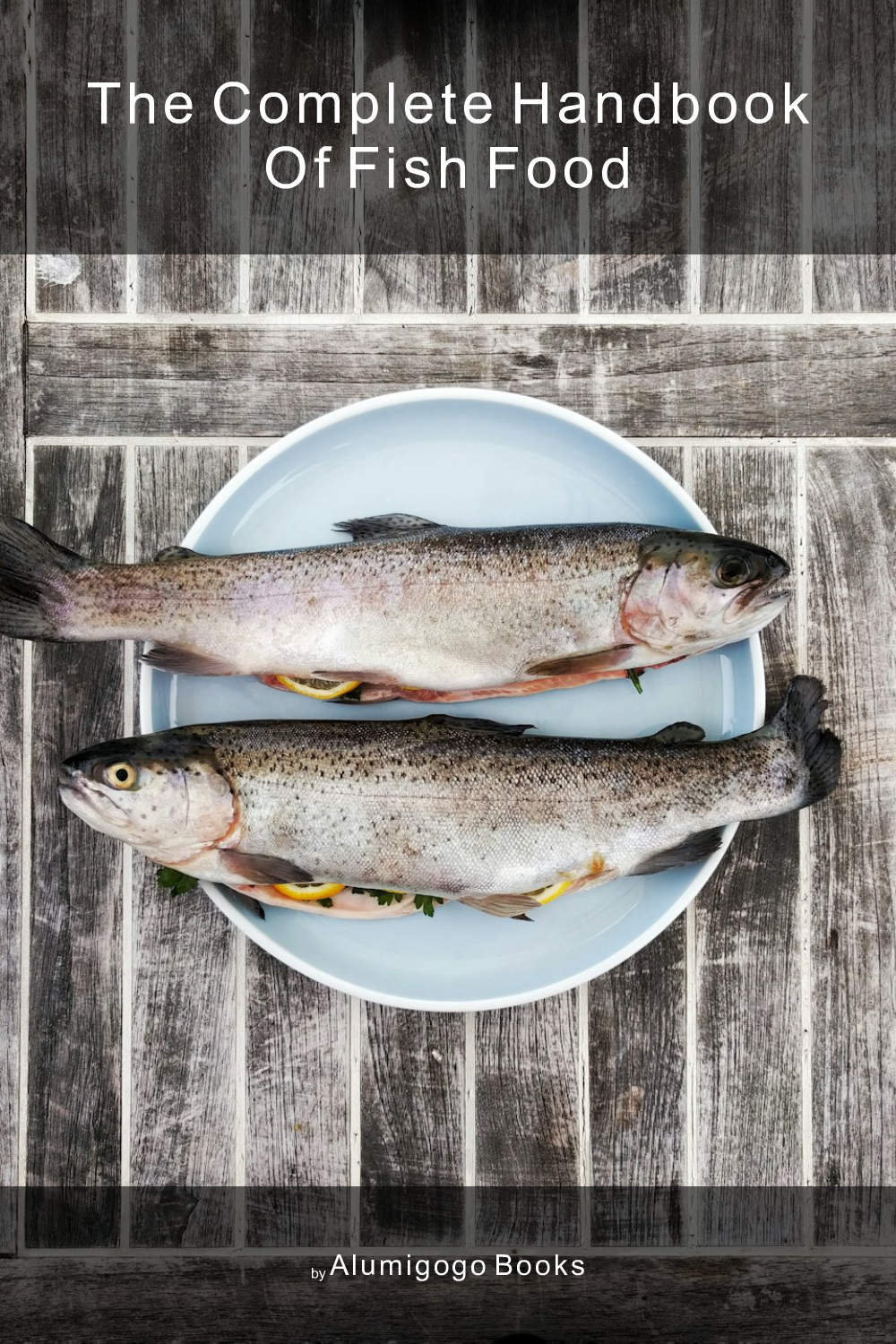
The Complete Handbook of Fish Food
A practical reference for aquaculturists, retailers, and serious hobbyists on selecting, using, and troubleshooting fish food
★★★★★4.1 · 8 reviewsby Alumigogo Books
non-fiction
The professional's field manual for fish nutrition, product selection, feeding protocols, and the commercial side of aquatic feed.
🔒Secure checkout via Stripe
Labor Day Sale
$9
About this book
What does a 2mm sinking pellet actually contain, and why does it matter for a juvenile rainbow trout versus a mature discus? This handbook answers those questions with practical specificity. It walks the reader through the physical forms of feed—flakes, pellets, wafers, frozen, live—and the specifications that define them, such as particle size, buoyancy, protein-to-lipid ratio, and ash content. It explains how to read a guaranteed analysis label and how to assess a food's performance in your own system, whether that is a retail display tank, a recirculating aquaculture system, or a breeding rack.
The book moves from product knowledge to operational practice. It covers storage protocols to prevent oxidation and mold, feeding schedules that balance growth against water quality, and troubleshooting guides for common failures like feed refusal and nutrient deficiency. It also includes a dedicated section on the business of fish food: how to evaluate suppliers, negotiate bulk pricing, create a private-label feed, or offer feeding services as part of a maintenance contract.
Written in a neutral, instructional tone, this is not a consumer guide full of top-ten lists. It is a reference that expects you to apply the information and get measurable results—healthier fish, lower waste, and a better bottom line.
Reader Reviews
Margaret Taylor
★★★★★Finally a fish food book that treats the subject seriously. I run a 20-tank breeding setup and I've been flying blind on protein levels and particle size for years. The chapter on understanding fish food alone was worth the price, especially the breakdown of how protein load affects biofilter load. It's not fluffy, it's dense but precise. I've already changed how I buy feed.
Daniel King
★★★★★Solid reference, but it leans toward commercial-scale. For my home show tank, the chapters on species-specific feeding were a bit broad. That said, the troubleshooting section on rancid feed saved me a week of frustration, and the breakdown of sinking versus floating pellets was clearer than anything I've seen online. Good desk reference if you run multiple systems.
Gary Hernandez
★★★★★As an aquaculture tech at a hatchery, I've read our feed spec sheets a hundred times and still had gaps. This book filled them all. The glossary alone is worth it, and the chapter on storage humidity effects on pellet integrity is something we should have known years ago. This will be the manual we hand every new hire. No fluff, just answers.
James Hall
★★★★★It's a fine book, but I expected more on the aquarium side. I keep a planted community tank, and about half the content felt aimed at people running ponds or commercial systems. The parts about flake oxidation and feeding frequency were useful, but a lot of the business talk in the later chapters didn't apply to me. Overall informative, but I skimmed a third of it.
Anna Taylor
★★★★★I bought this after a supplier sold me a bad batch of sinking pellets that turned my tank water cloudy. The troubleshooting section walked me through exactly what to check and how to test for lipid oxidation at home. That single section justified the cost. The full book is thorough and I appreciate that it does not read like a marketing blog. Only reason it is not 5 stars is I wish the photos were in color.
Brian Hernandez
★★★★★This is the manual I've been using to train my retail staff for the last month. It gives you concrete ways to explain the difference between budget flakes and premium pellets to customers. The cost-per-gram-of-protein comparison in the feeding chapter is a brilliant practical tool. I've bought five more copies to keep in the back office. Essential for anyone in the pet trade.
Donald Ramirez
★★★★★Good neutral text that covers the science without getting lost in it. I appreciated the nutrition section and the explanation on how fish digest carbohydrates differently than mammals, which most fish food literature glosses over. The maintenance section on storage and shelf life was practical and correct. Four stars because I would have liked more on wild-caught versus farm-raised ingredient sourcing.
Rebecca Harris
★★★★★A well-meaning and comprehensive desk reference, but the layout is a bit dense for quick lookups. The chapter on installation and usage is actually about feeding systems, which felt like a stretch for a book about food. However, the science on particle size and fish mouth gape was informative. I'll keep it for the glossary and the feed company comparison in the business chapter, just wish the index was better.