The Complete Handbook of Crutches
Selection, Setup, Maintenance, and Business Strategy for Mobility Professionals and Enthusiasts
★★★★★4.0 · 4 reviewsby Alumigogo Books
non-fiction
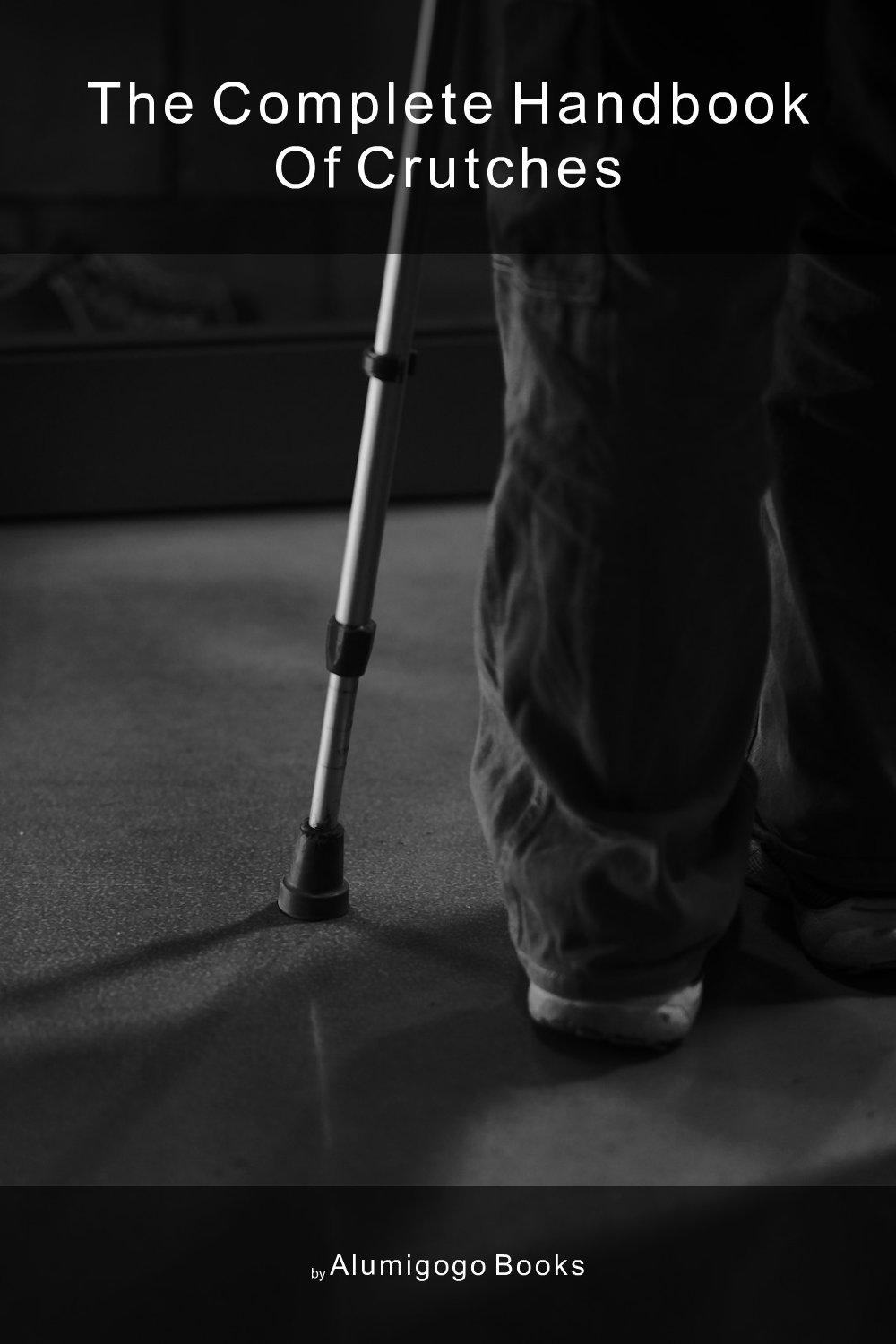
The Complete Handbook of Crutches
Selection, Setup, Maintenance, and Business Strategy for Mobility Professionals and Enthusiasts
★★★★★4.0 · 4 reviewsby Alumigogo Books
non-fiction
From fitting to repair to resale: the complete operational reference for crutches, for professionals and serious users.
🔒Secure checkout via Stripe
Labor Day Sale
$9
About this book
Crutches are among the most common medical devices in the world, yet they are also among the least understood. Most people encounter them at a hospital exit, get a five-minute fitting, and are sent home with no manual. This handbook corrects that imbalance. It covers the functional anatomy of each crutch type—axillary, forearm, and platform—and explains the mechanical loads each component carries, so you can inspect, adjust, and repair with confidence rather than guesswork.
Beyond the device itself, this book addresses the professional ecosystem: how to measure a patient quickly and accurately, how to set up a rental fleet, how to source parts from manufacturers versus wholesalers, and how to identify private-label opportunities in a market dominated by a few large brands. It includes concrete dimensional data, torque specifications for common fasteners, troubleshooting charts for creaks and instability, and a forward look at materials and regulatory changes.
Written for clinicians, DME suppliers, workshop operators, and serious hobbyists, this handbook avoids hype and marketing language. It provides the kind of practical, reproducible knowledge that belongs on a workbench and in a clinic supply room—ready for daily use.
Reader Reviews
Jacob Lewis
★★★★★Finally, a crutch book that treats the subject with respect. I run a small DME rental shop and the chapter on types and specifications alone saved me hours of cross-referencing manufacturer PDFs. The maintenance section gave me a checkable schedule for my rental fleet that I implemented the same week. The load distribution discussion in chapter one is clearer than anything I got in my orthotics training. This stays on my desk, not on a shelf.
Robert Williams
★★★★★The content is solid and the chapter on business opportunities made me think. But I found parts of chapter one dense—lots of anatomical detail I had to re-read to follow. For a handbook, it could use more diagrams; the text refers to components but the reader is left to imagine them. Also, the future trends chapter felt a bit speculative to me, though the regulatory part was useful. If you already know basic crutch types, you can skip the first forty pages.
John Lopez
★★★★★Good reference if you're in the industry, but it's not for someone just helping a friend recover from an ankle sprain. The fitting instructions are precise, which I appreciated, but there's little on how to train a layperson in safe use—most of the gait guidance assumes a therapist is present. The brand section was also thinner than I expected, more about market tiers than actual models. Worth having on the shelf if you already know what you're doing.
Jason Thompson
★★★★★I repair and sell refurbished crutches as a side business, and this handbook pointed out three problems I was missing: I never measured tip wear systematically, I didn't know the correct torque for the handgrip screws on my most common model, and I had no idea private-label assembly was so approachable. The troubleshooting guide in chapter five is worth the price alone—it's a quick reference I use daily now. The glossary at the back is also genuinely useful for writing my own listings.