The Complete Handbook of Cloth Napkins
A professional's field guide to selecting, using, maintaining, and profiting from cloth napkins.
★★★★★4.1 · 8 reviewsby Alumigogo Books
non-fiction
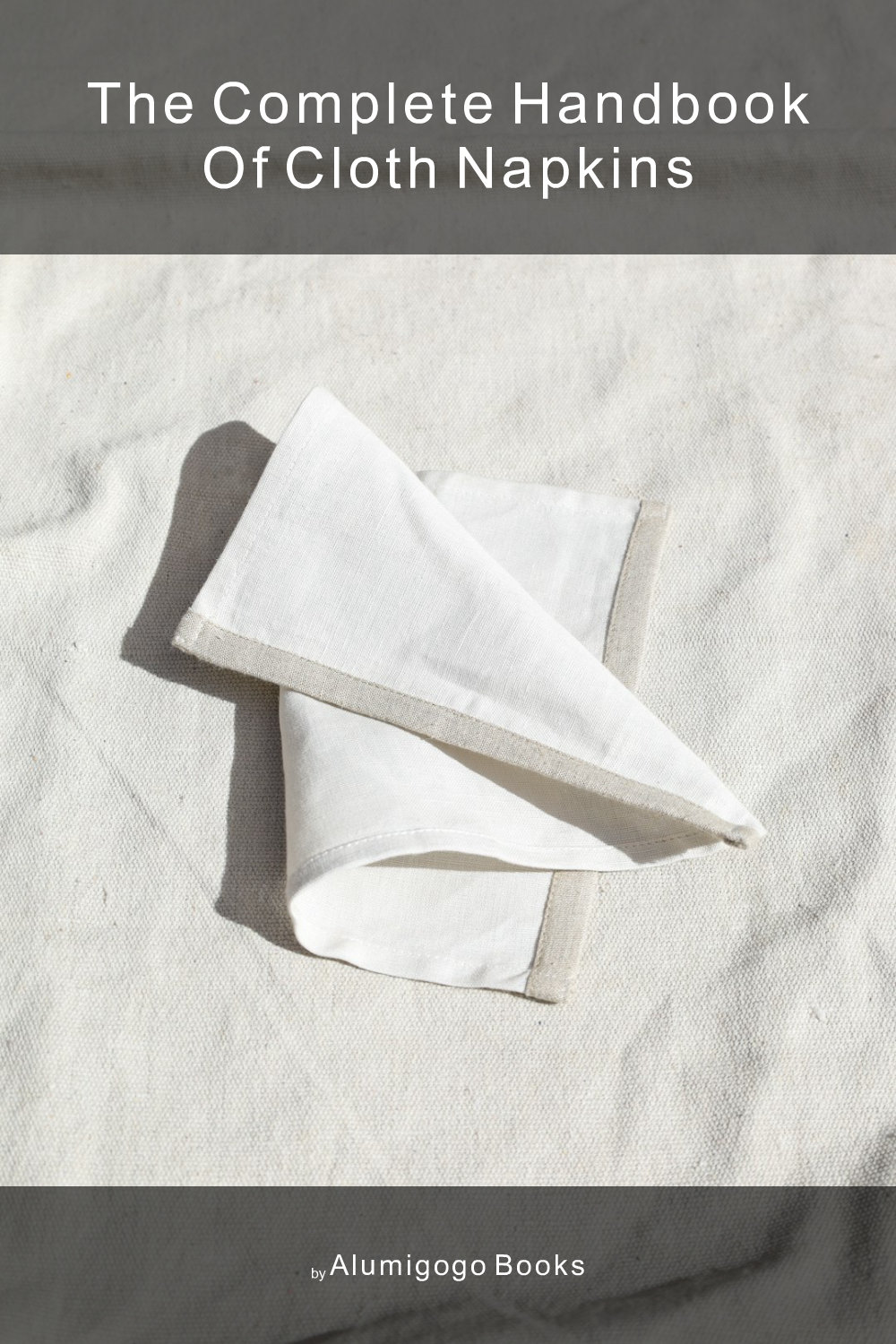
The Complete Handbook of Cloth Napkins
A professional's field guide to selecting, using, maintaining, and profiting from cloth napkins.
★★★★★4.1 · 8 reviewsby Alumigogo Books
non-fiction
Specify, buy, maintain, and sell cloth napkins with confidence. A practical reference for professionals.
🔒Secure checkout via Stripe
Labor Day Sale
$9
About this book
From a diner's paper replacement to a fine-dining signature, the cloth napkin is a high-utilization textile with distinct engineering and economic requirements. This handbook cuts through the marketing to provide a definitive reference on fibers, weaves, finishes, sizing, and laundering standards. It is the manual for anyone who buys napkins in bulk, manages a linen inventory, or selects textiles for a commercial or demanding home environment.
The book moves from fundamentals to operations and business strategy. You will learn how to calculate total cost of ownership, build a rotation schedule that extends textile life, and troubleshoot common issues like staining, fading, and fabric breakdown. For the entrepreneur, dedicated chapters explore sourcing, private labeling, rental models, and the emerging circular economy of textile services. This is the essential reference for making cloth napkins a reliable, cost-effective, and professional part of your operation.
Reader Reviews
Barbara Scott
★★★★★I've been sourcing linens for our restaurant group for a decade and still picked up a few things here. The chapter on laundering economics was the most concrete breakdown of cost-per-use I've seen outside of a manufacturer's internal doc. I docked a star because I wish the troubleshooting chapter had a quick reference chart at the start, but it's a solid desk reference.
Jacob Campbell
★★★★★This is the book I wish I had five years ago when I started my event rental company. It doesn't waste a single page on fluff. The decision framework in chapter three alone saved me from ordering a batch of napkins that would have started falling apart after ten washes. I've already got three colleagues ordering copies.
Matthew Campbell
★★★★★As a home enthusiast who just likes a nice dinner party, this was more detailed than I strictly needed, but I appreciated the rigor. The sections on fiber and weave are genuinely helpful for knowing why my linen napkins behave differently than my cotton ones. The business chapters I skipped, but that's my use case, not a fault in the book.
Andrew Gonzalez
★★★★★Good, solid reference material. The explanations of damask versus plain weave helped me understand the different price points I was seeing from suppliers. The maintenance chapter was spot-on for fixing my ironing issues. It's a professional book, so it lacks the cozy vibe of a lifestyle title, but that's exactly what I was shopping for.
Angela Wilson
★★★★★It's a thorough book, and I respect the detail, but a lot of it felt like common sense for anyone who's worked in restaurants for a while. The chapter on choosing napkins was good, but I felt it was aimed at white-tablecloth spots and didn't give much love to fast-casual or food truck operations. I gave it three stars because it's good for basic reference, but I wasn't wowed.
Daniel Campbell
★★★★★I bought this to help with my catering side hustle. It's well-organized and I did learn a lot about polyester blend options and why they are easier to maintain than I thought. My main criticism is that the brand chapter named names but didn't offer enough concrete pricing examples. I still had to do my own legwork to get quotes, which maybe is expected, but I wanted more guidance.
Ronald Miller
★★★★★Finally, a guide that treats table linens like the industrial product they are. The chapter on installation and usage is brilliant—the break-down of the different folding systems (standard, pyramid, the specific fan types) is precise and easy to follow. The troubleshooting for the washing machine was worth the price of the book alone. This lives on my desk now.
David Lopez
★★★★★I manage a linen rental service and this is the most accurate, practical handbook I've seen on the topic. The section on ROI and total cost of ownership is spot on, and it's good to see a book that covers the circular economy in the business opportunity chapter. It hits the perfect balance between textile science and business management. Highly recommend it to my peers.