The Complete Handbook of Climate Control Appliances
For professionals, businesses, and serious hobbyists who specify, install, maintain, or resell heating, cooling, and humidity systems
★★★★★4.4 · 7 reviewsby Alumigogo Books
non-fiction
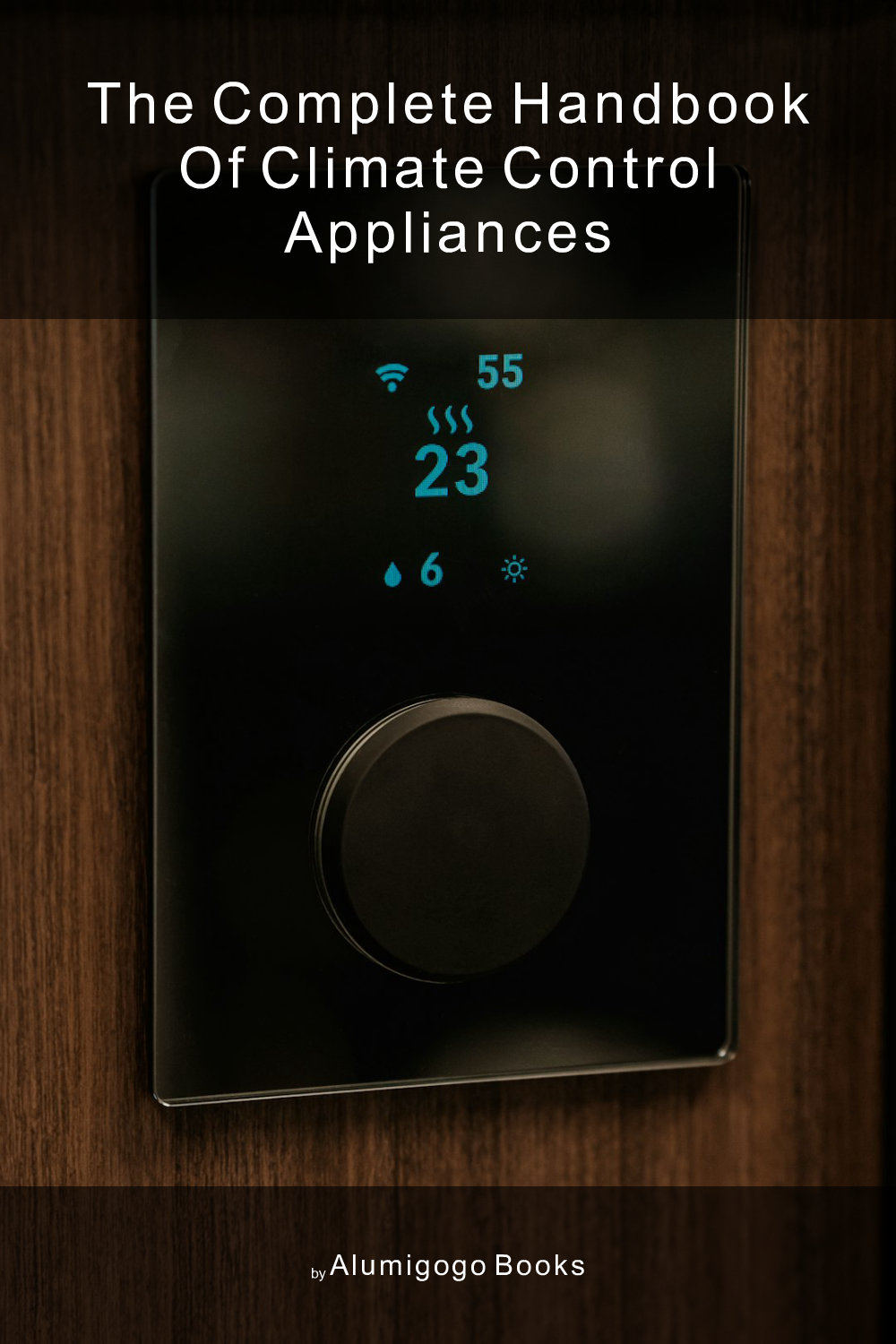
The Complete Handbook of Climate Control Appliances
For professionals, businesses, and serious hobbyists who specify, install, maintain, or resell heating, cooling, and humidity systems
★★★★★4.4 · 7 reviewsby Alumigogo Books
non-fiction
The practical, neutral reference for specifying, installing, and maintaining climate control systems—for professionals who need facts, not hype.
🔒Secure checkout via Stripe
Labor Day Sale
$9
About this book
Climate control appliances are not luxuries; they are functional systems that regulate temperature and humidity to protect products, enable processes, and create safe working environments. Whether you're a contractor sizing a heat pump for a commercial building, a facility manager troubleshooting a humidifier, a reseller deciding what brands to stock, or a business owner building climate infrastructure for a greenhouse or laboratory, you need practical knowledge—not marketing.
This handbook cuts through specification sheets and sales language to explain what climate control appliances actually do, how to evaluate one for your specific situation, how to install and maintain them correctly, and where the business opportunities lie. Each chapter is built on real-world context: concrete examples of system failures, efficiency metrics that matter, installation pitfalls, maintenance schedules that work, and the economics of service and resale. You'll find no generic AI filler, no buzzwords, and no bias toward any brand—only the knowledge professionals rely on when the system has to work.
Reader Reviews
Deborah Lee
★★★★★I was skeptical that a handbook could be this useful, but every chapter I've read so far has contained information I genuinely needed. The installation chapter is methodical without being patronizing. Best investment I've made in my professional library in years. Every HVAC tech and facility manager I work with should own this.
Christopher Wilson
★★★★★Finally, a handbook that treats climate control systems like the infrastructure they are. I've been installing and servicing HVAC for 15 years, and Chapter 1 alone clarified why certain sizing errors I've seen cause such expensive failures. The spec breakdown in Chapter 2 and the maintenance schedule in Chapter 5 are exactly the kind of reference I reach for on every job now. This is the book I wish I'd had when I started.
Linda Thompson
★★★★★Excellent practical resource for our facility management team. The troubleshooting chapter saved us several expensive service calls—we diagnosed a humidity sensor drift ourselves. My only real gripe is that Chapter 6 could have gone deeper into the regional distributor landscape, but the business models section was still solid. Highly useful reference overall.
Ashley Martinez
★★★★★I run a greenhouse operation and needed to understand the difference between spot humidifiers and integrated ventilation+humidity systems. This book explained not just the mechanics but the real cost differences and failure modes I hadn't considered. Chapter 3's decision framework walked me through sizing correctly for my space. Exactly what I needed—concrete, no fluff.
Jeffrey Campbell
★★★★★As a contractor bidding on a retrofit project, I used Chapter 2 to spec out three different heat pump configurations and compare their lifecycle costs properly for the first time. The glossary is thorough. This is a working reference, not a coffee table book, and that's precisely what the field needs. Highly recommended for anyone serious about this category.
Sharon Jackson
★★★★★Strong handbook overall—the neutral stance on brands is refreshing, and the real-world failure examples in Chapter 1 make it clear why specification matters. Chapter 4 on installation was particularly helpful for our team. I did wish there was more on smart controls and remote monitoring, though the Future Trends chapter hints at where that's headed. Still, very solid reference.
Donna Hall
★★★★★Useful reference, though not everything landed for me. The technical specs in Chapter 2 are thorough but dense in places, and I had to reread some sections. The maintenance chapter was practical and clear. It's definitely a real professional resource—not a beginner's guide—so if you're looking for entry-level information, this isn't it. Good for someone already in the field.