The Complete Handbook of Cast & Bandage Protectors
A practical reference for medical professionals, first-aid responders, and serious outdoor enthusiasts on selecting, fitting, and maintaining waterproof and protective coverings for casts and dressings.
★★★★★4.0 · 4 reviewsby Alumigogo Books
non-fiction
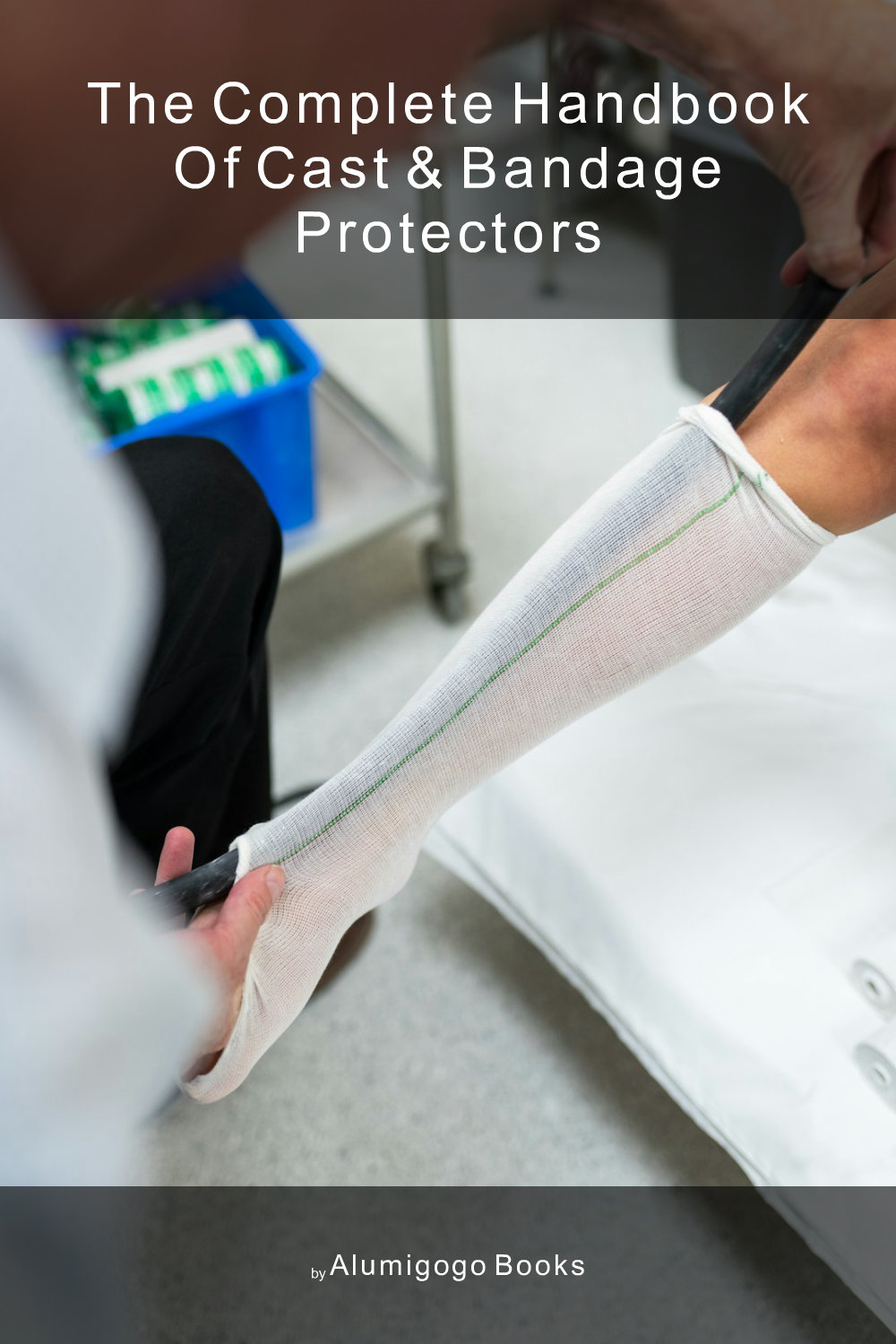
The Complete Handbook of Cast & Bandage Protectors
A practical reference for medical professionals, first-aid responders, and serious outdoor enthusiasts on selecting, fitting, and maintaining waterproof and protective coverings for casts and dressings.
★★★★★4.0 · 4 reviewsby Alumigogo Books
non-fiction
A critical, specification-driven guide to selecting, fitting, and maintaining waterproof covers for casts and bandages — for professionals who need it to work the first time.
🔒Secure checkout via Stripe
Labor Day Sale
$9
About this book
For anyone responsible for keeping a healing limb dry, the choice of a cast or bandage protector is a matter of clinical necessity, not convenience. Moisture trapped against a cast can lead to skin maceration, infection, and structural failure of the plaster or fiberglass, turning a routine healing process into a setback. This handbook provides an unbiased, technical look at the options — from simple polyethylene sleeves to high-vacuum, multi-layer systems — and gives you the tools to evaluate them on the criteria that actually matter: watertight integrity, durability, ease of use, and safety.
This is not a buyer's guide filled with brand hype. It is a reference manual that explains how each design works, what its failure modes are, and how to match a protector to an injury type, a patient's lifestyle, and the specific water activities they want to do. You will learn how to measure for a correct fit, how to apply and remove a cover without damaging the cast, and how to troubleshoot common issues like suction lock, seam leaks, and material degradation.
Intended for clinicians, DME buyers, and serious outdoor users, the book also covers maintenance protocols, the business landscape of this niche supply category, and the future of smart materials and anti-microbial coatings. It answers the practical questions that forums and brochures ignore, so you can choose a protector with confidence, use it safely, and extend its usable life.
Reader Reviews
Sharon Moore
★★★★★As a nurse who works in a busy ED, I've pulled more soaked casts off kids than I care to count because parents trusted a random plastic bag over a bath. The first chapter alone is worth the price — it plainly explains why a simple 'leak-proof' sleeve fails under water pressure and what a proper barrier actually does. This is the first resource I've seen that takes the category seriously, and it's already changed how I counsel patients on showering. The chapters on troubleshooting and real specs are a goldmine I haven't found in any manufacturer's brochure. I'll be recommending this to our sports clinic for sure.
John Jackson
★★★★★A lot of useful technical detail here, and I appreciate the neutral tone, but I felt it was a bit heavy on the clinical side and lighter on the actual comparative specs of models I was considering. I bought it looking for specific numbers on water-pressure ratings and how long a given type of seal typically lasts, and those figures are discussed but not in a definitive, tabulated format. It reads more like a textbook than a quick-reference handbook. It's fine if you're deeply involved in the field, but a weekend kayaker like me just wanted a simpler table to get to a good product. Also, the writing is dry, though that's probably expected for a reference.
Timothy Clark
★★★★★It's an okay resource, but it fell short of my expectations. I do a lot of backcountry hiking and bought this on the strength of the outdoor-use angle, but at least a quarter of the book is clearly aimed at clinical or retail business-buyer questions. The explanations of how vacuum seal protectors work versus simple sleeves, and the specific risk of suction lock on my leg, were genuinely helpful and I've used that knowledge already. However, the 'concrete examples' promised in the first chapter were sometimes too abstract for my purposes. I also wanted an updated brand comparison, but it wisely avoids all editorializing on that. All in all, a good desk reference, but not the user-focused manual I hoped for.
Deborah Torres
★★★★★Finally, a book that treats this subject without the slick marketing. I run a small medical supply catalog, and I've been making fit recommendations based on guesswork and vendor bulletins for years. The breakdown of material science — why a thin polyethylene liner fails on a rough cast surface, while a neoprene blended cuff creates a better friction seal — was an eye-opener. It’s also given me a solid protocol for testing the protectors we stock, which has already reduced our return rate. The maintenance chapter on how to dry and store vacuum models to avoid mildew and seal degradation is exactly the kind of practical detail that earns its keep on the shelf. A five-star resource for anyone serious about the trade.