The Complete Handbook of Butter & Margarine
A practical field guide for professionals, businesses, and serious home cooks who need to understand, select, and manage butter and margarine with confidence.
★★★★★3.7 · 7 reviewsby Alumigogo Books
non-fiction
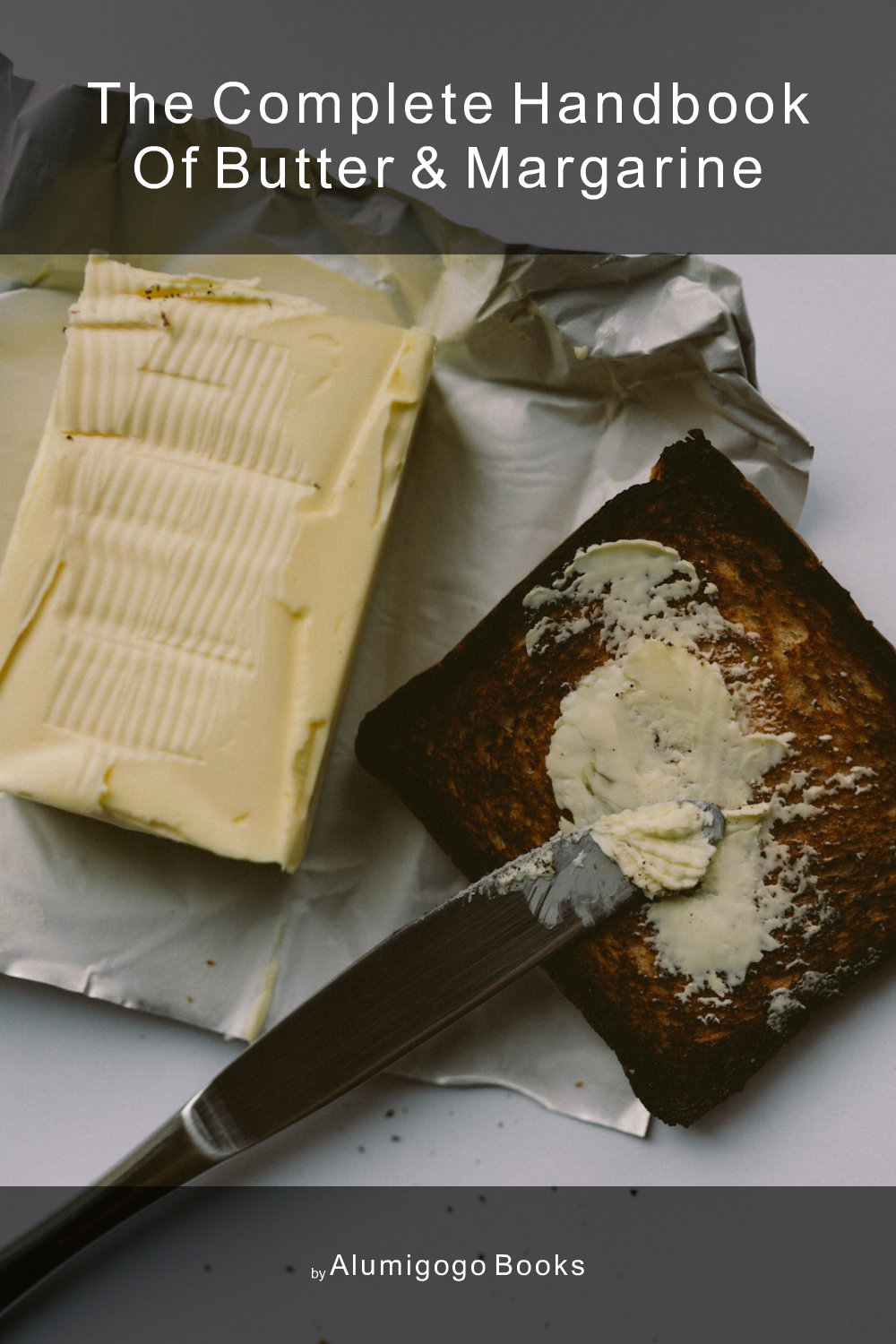
The Complete Handbook of Butter & Margarine
A practical field guide for professionals, businesses, and serious home cooks who need to understand, select, and manage butter and margarine with confidence.
★★★★★3.7 · 7 reviewsby Alumigogo Books
non-fiction
Buy, use, and manage butter and margarine like a professional. Specifications, selection, troubleshooting, and market insights—no fluff.
🔒Secure checkout via Stripe
Labor Day Sale
$9
About this book
Every day, kitchens and food businesses make expensive decisions about butter and margarine based on habit rather than analysis. This handbook is written to change that. It begins with the fundamentals: what these products actually are at a molecular level, how water content and fat crystals determine behavior in heat and cold, and why the legal definitions matter to your bottom line. You will learn to decode the specifications that appear on a Certificate of Analysis, understand the differences between commercial grades, and identify which product characteristics—from melt point to plasticity—are non-negotiable for your specific application.
The middle of the book is pure application. You'll find structured guidance on choosing a product for baking, sautéing, table service, and manufacturing, along with clear protocols for storage, handling, and maintenance. A dedicated troubleshooting chapter addresses the most common operational failures: rancidity, oiling-off, curdling, and grainy texture, explaining the cause and the fix. The final sections cover the commercial landscape: how major brands are positioned in the market, how to assess private-labeling opportunities, and a plain-language look at where the industry is headed regarding regulation, labeling, and fat technology.
This is not a marketing piece. It is a reference that respects the reader's intelligence, with concrete examples, real-world specs, and practical steps. Whether you run a bakery, manage a commissary, or are obsessed with the perfect laminated dough at home, this handbook is the resource to keep on the counter, not just on the shelf.
Reader Reviews
Jacob Young
★★★★★This is the book I wish I had when I started my bakery. The first chapter alone—the part about understanding water content and fat crystals—explained why my croissants weren't lamination correctly. I made two changes based on the specs in the book and it's night and day. It's dense but completely practical. I keep it on my office desk now, not the bookshelf. For anyone in food production who's serious about their craft and their margins, this is a steal.
Linda Brown
★★★★★Good, serious reference. I bought it for the chapter on specifications and it delivered. They explain how to read a Certificate of Analysis, which no one ever bothered to teach me. I docked one star because I felt the chapter on brands felt a little too neutral and general; I wanted a bit more concrete market data, but I understand why they kept it generic since that goes stale fast. The troubleshooting chapter is solid.
Paul Hernandez
★★★★★It's fine. A lot of the information is common sense if you've been in the industry for a while. The storage and maintenance advice is things you learn in your first year of culinary school. I think the target audience is more for a manager who's just starting to handle procurement, not a seasoned pastry chef. Some of the technical parts were interesting, and the writing isn't painful to read, but I wasn't blown away by new information.
George Carter
★★★★★I bought this to get into the private-label game, and the business chapter was more about basics than I expected. The first few chapters on understanding the chemistry and choosing the right product were the real value for me. It's well-written but a bit dry, which I guess is fine for a handbook. If you need to know the difference between roll-in butter and regular butter, this is great. If you're looking for a market analysis report, look elsewhere.
Michelle Smith
★★★★★Honestly, I bought it for the recipe applications, but it's not a cookbook. My fault. It's a technical manual. The explanations are clear, but be prepared to work through it. The glossary at the back is helpful, and I found the FAQ section to be the most accessible part. I think I'll use it when I have a specific issue, but I probably won't read it cover to cover again. A useful tool to have, but not a page-turner.
Timothy Taylor
★★★★★Finally, a reference that doesn't talk down to you or sell you a brand. The premise is exactly what it says: complete and practical. The breakdown of how the fat structure affects the phase transition during baking was incredibly useful for the gelato base I develop for my restaurant. It gives you the vocabulary and the specs to negotiate better with your suppliers. I've already recommended it to two other chefs. This is a professional tool.
Brian Garcia
★★★★★I was disappointed with the lack of specific numbers in the market analysis section. I was hoping for a more forward-looking take on plant-based fats, but they just gave general trends. However, the section on troubleshooting broke down a buttercream splitting issue I've been having for months. The explanation about emulsion and fat content finally made it click. It's a mixed bag for me. Good for the fundamentals, less good for the business strategy.