The Complete Handbook of Binders
A Practical Reference for Professionals, Businesses, and Serious Hobbyists
★★★★★4.2 · 6 reviewsby Alumigogo Books
non-fiction
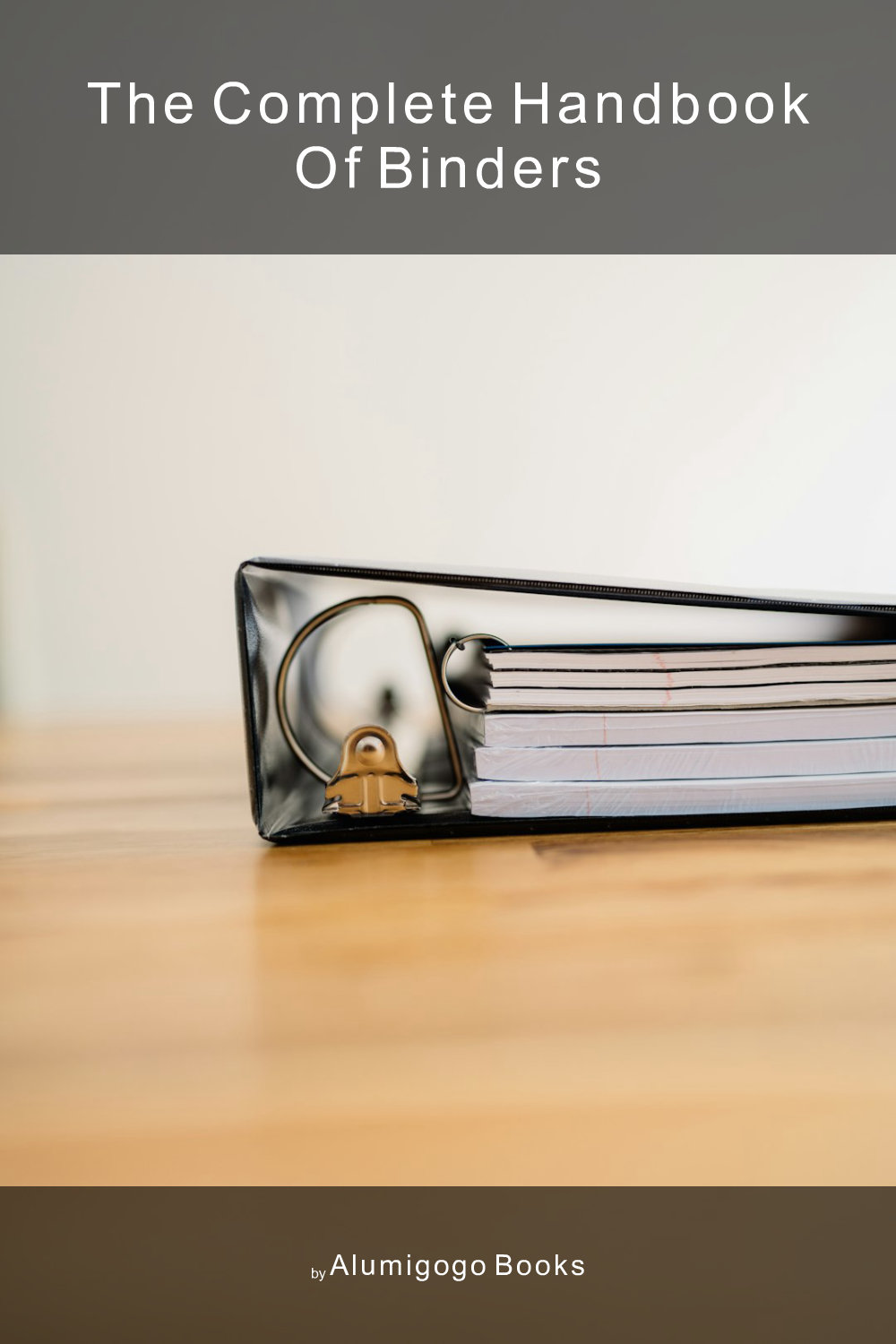
The Complete Handbook of Binders
A Practical Reference for Professionals, Businesses, and Serious Hobbyists
★★★★★4.2 · 6 reviewsby Alumigogo Books
non-fiction
Understand, choose, and maintain the right binder for any job, from boardroom to warehouse.
🔒Secure checkout via Stripe
Labor Day Sale
$9
About this book
Most people buy binders based on a color and a price. This handbook is for the person who needs a binder to survive ten years of daily use, a legal discovery process, or a workshop filled with chemicals and dust. It covers everything from the chemistry of PVC and polypropylene to the metallurgy of rivets and the torque of a D-ring mechanism.
This is not a shopping catalog. It is an engineering and usage manual. Learn how to decode the specifications that matter, from sheet capacity and board thickness to hinge geometry and cover material. Understand installation, maintenance, and troubleshooting so your binder doesn't fail when it matters most. For the entrepreneur, a dedicated chapter outlines realistic business models in reselling, servicing, private label, and rental.
The book is structured for reference, not for a single cover-to-cover read. Consult a specific chapter for a decision, or read it through to gain a complete mental model. Every claim is grounded in physical reality and practical use, with concrete examples drawn from real offices, libraries, and industries.
Reader Reviews
Edward Williams
★★★★★I've been ordering office supplies for a department of 40 for years, and I thought I knew binders. This book made me realize I was just picking the cheapest thing with the right ring size. The chapter on understanding what a hinge actually is and how board thickness affects warping validated a lot of problems I'd been seeing but couldn't explain. It is a bit dry in places, but it's a reference book, so that's fine. I've already changed our standard ordering specs because of it.
Eric Garcia
★★★★★Finally, a book that treats binders like the engineering products they are. The dissection of exactly why polypropylene hinges delaminate and why a rivet material matters is the kind of practical knowledge you just can't find by browsing a supply store. The business chapter alone is worth the price for the detailed breakdown on sourcing and private label costs. It's comprehensive without being bloated. This will be the go-to reference in my shop.
Angela Nelson
★★★★★As an archivist at a mid-sized museum, I've struggled to explain to my board why we can't just buy the cheap clear binders from the big box store. This book is the perfect tool. I read the first chapter and immediately sent a quote from it to my director—the section on PVC off-gassing and metal corrosion is precise and easy to understand. The maintenance and troubleshooting chapter also gave me steps to save a few binders that I thought were trash. Bravo.
Rebecca Flores
★★★★★There's a lot of good information here, and I respect the no-nonsense tone, but it skews heavily toward industrial and archival use, which felt a little remote for my small business. I wanted more examples about day-to-day client presentation binders and retail-store options. The chapter on choosing the right binder is solid, but the one on installation and usage is overkill for me. I got what I needed from two chapters, but I think a complete novice might find the detail intimidating.
Gary Taylor
★★★★★I repair and flip used office furniture and equipment, and I started ignoring binders because the margins were so thin. This book completely changed my perspective. The troubleshooting chapter taught me how to reset a stuck D-ring and reglue a delaminating hinge in minutes, which means I can now resell binders that I would have thrown in the recycling pile. The chapter on suppliers and market positioning is incredibly helpful for finding undervalued lots. It's a niche subject, but for me, it's a goldmine.
Laura Gonzalez
★★★★★The writing is clear and the information is accurate, but I felt it occasionally dives into the weeds on things like board thickness and tensile strength that I'll never need to resolve. I mostly organize documents in a home office and wanted a solid guide on getting good value. It gave me that, so I don't want to be too harsh, but I did find myself skipping forward in the maintenance chapter. It's a thorough reference, but it's more geared toward heavy-duty professional use.