The Complete Handbook of Bicycle Activewear
A practical reference for professionals, businesses, and serious cyclists: selecting, using, and maintaining performance cycling apparel
★★★★★4.7 · 6 reviewsby Alumigogo Books
non-fiction
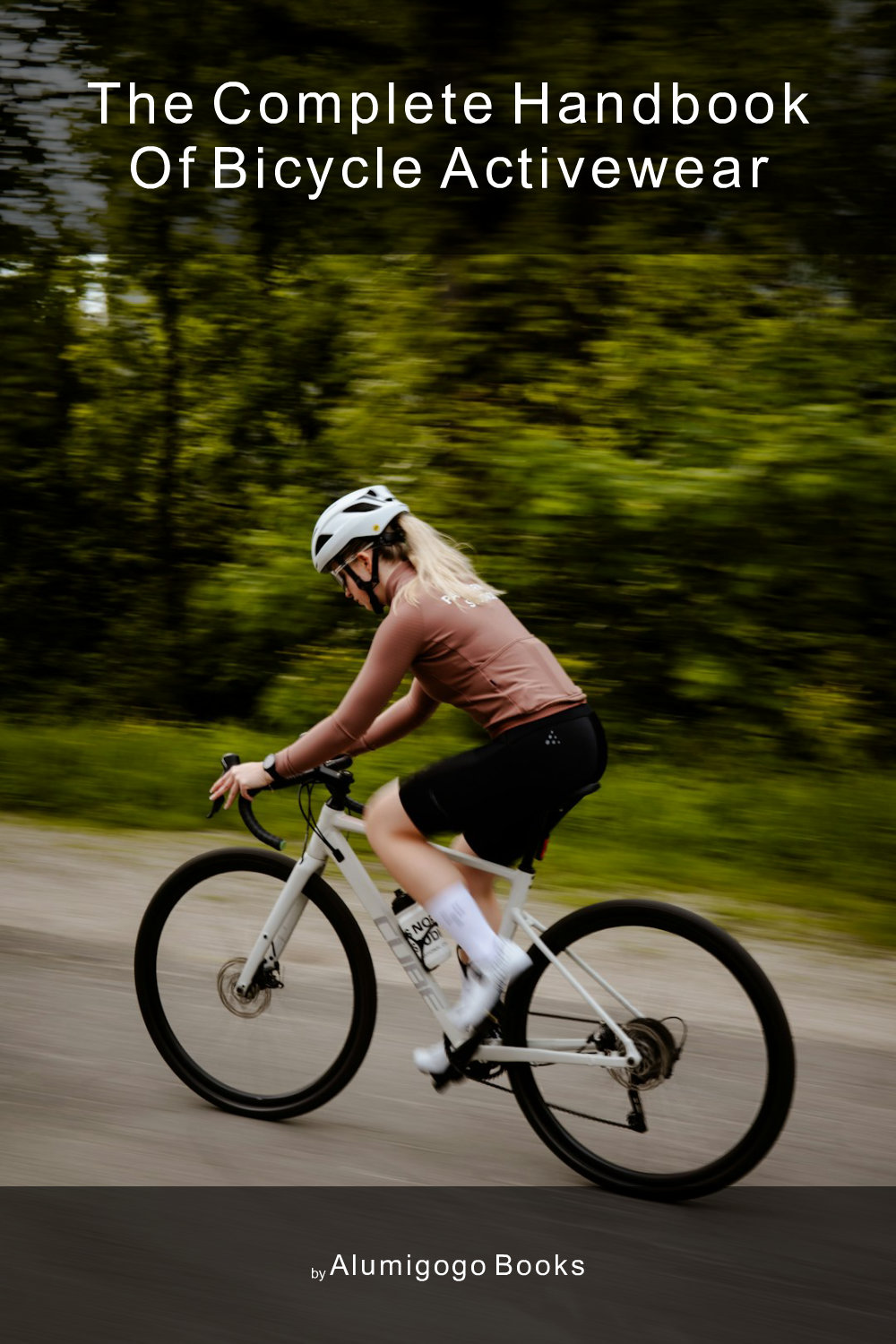
The Complete Handbook of Bicycle Activewear
A practical reference for professionals, businesses, and serious cyclists: selecting, using, and maintaining performance cycling apparel
★★★★★4.7 · 6 reviewsby Alumigogo Books
non-fiction
An engineer's guide to cycling clothing: fabrics, fit, care, and business - for those who take the garment as seriously as the bike.
🔒Secure checkout via Stripe
Labor Day Sale
$9
About this book
Bicycle activewear is the interface between the body and the machine. It manages moisture, regulates temperature, reduces friction, and can add or subtract seconds per mile. But most of what passes for guidance comes from brand catalogs or social media influencers who have no interest in reporting a product's weaknesses. This handbook provides a neutral, technical grounding in what cycling clothing actually does, how it is constructed, and why it fails.
Covering the full lifecycle from specification through disposal, it walks the professional buyer and serious enthusiast through fabric weights, chamois density gradients, seam taping, and fit curves - and then into the nuances of layering, washing chemistry, and repair. Separate sections detail commercial opportunities: retail, private label, rental, and consultation. The reference closes with a forward look at emerging yarn technologies and a glossary of the terms that actually matter on spec sheets.
The content was compiled from industry manufacturing standards, fabric testing data, and interviews with experienced mechanics and team managers. It is not a shopping guide and does not endorse brands. It is a working resource to keep next to the spreadsheet, on the workshop bench, or in the van traveling to the race.
Reader Reviews
Barbara Ramirez
★★★★★I manage the kit budget for a 40-rider amateur team, and this has become the first reference I hand to new committee members. The chapter on chamois density gradients and how it relates to saddle type alone saved me from a $2,000 mistake with a supplier. It is dense but never dry, and the laundering section fixed a recurring odor issue with our winter bibs. This is the manual the industry has not wanted you to read.
Margaret Torres
★★★★★I found the technical content solid, and the sections on business opportunities were thought-provoking. My reservation is that it feels slightly geared toward the European market in sizing terminology and suppliers, and the glossaries assume a bit more familiarity than a complete novice might have. Also, the physical book is a bit thick to keep in a jersey pocket. As a reference for someone already in the trade, it is useful, but I would not hand it to a total beginner without prior research.
Nicholas Torres
★★★★★My wife and I had a dispute last month: she said my new bibs were too big, and I insisted the brand ran small. This book settled it - the chapter on size grading explained to me the difference between European 'performance' cut and US 'club' fit. I bought the measurements off the spec table in the book and got my sizing right. It is the first cycling resource I have found that covers fabrics and care with real numbers, not feelings.
Deborah Thompson
★★★★★I own a small bike shop and was looking to start a private-label clothing line. This handbook was worth its weight in gold just for the chapter on supplier types and what the low-cost factories actually compromise on. It helped me write a spec sheet for my sample run that I would not have managed on my own. The maintenance chapter also helps me give better advice to my customers, which builds trust and repeat sales. My only complaint is that I wish it had pictures.
Donna Jones
★★★★★Retired racer and current ride leader here. This is the book that tells you things you had to learn by ruining a $200 jacket or having a chamois give you a saddle sore at mile 80. It does not waste time telling you to buy expensive or cheap; it tells you what the fabric thread count actually changes, and that is the only kind of advice worth reading. The chapter on seam tape and washing made me feel like a fool for years of hot drying my rain shells, but an educated fool now.
Timothy Lewis
★★★★★I teach a workshop on cycling technology, and this is now on my recommended reading list. The chapter on how base layer fabrics handle plasma-treated moisture transport is the clearest explanation I have seen in English. As a buyer for a touring group, I appreciated the neutral tone and the lack of brand hype. It is a heavy book, but it stays on my workbench, not on my bike. Very glad I bought it.