The Complete Guide to Becoming An Electric Motor, Power Tool, and Related Repairer
The honest, no-hype playbook on the work, pay, training, and career path for electric motor, power tool, and related repairers — so you can decide if this trade is truly right for you.
★★★★★3.9 · 7 reviewsby Alumigogo Books
non-fiction
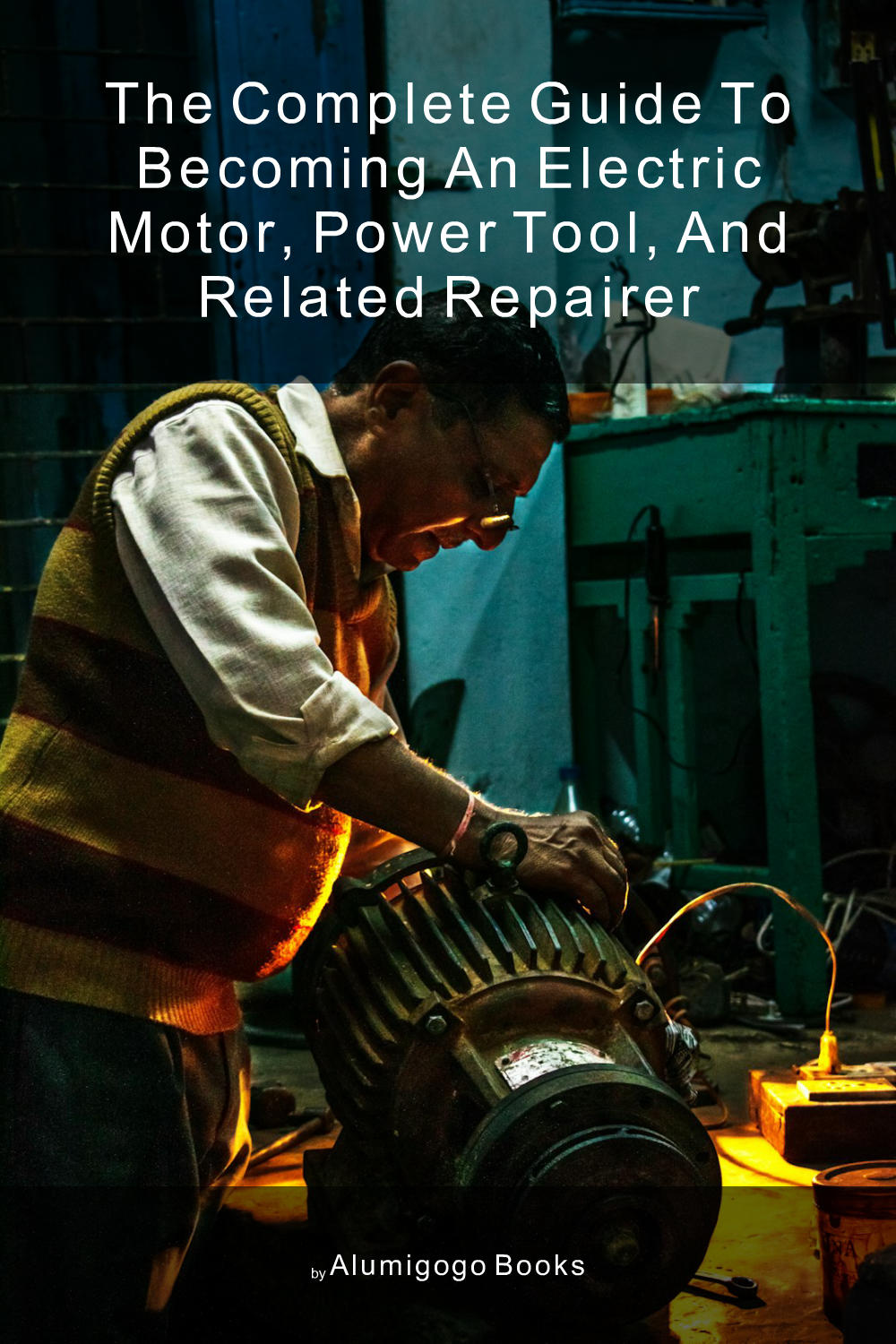
The Complete Guide to Becoming An Electric Motor, Power Tool, and Related Repairer
The honest, no-hype playbook on the work, pay, training, and career path for electric motor, power tool, and related repairers — so you can decide if this trade is truly right for you.
★★★★★3.9 · 7 reviewsby Alumigogo Books
non-fiction
The honest, no-hype playbook on the work, pay, training, and career path for electric motor, power tool, and related repairers.
🔒Secure checkout via Stripe
Labor Day Sale
$9
About this book
Thinking about becoming an electric motor, power tool, and related repairer? You've probably seen a few job postings and a salary range, but you're missing the real picture: What does the actual workday look like? How much will you really earn at year one versus year ten? And, most importantly, will you actually like the work once the novelty wears off?
This guide answers all of that and more. Written with the directness of a career counselor who knows the trade inside out, it walks you through the tangible realities of the job—from the smell of burning varnish in a motor shop to the satisfaction of rebuilding a 200-horsepower industrial motor from scratch. You'll get concrete salary tables, a realistic breakdown of training and certification paths, and a self-assessment checklist to help you determine if your personality and interests match the work.
No vague platitudes, no inflated promises. Just the facts, the trade-offs, and the honest advice you need to decide if this is the right path for your future.
Reader Reviews
Richard Mitchell
★★★★★Finally a career book that doesn't treat the reader like a fool. I'm 34 and looking to switch out of retail into something with actual skills, and this guide gave me the real numbers I needed. I loved the hour-by-hour day-in-the-life in Chapter 1 — it's not all glamorous, but now I know exactly what I'm signing up for. The salary table showing entry pay around $17/hour was sobering but honest, and the chapter on training made the path clear. I've already emailed a local motor shop to see if I can shadow someone for a day.
Daniel Carter
★★★★★It's a solid, well-researched book and I don't regret buying it. I gave it three stars because it sometimes felt a little repetitive — the same points about patience and attention to detail come up in multiple chapters. But Chapter 1 really did put me in the shoes of the worker, and I appreciated the concrete example of rewinding a stator coil. If you're on the fence, this will at least help you understand the job before you waste time and money on training.
Mary Thomas
★★★★★My son was considering a 4-year college degree he wasn't sure about, and this guide helped us both step back and look at this trade seriously. The breakdown of what a repairer actually does in Chapter 1 — the bench work, the customer interactions, the business reality of repair shops — was down-to-earth and specific. We loved the honest discussion about physical demands and the advice in Chapter 5 about building a portfolio of your own repair projects. This is what career guidance should look like.
Jacob Adams
★★★★★This is exactly the kind of book I wish I'd had in high school. I've been working as a helper in a small motor shop for six months, and this guide confirmed I'm on the right track. The salary info in Chapter 4 matches what I'm seeing locally, and the growth pathways in Chapter 7 gave me a clear idea of what to aim for over the next five years. It's written in plain English, not corporate buzzword nonsense. Recommended for anyone who likes taking things apart and wants to get paid for it.
Emily Jackson
★★★★★It's a useful overview, but I was hoping for a little more depth on what the actual aptitude test or hands-on screening is like in interviews. The book tells you what they'll ask, but I wanted more examples of mechanical reasoning questions. Still, I found the lists of the tools of the trade in Chapter 1 super helpful for vocabulary, and the section on whether this is the right fit for you was blunt in a good way. Three stars because it's a great starting point, just not the final word.
Anna Allen
★★★★★Grounded and realistic. The book doesn't promise you'll be rich — it tells you that the median wage is around $24 an hour, which is decent but not life-changing, and that you'll spend a lot of time on your feet. I found the checklist in Chapter 2 particularly useful for deciding if i have the right temperament. The main downside for me was that the writing, while clear, is a bit dry. But if you're weighing this career, you need facts like these, not hype. Overall, a worthwhile read.
Mark Brown
★★★★★Decent book that covers the basics. The info in Chapter 1 about the physical environment and who you work with — machine operators, plant managers, electricians — gave me a clear idea of the day-to-day, which is what I wanted. I knocked off two stars because I felt the section on continuing education and certs in Chapter 3 could have been more detailed about costs and specific schools. But the salary tables are worth the price alone. It's a good stepping stone to further research.