The Complete Guide to Becoming A Robotics Technician
What the job really pays, how to break in, and whether you'll actually like it
★★★★★3.4 · 7 reviewsby Alumigogo Books
non-fiction
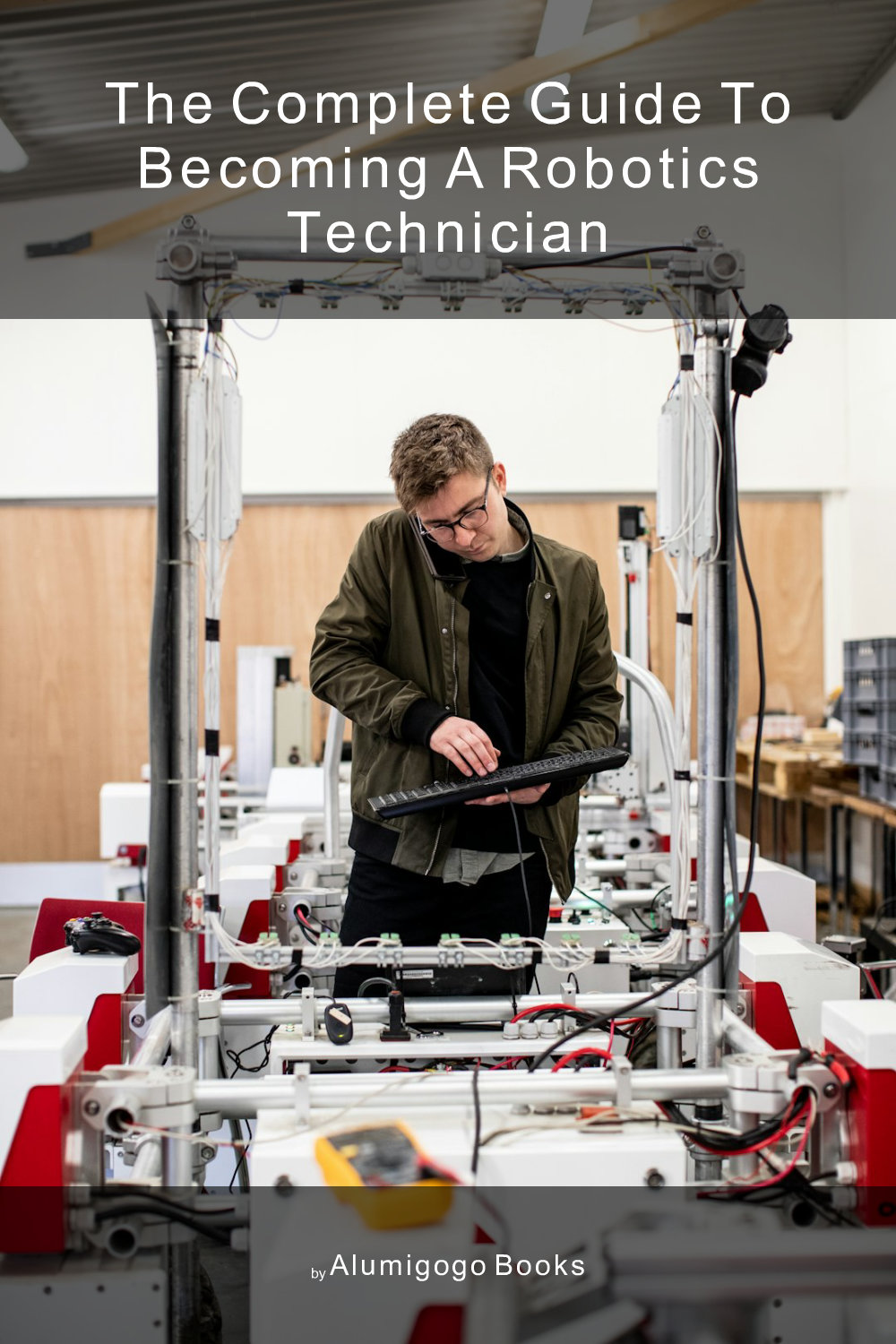
The Complete Guide to Becoming A Robotics Technician
What the job really pays, how to break in, and whether you'll actually like it
★★★★★3.4 · 7 reviewsby Alumigogo Books
non-fiction
Real salaries, real days, real training paths - everything you need to decide if becoming a robotics technician is right for you.
🔒Secure checkout via Stripe
Labor Day Sale
$9
About this book
You've heard robotics is a growing field. You've seen the job listings. But what does a robotics technician actually do on a Tuesday morning at 9:00 AM? How much does it really pay starting out, and what does it take to get that first offer? And more importantly - will the work bore you to tears or stress you out, or will it feel like solving a puzzle and getting paid for it?
This guide answers those questions with specifics. You'll learn about the three main types of technician roles (industrial, field service, and lab-based), the tools you'll use every day like multimeters and PLCs, what a typical 12-hour shift actually involves, and what the promotion track looks like - plus the ceiling you'll hit if you don't keep learning. You'll get honest numbers on salaries from entry level to senior, a chapter-by-chapter breakdown of training paths with real costs, and a checklist you can use tonight to decide if you should apply.
This isn't a cheerleader's pitch and it isn't a scare tactic. It's a straight-talking guide from someone who's worked alongside these technicians and wants you to make a smart decision.
Reader Reviews
Amy Nelson
★★★★★I've been a warehouse supervisor for six years and was seriously considering a switch to robotics. This guide gave me the real picture - the long shifts, the troubleshooting under pressure, and the fact that you're often working alone. It didn't talk me out of it, but it made me realize I need to get more comfortable with electrical systems before I apply. The salary table alone was worth it - I had no idea how much the pay jumps after a couple years. A very grounded, useful read.
Gary Thomas
★★★★★It's fine, but I was hoping for a bit more depth on the actual training programs. The chapter on education and certification had a good comparison table, but I felt like some of the specific apprenticeship options were glossed over - I ended up doing a lot of my own research after reading. Still, the chapter on what the job actually involves was refreshingly honest about the repetitive maintenance tasks. Worth a read if you're at the very beginning of your research, but don't expect it to be the only resource you need.
George White
★★★★★The Chapter 1 breakdown of a typical day finally made me understand what I'd be signing up for. I'm a senior in high school and my counselor suggested this career, but she couldn't tell me what the work actually involves. This guide cleared it up - the shift work, the need to read schematics, the fact that you're problem-solving on your feet. The self-assessment checklist in Chapter 2 was helpful too. I've decided to go for it, and I feel better prepared knowing what's ahead. Definitely a solid starting point.
Melissa Anderson
★★★★★As someone from a non-technical background considering a change, I found the book useful but a bit daunting. I appreciated the honesty about the math and electrical fundamentals needed - it saved me from wasting money on a certification I wasn't ready for. But the tone occasionally felt a little too focused on the negatives, like the harsh shift work and the troubleshooting stress. I think I'll still pursue it, but this made me realize I need to take a couple of community college courses in basic electronics first. Good reality check, even if it wasn't always comfortable.
Christopher Baker
★★★★★This was exactly the straight-shooting guide I needed. I'm a manufacturing associate looking to move up, and I'd heard from a recruiter that robotics is a fast track to higher pay. This guide confirmed that but also showed me the path is more about certifications and hands-on experience than a 4-year degree, which is what I was worried about. The chapter on landing the first job had concrete steps like joining local automation groups and getting an OSHA card. I've already started following the checklist.
Eric Anderson
★★★★★Decent overview, but I wanted more regional salary breakdowns. The book gives national averages and some high-level state comparisons, but I was hoping to see more specifics about cost-of-living adjustments in places like Texas versus Ohio. The day-in-the-life chapter was the most valuable part for me - it showed the job is more about troubleshooting and maintenance than fancy robot programming. Overall, a good read to help you decide, but I'd supplement it with salary data specific to your city.
James White
★★★★★The honest title is accurate - this is a career guide, not a hype piece. I appreciated that it didn't try to sell me on the job. The breakdown of the day-to-day work, especially the time spent doing repetitive calibration and cleaning, was refreshingly honest. I was a little concerned about the career ceiling - it made it clear that to really move up, you need to move into automation engineering or management. That's valuable to know early. A little dry in parts, but the information is solid.