The Complete Guide to Becoming A Precision Agriculture Technician
The real numbers, real days, and real decisions behind the job - so you know if precision agriculture is your path before you invest a dime in training.
★★★★★3.7 · 6 reviewsby Alumigogo Books
non-fiction
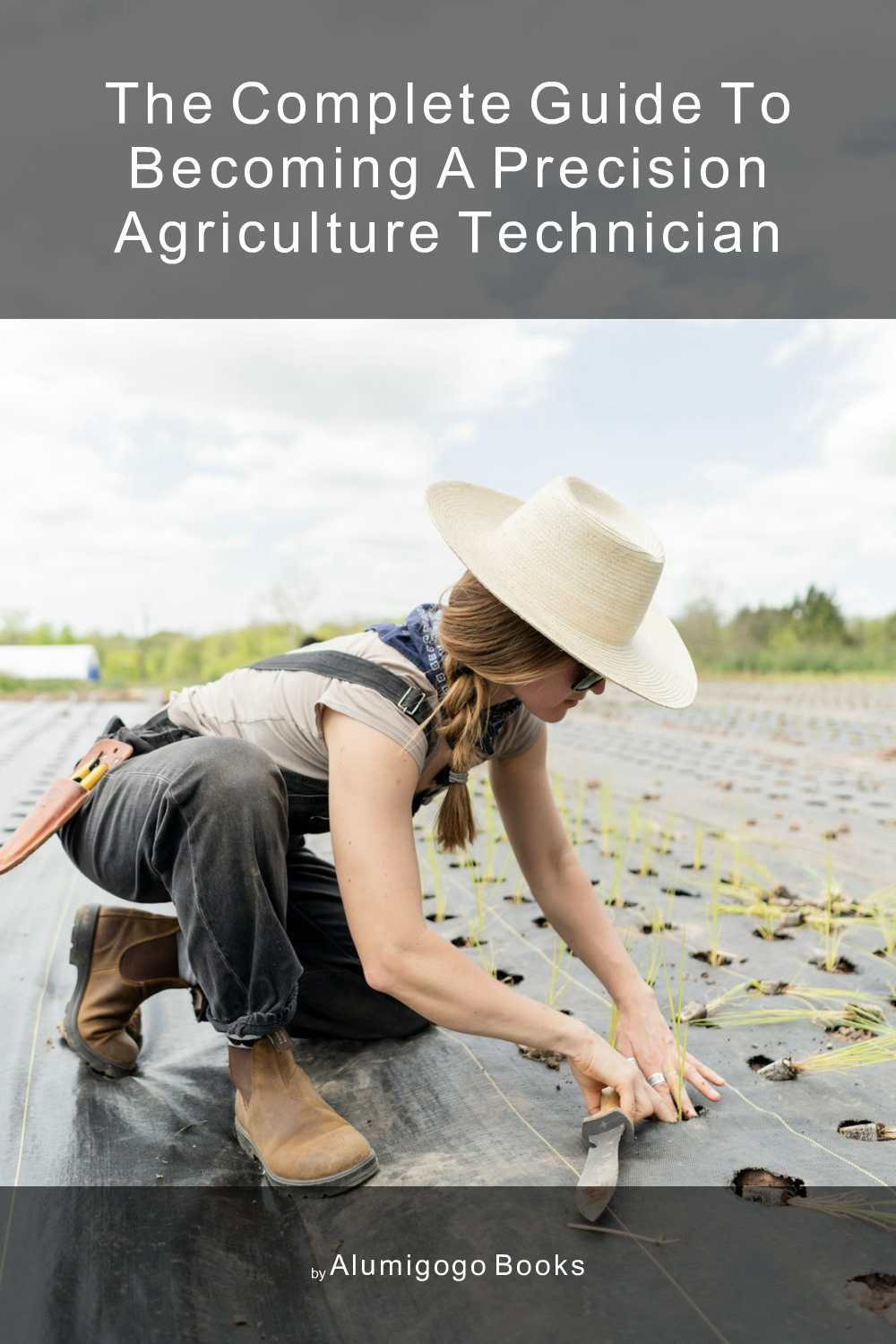
The Complete Guide to Becoming A Precision Agriculture Technician
The real numbers, real days, and real decisions behind the job - so you know if precision agriculture is your path before you invest a dime in training.
★★★★★3.7 · 6 reviewsby Alumigogo Books
non-fiction
What does a precision ag tech really do all day? What do they earn? This guide gives you the unvarnished facts to decide if the field is right for you.
🔒Secure checkout via Stripe
Labor Day Sale
$9
About this book
You're considering precision agriculture, but you're not sure what the job actually looks like on a Tuesday morning in July. You've seen the glossy photos of drones over cornfields and the headlines about tech transforming farming - but nobody's told you what you'll be doing at 7 AM when a planter's GPS module stops talking to the tractor's display. This guide fills that gap with concrete detail: the real tasks, the real pay, and the real skills that will make you employable.
You'll get a ground-level view of the career based on what technicians actually do: calibrating yield monitors, troubleshooting RTK base station errors, writing soil sampling scripts, and explaining data maps to a farmer who just wants to know if the nitrogen rate paid off. You'll see the salaries for entry, mid, and senior roles across different regions. You'll get straight answers on whether you need a four-year degree or if a two-year program plus certification gets you there faster.
The guide also gives you honest guidance on whether this career fits your temperament. It includes a self-assessment checklist so you can test your fit before committing to expensive training. It shows you what the advancement path looks like - and where the ceiling is for someone who stays in this role. If you want to make a smart, informed choice about becoming a precision agriculture technician, this is the book to read first.
Reader Reviews
Jacob Walker
★★★★★I'm a high school senior looking at ag programs and this book saved me from a few bad assumptions. I thought the job was mostly flying drones, but chapter one made it clear that most days are about data and calibration. It's not discouraging, just honest. I docked a star because I wished it had more info on specific two-year programs, but overall it's a solid reality check.
Robert Roberts
★★★★★This is the most grounded career guide I've found anywhere. The chapter on what you actually do day to day is worth the price alone - I had no idea how much time goes into soil sampling and teaching farmers how to read the data. The salary breakdown matched what I found in job postings, and the self-assessment checklist talked me into committing to a two-year ag tech degree. Highly recommend for anyone on the fence.
Jessica Harris
★★★★★I've been an IT guy for eight years and I'm curious about moving to ag tech. The book did a great job showing how my existing troubleshooting skills translate, but it also didn't sugarcoat the field work - you're outside in the heat, crawling under equipment, dealing with dust and Wi-Fi dead zones. The chapter on what interviewers ask was especially useful. I took off a star only because it could have gone deeper on data analytics.
Thomas Davis
★★★★★As a career-changer in my 30s, I appreciated that the book was realistic about the hard parts of the job - long days during planting and harvest, and the fact that you're often the only tech for a hundred miles. But I found the tone a bit too optimistic about entry-level opportunities. A few real-world job postings suggest they want more experience than the book implies. Still, the salary and path tables are genuinely useful.
Barbara Allen
★★★★★I bought this for my son who's thinking about ag tech. The book is clear and well organized, but I found the chapter on education and certification somewhat negative on apprenticeships - it didn't give much detail on how to actually find one. The self-assessment checklist was a good conversation starter though. It's a decent book, just not as complete on the training route as I'd hoped.
Joseph Clark
★★★★★Decent overview but the chapter on demand outlook felt a bit generic by region - it said 'the Midwest has the most jobs' but didn't really break it down county by county or give specific projections. The day in the life, though, was spot on with what a friend in the field has told me. If you're just starting your research, this is a fine place to begin. Just don't expect it to be the last book you'll need.