The Complete Guide to Becoming A Podiatrist
The real numbers, daily realities, and honest trade-offs of podiatric medicine — so you can decide if it's worth the decade of training
★★★★★4.2 · 6 reviewsby Alumigogo Books
non-fiction
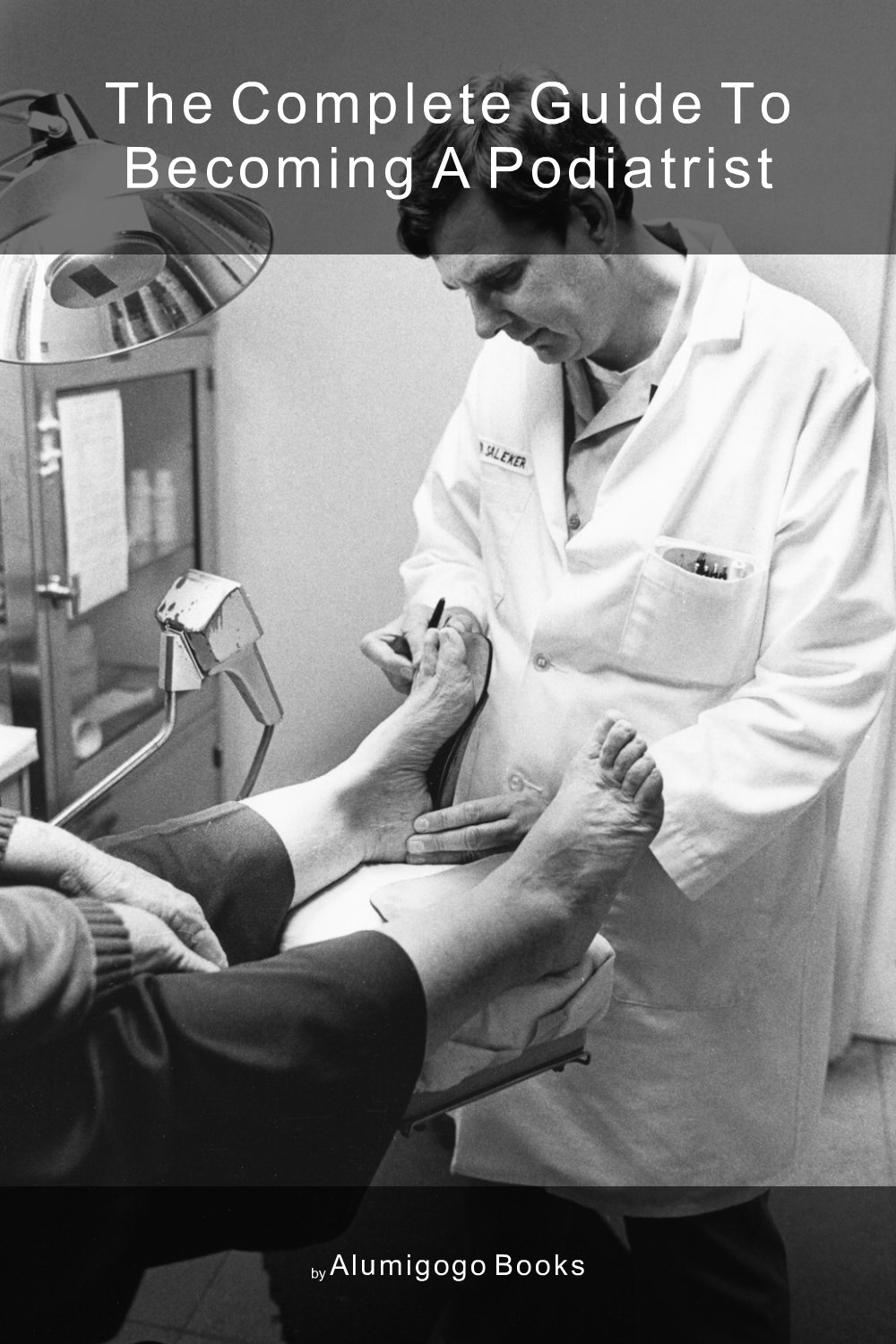
The Complete Guide to Becoming A Podiatrist
The real numbers, daily realities, and honest trade-offs of podiatric medicine — so you can decide if it's worth the decade of training
★★★★★4.2 · 6 reviewsby Alumigogo Books
non-fiction
What does a podiatrist really do all day? How much do they earn, how long is training, and is the debt worth it? Straight answers for a serious career decision.
🔒Secure checkout via Stripe
Labor Day Sale
$9
About this book
You're not looking for a "follow your dreams" pep talk. You're weighing a decade of schooling, six-figure debt, and a career that will put you in direct contact with feet — all of it. This guide gives you the unvarnished picture: what the job actually involves on a Tuesday morning, what it pays at every level from residency to private practice, and the personality traits that make people thrive or burn out in this specialty.
Backed by real data on match rates, board exam pass percentages, and average salaries by region and experience level, this is the handbook that career counselors wish they had time to write. You'll get concrete self-assessment checklists, a comparison of training paths (including DO vs. DPM vs. international avenues), and a step-by-step plan for landing your first job — with the exact questions interviewers will ask.
Podiatry is a rewarding, stable, and often overlooked corner of medicine. But it's not right for everyone. This guide ensures that if you choose it, you do so with your eyes wide open — and if you don't, you find out before you've sunk years into organic chemistry.
Reader Reviews
Betty Rodriguez
★★★★★I'm in my last year of undergrad and was completely lost between PA school, nursing, and podiatry. Chapter 1 alone was worth it — I had no idea how much of the job is actually wound care and diabetic management, not just 'foot surgery.' The salary tables in Chapter 4 made me realize the income is solid but not crazy, which is exactly the reality check I needed. I'm now seriously applying to DPM programs with clear eyes.
Elizabeth Taylor
★★★★★Good guide overall, but I docked a star because Chapter 3 on the training path didn't fully prepare me for how competitive the residency match has gotten recently. The numbers were accurate, but I wish there was more on how to stand out in rotations. That said, the self-assessment checklist in Chapter 2 is brutally honest — I sent it to my two pre-med friends before they wasted any more tuition money.
Emily White
★★★★★As a career-changer from corporate finance, I needed actual facts about whether I could handle this path. The hour-by-hour day in Chapter 6 was the most realistic description I've read anywhere — including the 45 minutes of charting after lunch. The book told me exactly how much I'd make in my first year out of residency, how much debt I'd be carrying, and how long before I could realistically buy into a practice. It's worth triple the price for that level of detail.
Paul Lewis
★★★★★The best thing I've read on this career, period. I especially appreciated that Chapter 1 got into the specific tools — from a Winograd needle to an osteotome — without dumbing it down, and the breakdown of who else is in the room during a procedure, like the surgical tech and circulator nurse. Chapter 7 showed me that becoming a foot and ankle surgeon is not just a dream but a documented path. I'm now a DPM student and this book is still on my desk as a reference.
Shirley White
★★★★★This is a fine book, but I wanted more on the reality of podiatry in rural areas. I live in a small state and the demand data in Chapter 4 was mostly national — it didn't help me figure out if I should stay or move. The writing style is decent but the tone sometimes felt like a career counselor who'd never actually been on their feet all day in a clinic. Useful for basics, but not the deep dive I was hoping for on the business side of running a practice.
Anna Hall
★★★★★The author is clearly knowledgeable, but I found the early chapters a little repetitive — I skimmed Chapter 1 because I already know what a podiatrist does, and I wish the guide got to the risk areas sooner. Chapter 8's FAQ was the most valuable part for me, particularly the answer about whether a DO degree could be a better investment than a DPM. I'm still undecided between the two, but at least I have a better framework now. Solid if you have absolutely no background, less useful if you've done your research.