The Complete Guide to Becoming A Photonics Technician
Real pay, real paths, real days: how to know if photonics is the right trade for you before you spend a dollar on training
★★★★★3.8 · 5 reviewsby Alumigogo Books
non-fiction
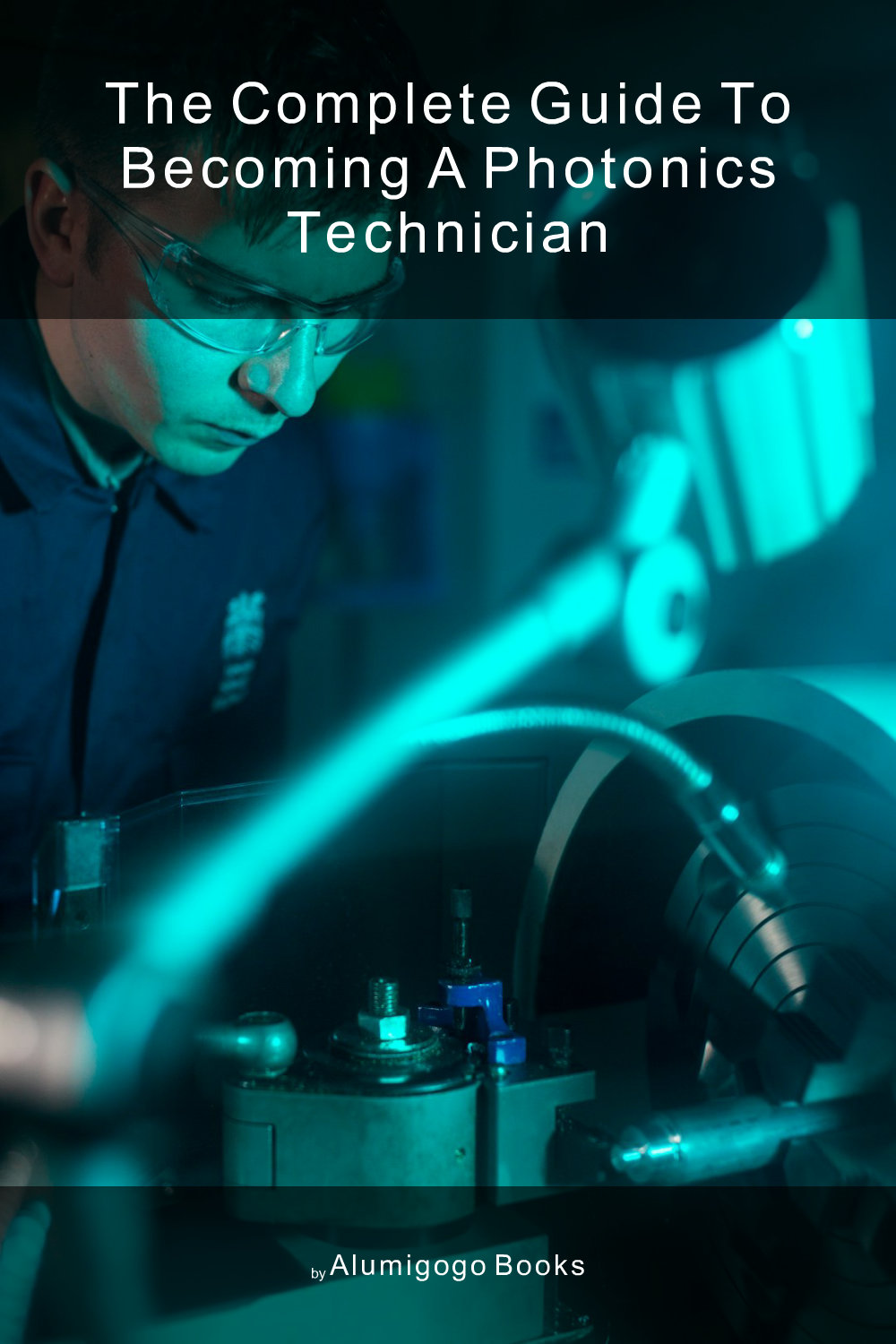
The Complete Guide to Becoming A Photonics Technician
Real pay, real paths, real days: how to know if photonics is the right trade for you before you spend a dollar on training
★★★★★3.8 · 5 reviewsby Alumigogo Books
non-fiction
What do photonics techs really do all day? What do they earn? Is it a fit for you? Straight answers, no fluff.
🔒Secure checkout via Stripe
Labor Day Sale
$9
About this book
You've seen the job postings: "Photonics Technician Needed — Competitive Pay." But what does that actually mean on a Tuesday at 2 p.m.? Are you aligning lasers in a cleanroom, troubleshooting fiber optic networks, or calibrating sensors for medical devices? And is the pay competitive enough to justify the training? If you're weighing this career, you need concrete answers, not a recruiter's pitch.
This guide walks you through the real work: the optical tables, the spectrum analyzers, the fusion splicers, the cleanroom gowning, the 10-hour shifts standing at a bench, and the satisfaction of getting a system to spec that's being shipped to a hospital or a satellite program. It covers the honest salary ranges at entry, mid, and senior level, breaks down the cost and length of every realistic path into the field (associate degrees, certificates, apprenticeships, on-the-job training), and gives you a self-audit so you can see if your temperament fits the work before you commit a single dollar.
You'll also get a chapter on landing your first job with zero experience, a realistic day-in-the-life narrative from morning to quitting time, and a roadmap for where this career can take you — from senior tech to applications specialist to manufacturing engineer. Written by someone who's been in the weeds of this work, not just read about it, this guide is your honest, grounded companion for making the decision.
Reader Reviews
Sarah Flores
★★★★★I was completely lost on what a photonics tech actually did all day. The first chapter alone was worth it — it walks you through what an optical table is, what a fusion splicer is for, and what a 10-hour shift standing at a bench actually feels like mentally. It's the first thing that made me feel like I could picture myself in this job. The salary tables in chapter four were the reality check I needed.
Linda Flores
★★★★★As a mom reading this for my daughter who's finishing high school, I found the education and training chapter very practical. The comparison table of the associate degree versus a certificate versus an apprenticeship gave us a real sense of what the money and time would look like. I took off half a star because I wish the book had specific schools listed, but I get that it's more about the decision than the directory.
Carol Rivera
★★★★★It's solid information and I appreciate the honesty, especially the self-assessment checklist which made me pause, but a lot of this I could have found scattered for free on forums and YouTube if I was willing to do the digging. The day-in-the-life chapter was well written though, and it did clarify that this is a bench job with a lot of repetition, which I appreciated. Good if you want it in one place.
Ronald Campbell
★★★★★I'm a manufacturing tech thinking of switching over to photonics, and this guide gave me a realistic map of the bridge. The pay chapter is accurate to what I've seen posted around Dallas, and the advice on breaking in without experience — specifically mentioning cleanroom experience and basic soldering skills — was directly actionable. I appreciated that it didn't try to convince you; it just lays out the path.
Kathleen Scott
★★★★★Decent overview, but it skimmed the surface in a few spots. The breakdown of the tools and systems in chapter one was useful — I felt like I understood the basics of an interferometer for the first time. That said, I felt the career growth chapter was a bit optimistic and I wish it had more details on how to find apprenticeships specifically. It reads a bit like a very thorough blog post rather than a book, but it was a quick read and helpful enough.