The Complete Guide to Becoming A Medical Records Specialist
The truth about the pay, the day-to-day grind, and the path in — so you can decide if this is the right healthcare career for you.
★★★★★4.3 · 8 reviewsby Alumigogo Books
non-fiction
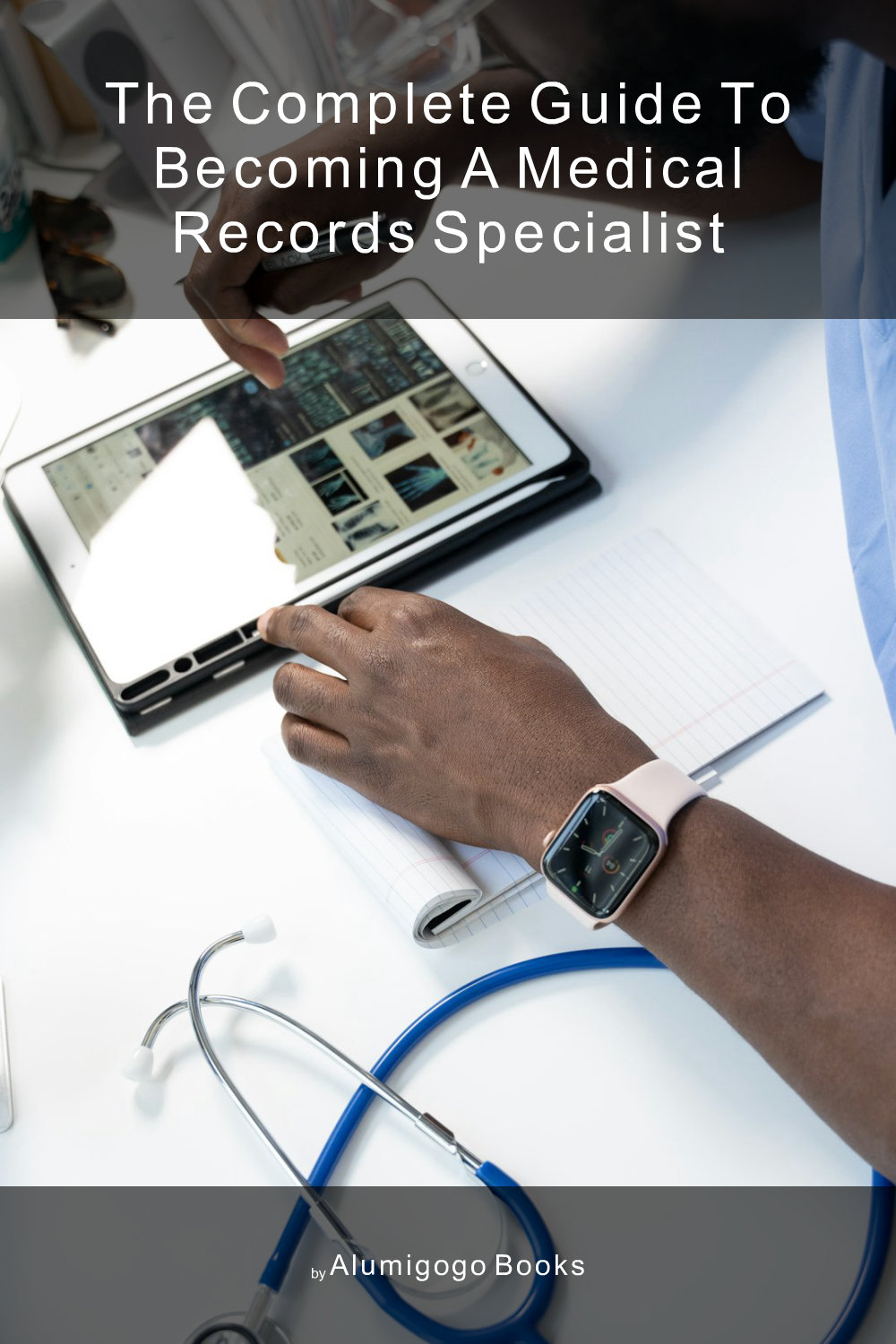
The Complete Guide to Becoming A Medical Records Specialist
The truth about the pay, the day-to-day grind, and the path in — so you can decide if this is the right healthcare career for you.
★★★★★4.3 · 8 reviewsby Alumigogo Books
non-fiction
What do Medical Records Specialists actually do all day, and is it worth it? Real pay, real paths, real answers.
🔒Secure checkout via Stripe
Labor Day Sale
$9
About this book
You've seen the job postings: "Medical Records Specialist — healthcare experience preferred, EHR proficiency required." But what does that actually mean for your daily life? This guide answers that with concrete detail — the monotony of data entry, the pressure of audit deadlines, and the quiet satisfaction of a perfectly organized patient chart. It's a warts-and-all look at a role that is increasingly essential in a digitized healthcare system.
Expect real numbers, not vague promises. You'll see realistic salary ranges for your city and experience level, the true cost of RHIT certification versus a two-year degree, and what advancement actually looks like (hint: it's not a straight line to the C-suite). With an honest self-assessment checklist, a step-by-step job search plan, and a chapter that walks you through a typical day hour-by-hour, this guide gives you the tools to decide if this is a stepping stone or a dead end — before you invest your time and tuition money.
Reader Reviews
Jason Baker
★★★★★I've been a CNA for 6 years and I'm burned out, so I was looking at medical records. Every other career guide is fluff. This one actually told me that I'd be spending about 70% of my day in an EHR system, which honestly sounds like heaven compared to lifting patients. The salary table for my state made me realize I could afford the RHIT cert. I feel like I can actually make a plan now.
Margaret Clark
★★★★★It's a decent overview, but I felt like the author was a bit too negative about the data entry aspect. Sure, it's repetitive, but that's true of every office job. I also wish they'd spent more time on the different types of EHR systems like Epic vs Cerner, since that's what I keep seeing in job postings. Still, the chapter on how to get that first job was super practical.
Jason Nelson
★★★★★As a high school junior trying to figure out what to do with my life, this was a breath of fresh air. No cheesy quotes about following my dreams. It's the first book that actually broke down what a job involves, what it pays, and exactly what classes to take. The hour-by-hour day in the life chapter made it feel real to me. I'm not scared of the boring parts anymore.
Emily Thomas
★★★★★The self-assessment checklist in Chapter 2 was a gut check. I'm a people person, so the "not a good fit" section really spoke to me — if you want to talk to patients all day, this isn't it. I'm glad I read that before spending money on a degree. Appreciated the honesty even if it wasn't what I wanted to hear. Book is well-written and specific, using actual numbers rather than guesses.
Sandra Smith
★★★★★I was worried about job security and whether this would be automated away. The demand outlook section gave me a realistic picture that it's more about data quality than just typing stuff in, so the role is evolving rather than disappearing. Reading about the pay ranges for a senior specialist is what convinced me it's a stable middle-class job, which is all I'm really asking for.
Kathleen Smith
★★★★★This is the only book I found that breaks down the cost of the RHIT and the cost of the associate's degree side by side, including the reality of internship hours. The interview questions in Chapter 5 were spot on — I literally got asked about what to do if I found a patient's info error. I used the answer from this book and got the job. Worth every penny.
Ryan King
★★★★★Good, practical read. I'm a career-changer from retail, so the chapter on salary by region was exactly what I needed. I would have loved a few more examples of daily tasks, but the chapter on how to talk to hiring managers without a medical background was worth the price alone. It reassured me that my customer service experience counts for something.
Barbara Lee
★★★★★I was on the fence between this and becoming a pharmacy tech. This book made the difference. It's honest that the job can be repetitive, but that's precisely why I think I'll like it. The list of adjacent roles like medical coder or release-of-information specialist gave me a clear path for growth. It's a solid, realistic guide for anyone looking to get into healthcare without clinical work.