The Complete Guide to Becoming A Diagnostic Medical Sonographer
The real pay, the real path, and the real day-to-day — everything you need to decide if this is the right career for you before you spend a dollar on tuition.
★★★★★3.9 · 8 reviewsby Alumigogo Books
non-fiction
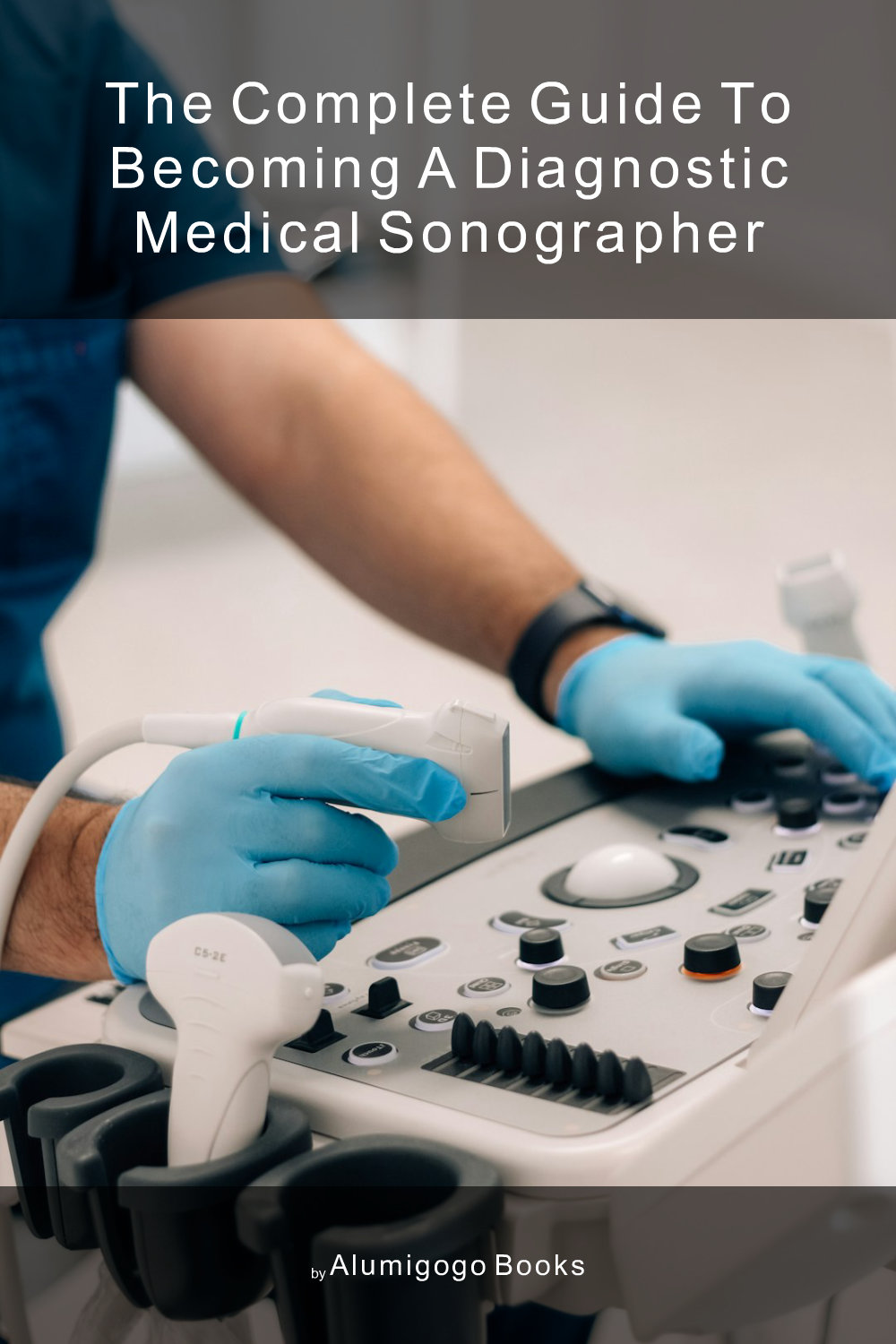
The Complete Guide to Becoming A Diagnostic Medical Sonographer
The real pay, the real path, and the real day-to-day — everything you need to decide if this is the right career for you before you spend a dollar on tuition.
★★★★★3.9 · 8 reviewsby Alumigogo Books
non-fiction
Real answers about pay, training, and daily work — so you can decide if sonography is right for you before spending years and thousands on a degree.
🔒Secure checkout via Stripe
Labor Day Sale
$9
About this book
Are you thinking about becoming a diagnostic medical sonographer? The job listings say 'great pay, great hours, in-demand.' But what does that actually mean for your day-to-day life? This guide gives you the grounded, specific truth — not a recruiter's pitch. You'll learn what a sonographer actually does from the first patient to the last, the physical toll the job takes on your shoulders and wrists, and why some people thrive in this work while others quit within two years.
Get real numbers on entry-level pay versus senior pay, the actual cost and timeline of different training paths (from a $60,000 degree to a cheaper certificate program), and a practical, step-by-step plan for landing your first job when every posting seems to want experience. You'll also see what a typical day looks like hour-by-hour, how to specialize for higher pay, and answers to the questions you're too embarrassed to ask — like 'What if I hate blood?' or 'Can I actually do this at 40?'
This book is for anyone who is seriously weighing this career — not people already in the field. If you want to know what you're really signing up for, before you commit years and tuition dollars, start here.
Reader Reviews
Elizabeth Hill
★★★★★It's a solid overview, and the chapter on what sonographers actually do is pretty accurate to what I've seen as a patient. I just wish there was more detail on the certification process — it felt a little thin compared to how much space the day-to-day stuff got. Still, it helped me rule out this career, which is what I needed, so I'll count it as a win.
George Martin
★★★★★I was leaning toward sonography because a friend recommended it, but I had no idea about the physical toll until I read Chapter 1. The wrist and shoulder stuff is something nobody at the career fair mentions. This isn't a flashy book, but it's honest. It read a bit dry in the middle, but the pay numbers were the most real I've seen anywhere.
Barbara Hall
★★★★★I'm 34, looking for a second career, and I felt completely lost reading college websites and hospital job listings. This guide broke everything down in plain English — the real hours, the real pay, what the job actually feels like physically and mentally. The self-assessment checklist in Chapter 2 made me realize I'm actually a good fit, and the first-job advice gave me a concrete plan. Best money I've spent on career research.
Patricia Anderson
★★★★★Very practical. I appreciated that it didn't try to convince me this job is glamorous — it's hard work, and the book says so. The chapter on what you'll earn was worth the price alone, especially the table showing how pay stagnates if you don't specialize. It could have been better edited in a couple spots, but the information is solid and exactly what I needed.
Anthony Torres
★★★★★My daughter is a junior in high school and thinks she wants to do ultrasound. I bought this for myself first so I could help her make an informed decision, and I'm glad I did. The chapter on training paths was the clearest comparison I've found — cost, time, what each path gets you. We made a list of questions to ask her counselor based on this book. This should be required reading for any family going through this.
Jacob Wilson
★★★★★Honestly, it was a decent read, but I felt like the chapter on a day in the life was a little too rosy. The author says it's not sugar-coated, but some parts sounded like a hospital PR piece. That said, I did respect the section about breaking in — made me realize which hospitals to target and how to stand out. It's a fine starting point, but read the specific program's reviews too.
George Walker
★★★★★I've been a radiologic tech for six years and I'm thinking of cross-training into sonography. This book laid out the real differences between what I do and what sonographers do — different patients, different workflows, different pay. The chapter on advancing in the field was practical, not the usual 'sky's the limit' nonsense. I'm a lot more confident about making the switch now, and I know what to ask the program directors.
William Lopez
★★★★★What I needed was straightforward information about time and money, and this guide delivered. The breakdown on certificate versus degree programs versus apprenticeships got me to stop spiraling about how to afford it. I also appreciated the honesty about the physical demands — I had no idea how much of the job is maneuvering a heavy wand around a patient, not just looking at a screen. This felt like talking to a smart friend who works in the field.