The Complete Guide to Becoming A Computer Programmer
What you'll really earn, what the work really involves, and exactly how to decide if this is your path
★★★★★4.3 · 6 reviewsby Alumigogo Books
non-fiction
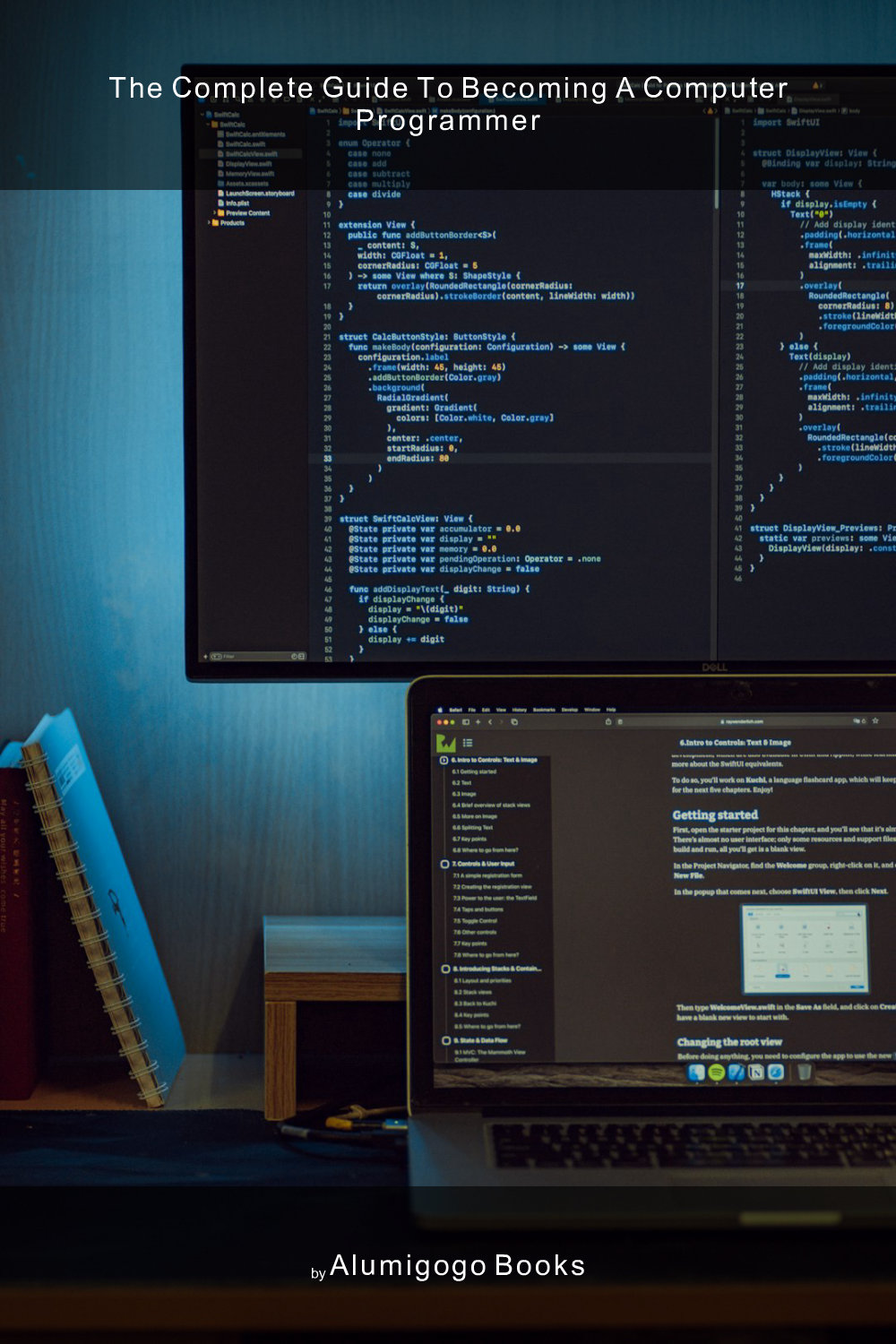
The Complete Guide to Becoming A Computer Programmer
What you'll really earn, what the work really involves, and exactly how to decide if this is your path
★★★★★4.3 · 6 reviewsby Alumigogo Books
non-fiction
The honest, no-BS guide to whether programming is right for you: the work, the pay, the path in, and the future.
🔒Secure checkout via Stripe
Labor Day Sale
$9
About this book
You've heard that programming pays well and has job security. But you've also heard it's stressful, isolating, and maybe on the verge of being automated away. So which is it? This guide does what no recruiter or YouTube video will do: it shows you the actual day-to-day work of a computer programmer, the real salary figures at entry, mid, and senior levels, and the specific skills that determine whether you'll thrive or burn out.
Written by someone who's been alongside programmers in real workplaces, this is a career counselor's perspective, not a cheerleader's. You'll learn the three realistic paths into the field with honest timelines and costs, what interviewers actually ask, and what the career ceiling looks like. You'll also get a self-assessment checklist to help you decide if your natural traits fit the work. No vague inspiration, no 'follow your passion' filler. Just the facts, the trade-offs, and a clear path to a decision.
Whether you're a high schooler weighing a CS major, a professional considering a pivot, or someone who just wants to understand what programmers really do all day, this guide will give you the grounded clarity you need to make the call with confidence.
Reader Reviews
Emily Mitchell
★★★★★I'm a marketing manager thinking about switching to tech, and this book was refreshingly honest. I appreciated that Chapter 1 actually walked through a real workday instead of just listing job duties. The salary info in Chapter 4 made me reconsider my expectations, but in a good way. It's not a pep talk, it's a reality check, and I needed that. Took off one star because I wished the networking advice in Chapter 5 was more detailed.
Rebecca Carter
★★★★★This is the book I wish I had before I chose my major. I'm a sophomore in high school and everyone keeps saying 'learn to code' but nobody actually explains what programmers DO all day. This book told me exactly what the job is, what it pays, and how to get in. The self-assessment checklist in Chapter 2 made me realize that I actually have the patience for this work. I've already read it twice and I'm confident this is what I want to pursue.
Betty Johnson
★★★★★I'm 39 and I lost my retail management job last year. I kept hearing 'tech is the future' but felt too old to chase it. This book gave me concrete steps, not empty motivation. I really connected with the Chapter 1 breakdown of the actual work, because that's what I was scared of. It also showed me the different paths to get in and what they cost - I'm going with a bootcamp after reading the comparison table. I'm starting in two weeks.
Donna Lee
★★★★★Some parts were useful, but I found the tone a bit repetitive in places. The salary data in Chapter 4 was the most valuable part for me - I'm in a low-cost area and the ranges here were more realistic than what I've seen online. But Chapter 1 felt a little slow to me, and I wanted more concrete examples of what to do when you're stuck on a bug. Decent book, just not exactly what I was hoping for.
Cynthia Mitchell
★★★★★I'm 34 and I've been a teacher for ten years. I bought this book because I'm exploring a second career. The Chapter 1 description of a programmer's day reminded me of how teachers plan lessons and grade work - it's not as foreign as I thought. I really appreciated how it laid out the different types of roles, since 'programmer' can mean so many things. The parts about who you work with were spot on. It's the first career book I've read that didn't feel like it was trying to sell me something.
Robert Adams
★★★★★As a veteran coming out of the military, I needed straight talk, and this book delivered. It's direct and practical without being discouraging. The chapter on breaking in was especially helpful because it didn't assume I had a computer science degree already. It gave me a realistic plan for using my GI Bill for a bootcamp and what to expect in interviews. The only reason I'm not giving a middle rating is the reviews seemed too positive for me at first, but I was wrong - it's genuinely that good.