The Complete Guide to Becoming A Camera Operator, Television, Video, and Film
What the job really pays, how you actually break in, and whether you have what it takes - before you spend a dollar on film school.
★★★★★3.7 · 6 reviewsby Alumigogo Books
non-fiction
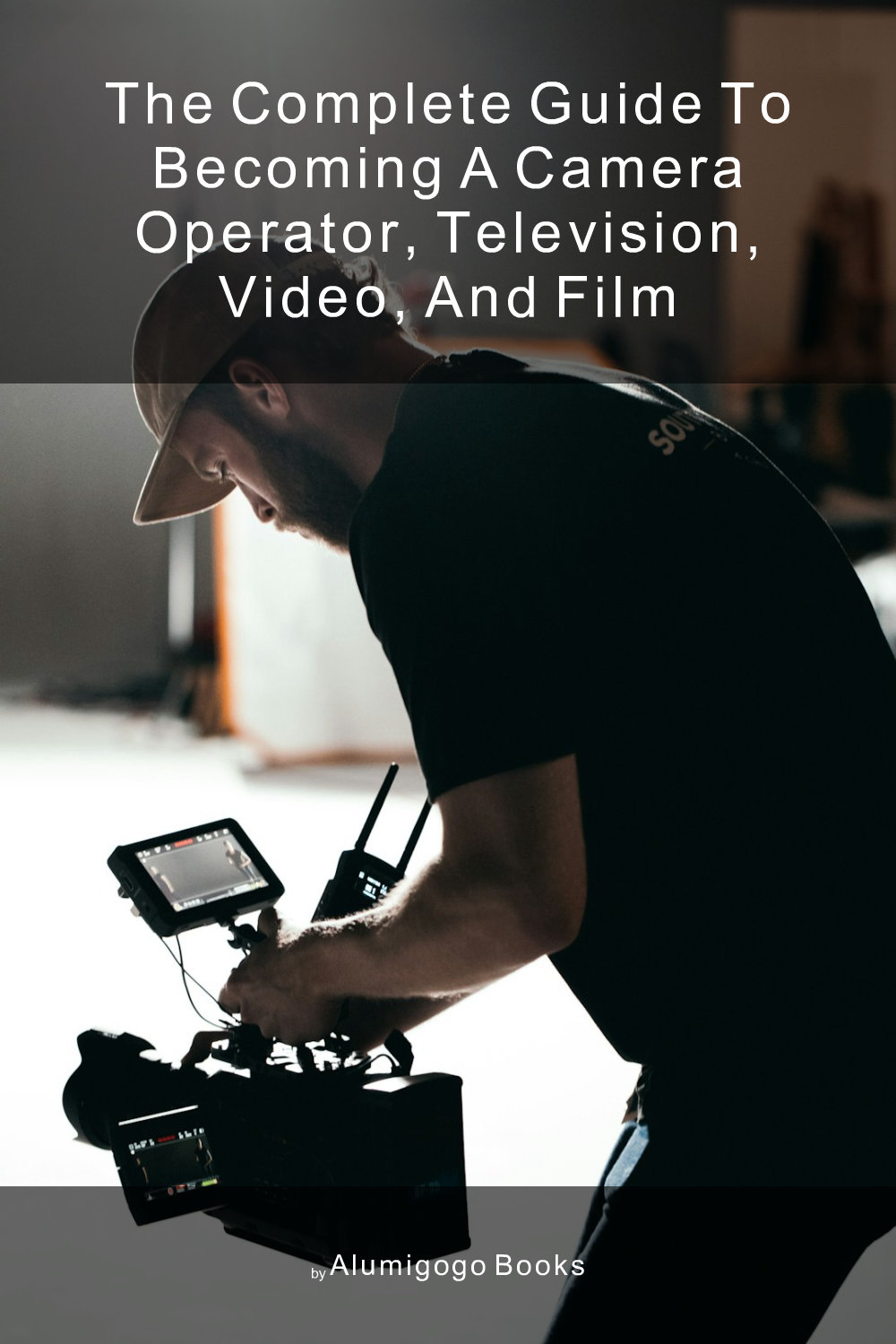
The Complete Guide to Becoming A Camera Operator, Television, Video, and Film
What the job really pays, how you actually break in, and whether you have what it takes - before you spend a dollar on film school.
★★★★★3.7 · 6 reviewsby Alumigogo Books
non-fiction
Real pay, real timelines, real expectations. A grounded guide to deciding if camera operating is the right career for you - before you invest years and tuition.
🔒Secure checkout via Stripe
Labor Day Sale
$9
About this book
You've seen the credits roll on a hundred movies and thought, "I could do that." But what does a camera operator actually do between 6:00 AM and 8:00 PM on a Thursday in March? This guide answers that question with concrete detail: the 40-pound camera rig on your shoulder, the 14-hour days on a commercial shoot, the editor who needs just one more angle, and the union ladder you might climb for a decade before landing a scripted drama.
This isn't a film school brochure. It's a career evaluation tool. You'll get honest salary ranges from entry-level corporate video gigs to top-tier union feature work. You'll learn the difference between a 10-month path into event videography and a 5-year slog into episodic television. And you'll find a chapter that helps you assess whether your temperament - not just your artistic taste - can handle the repetition, the waiting, and the heavy lifting.
By the end, you'll know what questions to ask, what skills to build, and whether this career is a smart investment for your specific situation - or a fantasy that should stay a hobby.
Reader Reviews
Paul Miller
★★★★★I'm a junior in high school trying to decide between film school and a state college, and this book actually helped me think it through. The salary chapter hit me hard - I had no idea that most camera ops in corporate video start around $35k and that union work takes years to break into. I still want to do this, but now I know what I'm signing up for.
Brenda Roberts
★★★★★The chapter on what camera operators actually do was accurate, maybe too accurate. I've been shooting corporate video for three years and I recognized the 70-hour weeks and the back pain. The book is well-organized and honest, but I wish it had more on freelance taxes and insurance. Still, it's a solid reality check for someone starting out.
Angela Roberts
★★★★★I'm 34 and thinking about leaving my office job to get into video production. The self-assessment checklist in Chapter 2 made me realize I actually do have the patience for those 12-hour shoots - and the chapter on breaking in gave me a concrete plan to start building a portfolio. I've already reached out to a local production company.
Amanda Davis
★★★★★What I appreciated most is that this doesn't read like a film school recruitment pamphlet. It gives you real numbers, real timelines, and real descriptions of the grind. The day-in-the-life chapter is worth the price alone - it convinced me I could handle the lifestyle. I've read a lot of threads on Reddit but this was far more organized.
Jonathan Hernandez
★★★★★As a college senior with a media degree but zero real-world experience, I was desperate for something concrete. The chapter on education and training was refreshingly honest about how a $120k film degree compares to just working your way up from a rental house. I feel like I can now make an actual informed decision instead of guessing.
Robert Taylor
★★★★★It's a fine book with good information, but it didn't blow me away. I'm a career-changer with a family, and I appreciated the salary tables, but the book is clearly written for young people with flexibility. There wasn't much on balancing this career with kids or a mortgage. Decent starting point, but I needed more than it offered.