Humanoid - New World Order
From ChatGPT to Superintelligent Robots: A Ten-Year Roadmap for Coexistence
by shay sabbah
science
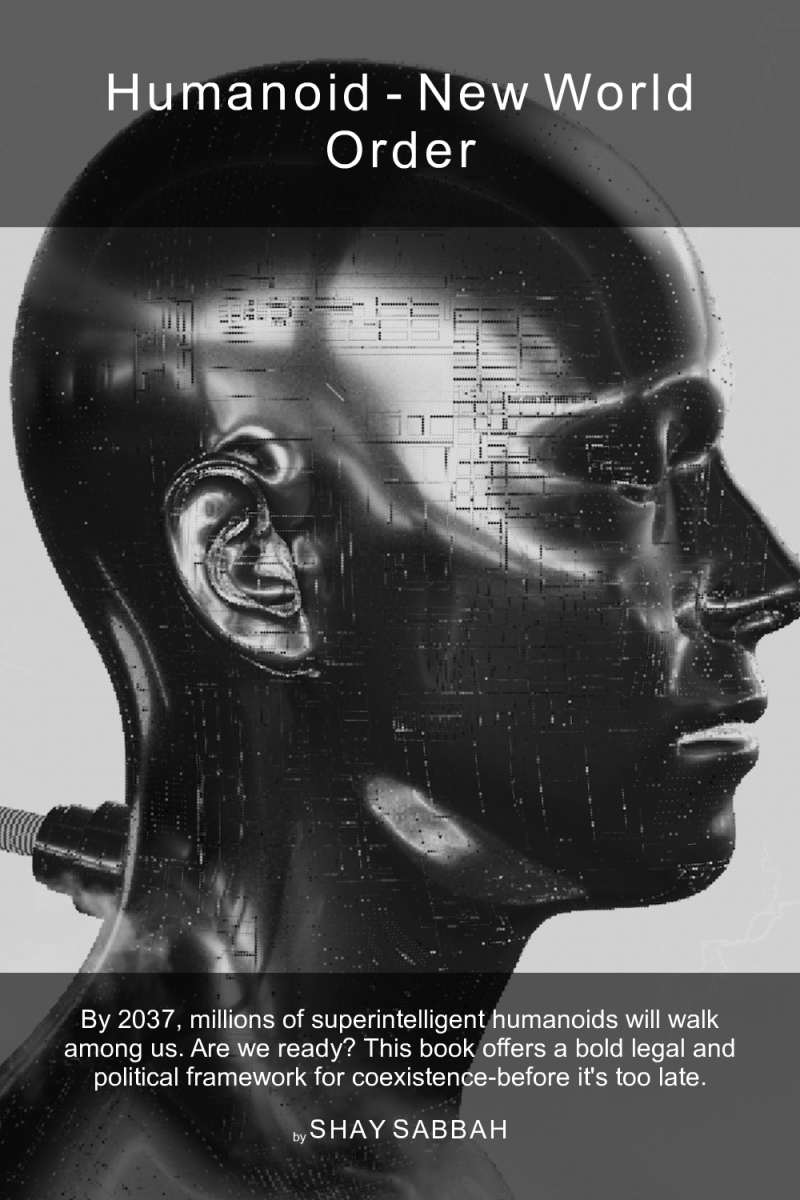
Humanoid - New World Order
From ChatGPT to Superintelligent Robots: A Ten-Year Roadmap for Coexistence
by shay sabbah
science
By 2037, millions of superintelligent humanoids will walk among us. Are we ready? This book offers a bold legal and political framework for coexistence—before it's too late.
🔒Secure checkout via Stripe
Fall Festival Sale
$9
About this book
In 2022, ChatGPT ignited a revolution. By 2027, China ships 95% of the world's humanoid robots. By 2037, an estimated [N] humanoids—some with superhuman AGI and ASI capabilities—will walk the earth. Yet our political, social, and economic systems remain rooted in a world where humans are the only intelligent agents. This is a recipe for catastrophe.
Humanoid - New World Order offers a gripping, decade-by-decade account of this unprecedented transition, from the birth of generative AI to the rise of embodied intelligence. It dissects the global race between the US and China, exposing the strategic advantages and ethical blind spots of each. But this book goes beyond analysis—it prescribes a solution.
Drawing on millennia of human history—from the Code of Hammurabi to the formation of the United Nations—the book proposes a 'Humanoid Constitution': a set of 25 laws and rules, one for each year from 2022 to 2037, designed to ensure that humanoids serve humanity, not the other way around. Each rule is illustrated with vivid 'what-if' scenarios, showing the dire consequences of inaction: economic collapse, political subjugation, and even biological obsolescence.
The book challenges us to rethink everything: Should humanoids have rights? Can they vote? How do we distribute wealth in a jobless economy? And crucially, what does it mean to be human when machines outthink us? It argues for a new world order—one that preserves human agency while embracing the benefits of superintelligent companions.
This is not a work of doom-saying but a pragmatic guide for survival. It is a must-read for leaders, policymakers, and every citizen who wants a say in the future we are creating. The time to act is now—because by 2037, it may be too late.