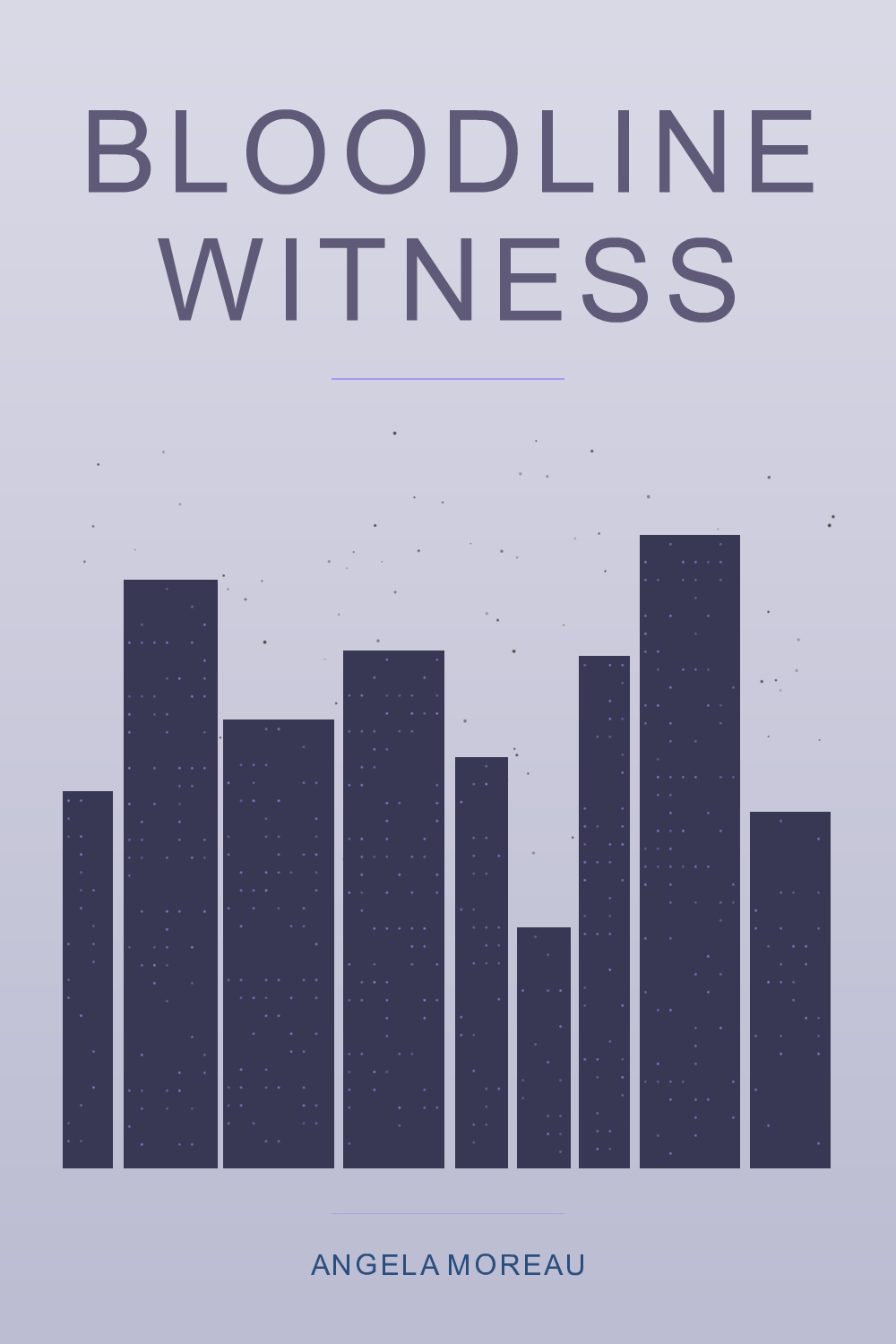
Sarah Chen's grandmother's DNA contains decades of hidden memories—and uncovering them could solve a cold case... or get her killed.
🔒Secure checkout via Stripe
Fall Festival Sale
$9
About this book
When geneticist Dr. Sarah Chen discovers anomalies in her grandmother's DNA, she expects to find rare mutations or ancestral markers. Instead, she finds memories—fragmented but vivid impressions of events witnessed decades ago, encoded somehow within the genetic sequence itself. The earliest memory is from 1952. The latest from 1987. Among them is a murder.
Sarah has spent her career studying how trauma shapes biology. She knows that stress hormones can be inherited, that epigenetic markers can pass down pain across generations. But this is different. This is evidence, preserved in the only medium that couldn't be destroyed or forgotten. Her grandmother—a woman who never spoke about her past, who raised Sarah with silence and careful distance—had been a witness to something unspeakable, and she found a way to make sure the truth would survive her.
As Sarah reconstructs the fragmented memories, the crimes multiply. A missing woman in 1952. A suicide that wasn't. A disappearance in 1987 that devastated her family's reputation. Three generations of women entangled in secrets that powerful people have kept buried for decades. And now someone knows what Sarah has discovered. Someone who benefits from this silence. Someone who will do anything to ensure these memories stay locked in the past where they belong.
With each decoded memory, Sarah edges closer to the truth—and closer to becoming a target. She must decide whether to destroy what her grandmother risked everything to preserve, or finish what three generations of women started, and speak the unspeakable aloud.
Reader Reviews
Kathleen Anderson
★★★★★Bloodline Witness grabbed me from that opening scene in the lab at 3 AM—the tension in Sarah's discovery of those impossible DNA sequences is brilliantly rendered. The premise of memories encoded in genetics is genuinely original, and watching Sarah piece together her grandmother's secrets across three generations kept me turning pages late into the night. My only complaint is that the middle section gets a bit tangled trying to juggle all three timelines, and I wanted more exploration of the science before it pivots into pure thriller mode. Still, a compelling and thought-provoking read.
Susan Davis
★★★★★I couldn't put this down. The way the author weaves genetics, generational trauma, and mystery together is masterful—it's hard science fiction meets thriller and it works perfectly. That opening is phenomenal; I was completely hooked by Sarah's realization that something impossible was staring at her from the sequencer results. The mystery itself is intricate without feeling contrived, and the emotional stakes for Sarah feel real and earned. This is the kind of book that stays with you long after you finish.
Charles Robinson
★★★★★A clever premise executed with real skill. I loved the specificity of the Portland lab setting and the technical detail in that opening chapter—it grounds the fantastical concept of genetic memory in something that *feels* plausible. The mystery unfolds compellingly, and the threat to Sarah escalates nicely. Where it stumbles slightly is pacing; there are moments in the second act where exposition about the grandmother's past slows things down. But the final stretch more than makes up for it. Recommended for mystery lovers with a taste for speculative ideas.
Jeffrey Moore
★★★★★The core idea is fascinating and that opening chapter is genuinely unputdownable, but the book doesn't quite live up to its own premise. Once Sarah starts 'decoding' the memories, the logic of how genetic sequences actually contain detailed episodic memories gets hand-wavy in a way that bothered me. And while the mystery itself is intriguing, it feels like it's serving the sci-fi concept rather than the other way around. It's a solid thriller with an imaginative hook, but I kept wishing the author had committed harder to either the science or the crime story instead of straddling both.